
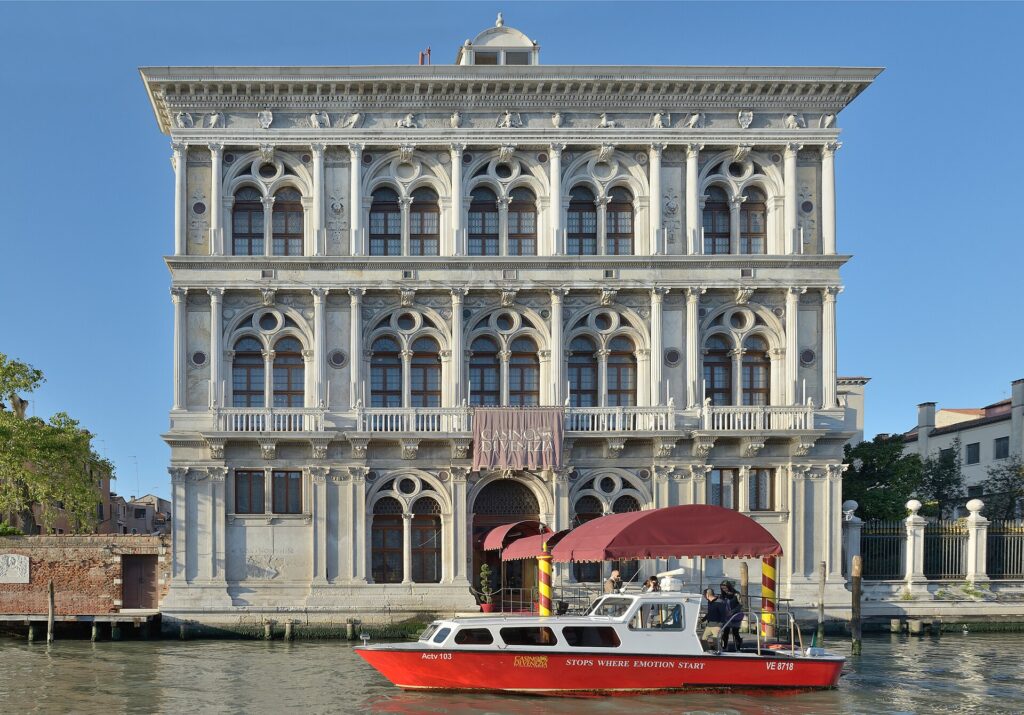
The first palace in Venice to put the round arches of the Renaissance on the Grand Canal. Wagner died in its mezzanine in February 1883. Since 1959 the city’s casino has played its winter season inside.
At a glance
Mauro Codussi designed the palace in the last years of the fifteenth century; building began in 1481 and was completed after his death by the Lombardo family of architects, in 1509. The last Vendramin heirs sold it in 1844 to Maria Carolina, Duchess of Berry. The City of Venice bought it in 1946, and since 1959 it has been the winter home of the Casinò di Venezia.
What you see
Three storeys to the water, faced in stone, with paired round-headed windows under semicircular arches and columns standing clear of the wall. Venice had been building pointed arches for two hundred years; this front is the moment the Renaissance arrives on the Grand Canal and settles there. The water entrance is still used, and the palace reads best from the vaporetto, or from the San Marcuola stop opposite.
Why it matters
Richard Wagner lived here from 1882 and died in these rooms on 13 February 1883; the apartment is kept as a small museum. Venice’s claim to the oldest casino in the world belongs to the institution rather than to this building: the Republic opened its gaming house, the Ridotto, in 1638, and the company that descends from it moved into Ca’ Vendramin Calergi only in 1959. The palace is where that long story is currently housed — which is a different thing, and worth keeping straight.
Practical information
- The Wagner rooms are visited by appointment, on set days, through the association that curates them
- The casino has its own opening hours, dress code and admission rules; entry requires identification
Getting there
Waterbus line 1 to San Marcuola-Casinò; the palace is on the opposite bank, a minute’s walk from the stop on the Cannaregio side.
Sources
- Casinò di Venezia, official site, on Ca’ Vendramin Calergi as the seat of the casino and on the Ridotto of 1638
- Richard Wagner Association / Museo Wagner, on the composer’s residence and death in the palace, 1882–1883
Editorial text © Cultural Heritage Online, 2026. Video filmed and narrated on site by Andrea Manzo.
Find it on the map
See this place and what’s around it →
📷 Become a Cultural Heritage Online photographer
Share your photos of places: they stay published under your name as the author. The more they're seen, the more you get noticed — and soon a contest will reward the most appreciated photos.
Log in or sign up free to add a photoIs this page about you?
This page is read by travellers and heritage enthusiasts who find it on Google. Tell us how you are connected to this place and we will take it from there.