
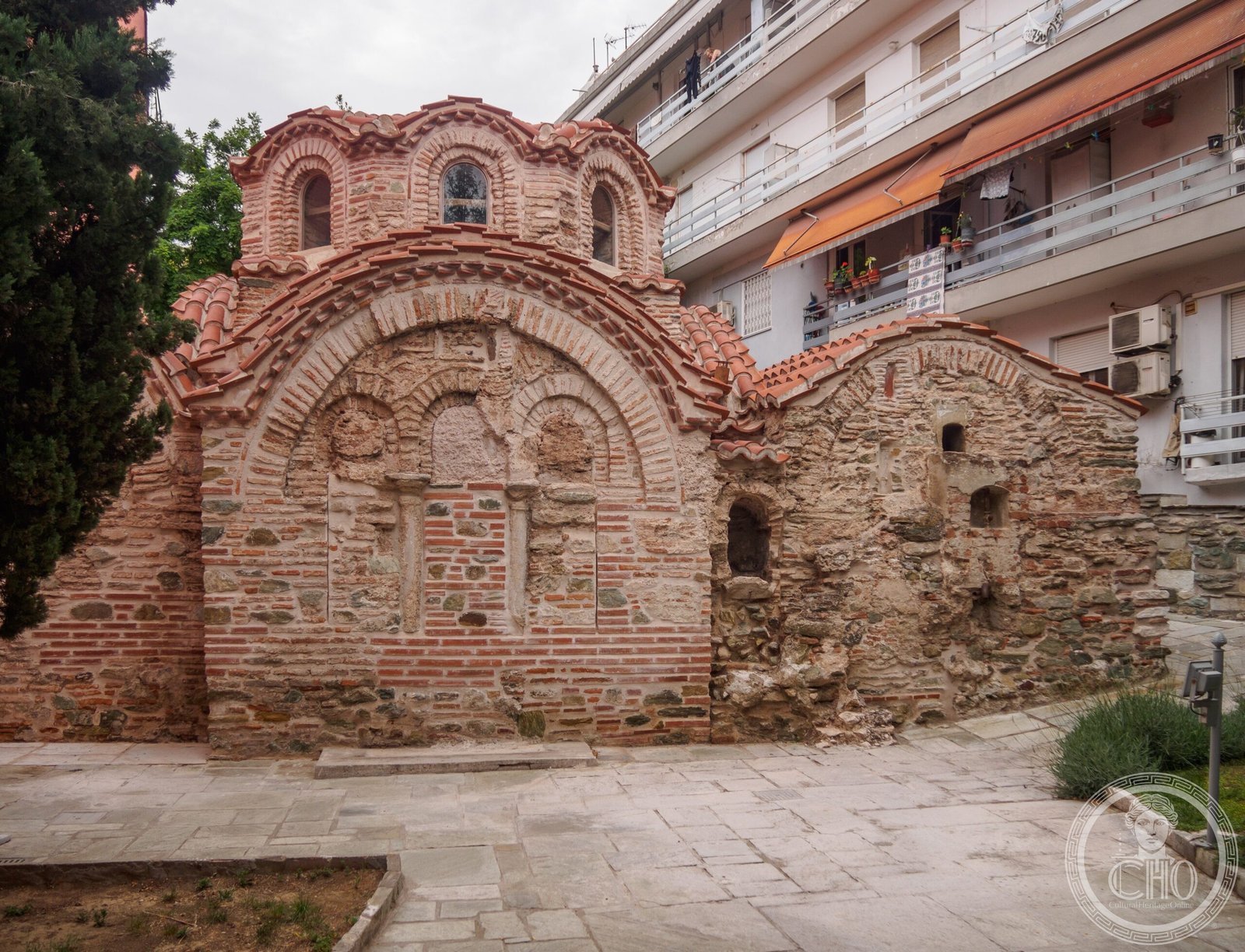
One of Greece’s finest surviving Byzantine baths, this restored public complex served Thessaloniki’s citizens for eight centuries before reopening as a museum in 2015.
At a glance
Constructed in the late 12th or early 13th century, the Byzantine Bath operated continuously until 1940, when it closed—probably due to World War II and German occupation. Located on Theotokopoulou Street in the Upper Old Town, it represents the most complete surviving example of Byzantine bathing architecture in Greece. The bath likely belonged to a monastery complex, as Byzantine sources make no mention of it.
History
The bath functioned as a public facility for roughly 750 years, serving both men and women in Byzantine times. During the Ottoman period, it became known as Kule Hammam—the “bath of the citadel”—and was reorganized to segregate male and female users. The structure endured considerable damage during the 1978 earthquakes but was saved by the 9th Ephorate of Byzantine Antiquities through structural reinforcement and protective covering. Following four years of comprehensive restoration, it reopened to the public as a museum and cultural space in June 2015.
What you see
The bath follows the classical Roman bathing sequence. The southern entrance leads to rectangular frigidarium rooms used for changing. Two vaulted tepidarium chambers follow, then two caldarium rooms with hypocausts—underfloor heating systems—beneath. One caldarium features a dome supported by an octagonal base with eight windows; the other has a domed ceiling. A cistern to the north supplied heated water, warmed by a hearth beneath. Ottoman-era partitions divided the complex into separate male and female sections, blocking passages between room pairs. Centuries of continuous use left the structure heavily altered from its original design.
Cultural significance
Though Thessaloniki once boasted numerous public baths—the 14th-century scholar Nikephoros Choumnos claimed the city had more baths than people—only this example survives intact in the city. It remains the largest and most complete Byzantine bath in Greece. Other ruined Byzantine baths survive elsewhere: two in Corinth, one each in Sparta, Paramythia, and Ioannina Castle, plus examples in the monasteries of Kaisariani and Zoodochos Pigi. The Byzantine Bath stands as irreplaceable evidence of urban life and hygiene practices in medieval Thessaloniki.
Key facts
- Country: Greece
- City: Thessaloniki
- Period: Late 12th–early 13th century
- Coordinates: 40.6396, 22.9526
- UNESCO World Heritage Site (1988, as part of Paleochristian and Byzantine monuments of Thessaloniki)
- Reopened to public: June 2015
Practical information & getting there
The bath is located on Theotokopoulou Street in the Upper Old Town of Thessaloniki. It now operates as a museum and cultural space. For current opening hours, admission fees, and visiting information, contact local tourist services in Thessaloniki.
Sources & resources
Find it on the map
See this place and what’s around it →📷 Become a Cultural Heritage Online photographer
Share your photos of places: they stay published under your name as the author. The more they're seen, the more you get noticed — and soon a contest will reward the most appreciated photos.
Log in or sign up free to add a photoIs this page about you?
This page is read by travellers and heritage enthusiasts who find it on Google. Tell us how you are connected to this place and we will take it from there.