

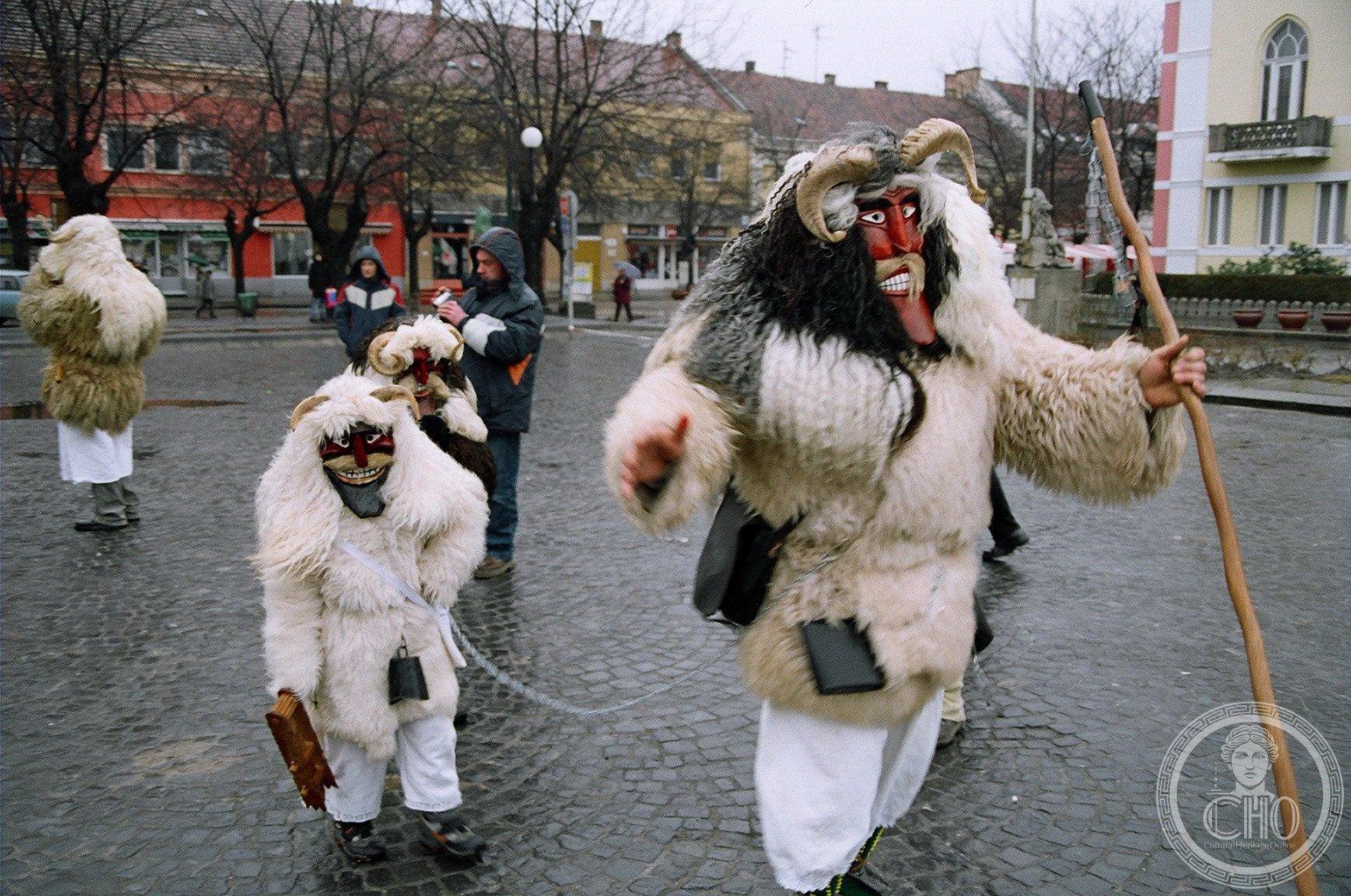
Each February, the Šokci people of Mohács don elaborate masks and take to the streets in a six-day carnival that marks the end of winter. Rooted in legend and Ottoman-era survival, Busójárás channels ancient apotropaic magic into music, parades, and communal joy.
At a glance
Busójárás is an annual masked carnival held at the end of the Carnival season, concluding the day before Ash Wednesday. The six-day celebration features Busós—people wearing traditional masks—alongside folk music, masquerading, parades, and dancing. Usually held in February, the festival runs from Thursday through the following Tuesday (Shrove Tuesday), with the largest gathering occurring on Farsang Sunday, the Sunday before Easter.
Origins and history
Two related legends explain the tradition’s origins. The most popular account describes Ottoman-era refugees from Mohács who fled to nearby swamps and woods. An old Šokac man appeared to them by firelight with a prophecy: craft masks and weapons, he said, and a masked knight would lead them back. On a stormy night, when they returned to town wearing their fearsome masks and making tremendous noise, the Turks—believing demons attacked—fled before dawn.
A second, older legend attributes the masks to the scaring away of Winter itself, not Ottoman troops. Regardless of origin, the Šokci have celebrated Busójárás in early February every year since, gradually expanding to host guest Busó teams from neighbouring Croatia, Serbia, Slovenia, and Poland.
The tradition today
The festival unfolds across six days in a prescribed sequence. It opens on Thursday, continues with Kisfarsang (Little Farsang) on Friday, peaks with farsang vasárnap (Farsang Sunday) on the Sunday before Easter, and closes with farsangtemetés (Burial of Farsang) on the following Tuesday. Throughout, Busós parade in their carved masks, accompanied by folk music and collective dancing that blend ritual solemnity with uninhibited celebration.
Cultural significance
Busójárás embodies the Šokci people’s resilience and identity. The festival preserves a form of apotropaic magic—the use of masks and noise to ward off malevolent forces—embedded in European folk Christianity. It also maintains the Šokci language, music, craft traditions, and communal bonds across generations. The participation of Busó teams from the wider Šokci diaspora reinforces ethnic and cultural continuity across modern borders.
Key facts
- Country: Hungary
- Anchor community: Mohács, inhabited by the Šokci ethnic minority
- Timing: Six days in February, ending the day before Ash Wednesday
- UNESCO inscription: Representative List of Intangible Cultural Heritage of Humanity, 2009
- Core elements: Carved masks, folk music, parades, dancing, and the Burial of Farsang ritual
Where to experience it
Busójárás takes place annually in Mohács, a town in southern Hungary near the Danube. The festival is open to visitors, who can watch processions, experience the music and masks, and observe the Burial of Farsang ceremony. Check local tourism websites or cultural calendars for exact dates in any given year, as the festival timing varies with the Easter calendar.
Sources & resources
- Busójárás – Wikipedia
- Cultural Heritage Online
Find it on the map
See this place and what’s around it →📷 Become a Cultural Heritage Online photographer
Share your photos of places: they stay published under your name as the author. The more they're seen, the more you get noticed — and soon a contest will reward the most appreciated photos.
Log in or sign up free to add a photo