
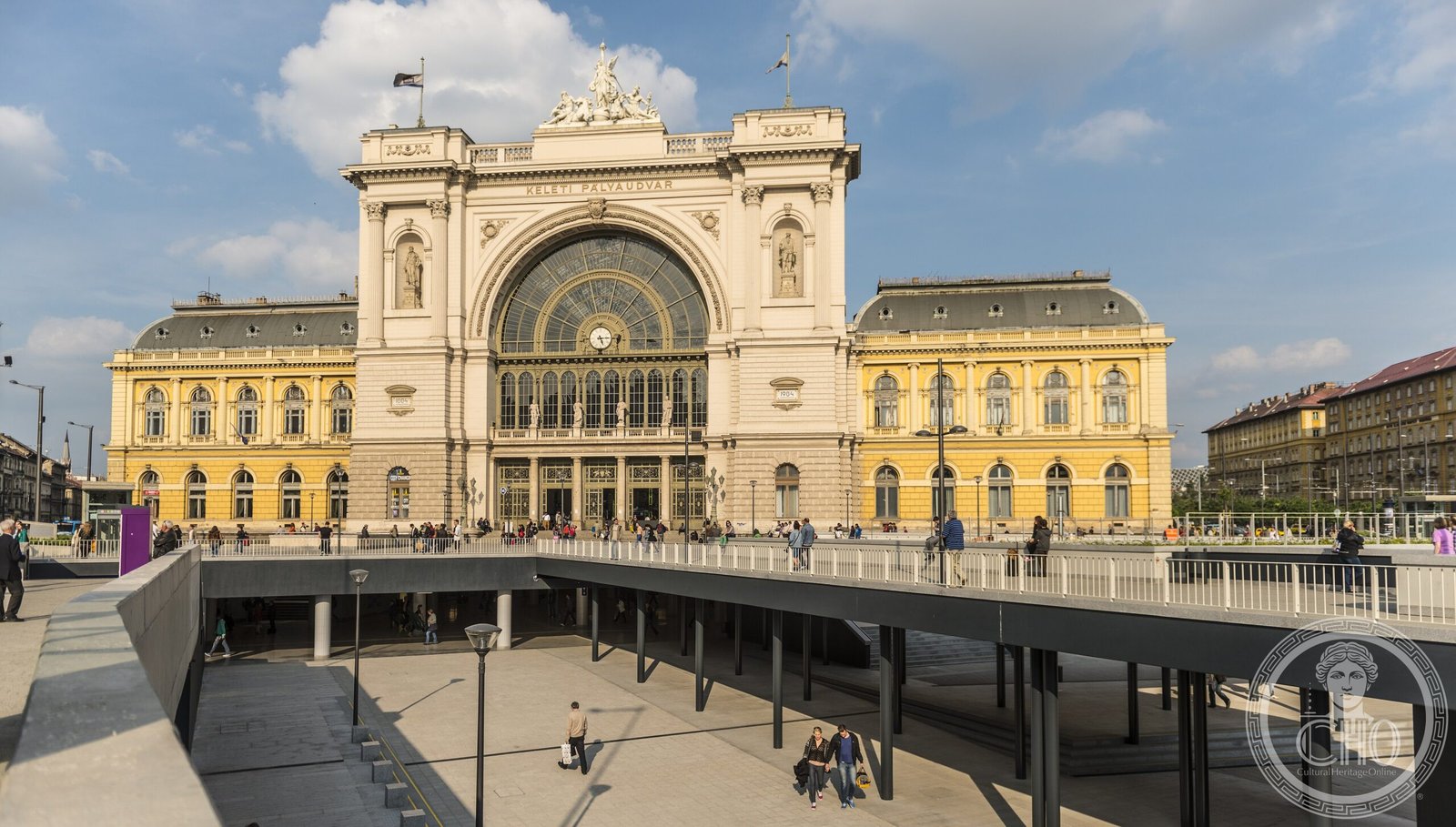
Hungary’s principal international and inter-city railway terminal, where grand architecture meets the convergence of eastern European transport routes.
At a glance
Budapest Keleti (Keleti pályaudvar in Hungarian) is the main railway hub for international and inter-city services in Budapest. Located where Rákóczi Avenue divides into Kerepesi and Thököly Avenues, the station anchors the city’s transport network.
History
Established in 1891, the station was named for its geographical position as Budapest’s easternmost rail terminus. Its original function was to serve lines from eastern Hungary, Transylvania, and the Balkans. By contrast, the Nyugati (western) railway station handled services toward Vienna and Paris, reflecting the city’s role as a continental crossroads.
What you see
Built to accommodate Budapest’s emergence as a major European transport hub, the station’s design reflects the ambitions of late 19th-century railway architecture.
Cultural significance
Keleti Station represents Budapest’s position as a gateway between Central Europe and the Balkans. The station’s naming and function encapsulate the city’s historical role connecting divergent regions and cultures across the continent.
Key facts
- Country: Hungary
- City: Budapest
- Built: 1891
- Coordinates: 47.5003°N, 19.0839°E
Practical information & getting there
Keleti Station serves as the primary point of arrival and departure for international trains. You can reach it via Budapest’s public transport network and major European rail routes.
Sources & resources
Find it on the map
See this place and what’s around it →
📷 Become a Cultural Heritage Online photographer
Share your photos of places: they stay published under your name as the author. The more they're seen, the more you get noticed — and soon a contest will reward the most appreciated photos.
Log in or sign up free to add a photoIs this page about you?
This page is read by travellers and heritage enthusiasts who find it on Google. Tell us how you are connected to this place and we will take it from there.