
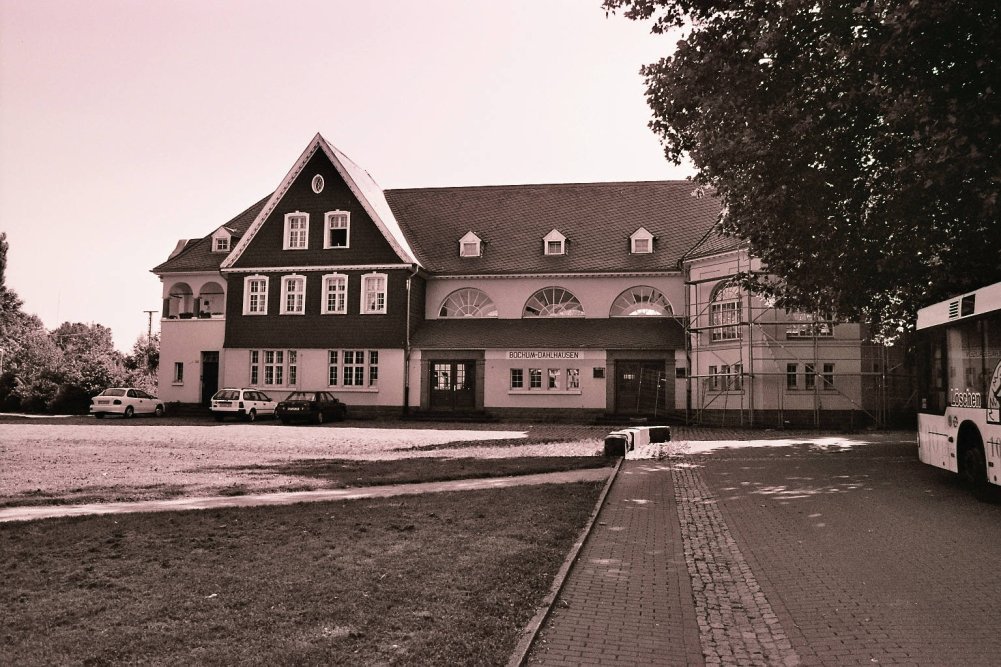
A railway station in Dahlhausen, Bochum, whose historic building survives from the First World War era.
At a glance
Bochum-Dahlhausen station serves the Dahlhausen district of Bochum, a major industrial city in the Ruhr valley. The station’s architectural identity is rooted in its early twentieth-century construction period, when the German railway network was expanding rapidly across North Rhine-Westphalia.
History
The station building dates from the time of the First World War, when wartime conditions shaped infrastructure development across Germany. This period marked significant investment in regional rail connectivity to support both civilian and military transport needs throughout the Ruhr industrial region.
What you see
The station retains its early twentieth-century building, a testament to rail architecture of the World War I era. The structure reflects the functional design priorities of its time, built to serve the transportation demands of one of Europe’s most important industrial zones.
Cultural significance
As part of Bochum’s railway heritage, the station documents the industrial history and development of the Ruhr region. Its survival offers insight into the architectural and infrastructural choices made during a transformative period in German industrial expansion.
Key facts
- Location: Dahlhausen district, Bochum, Germany
- Coordinates: 51.426°N, 7.142°E
- Construction period: First World War era
Practical information & getting there
The station is located in the Dahlhausen district of Bochum in North Rhine-Westphalia. For current transport schedules and accessibility information, consult local transit authorities or Deutsche Bahn.
Sources & resources
Find it on the map
See this place and what’s around it →📷 Become a Cultural Heritage Online photographer
Share your photos of places: they stay published under your name as the author. The more they're seen, the more you get noticed — and soon a contest will reward the most appreciated photos.
Log in or sign up free to add a photoIs this page about you?
This page is read by travellers and heritage enthusiasts who find it on Google. Tell us how you are connected to this place and we will take it from there.