
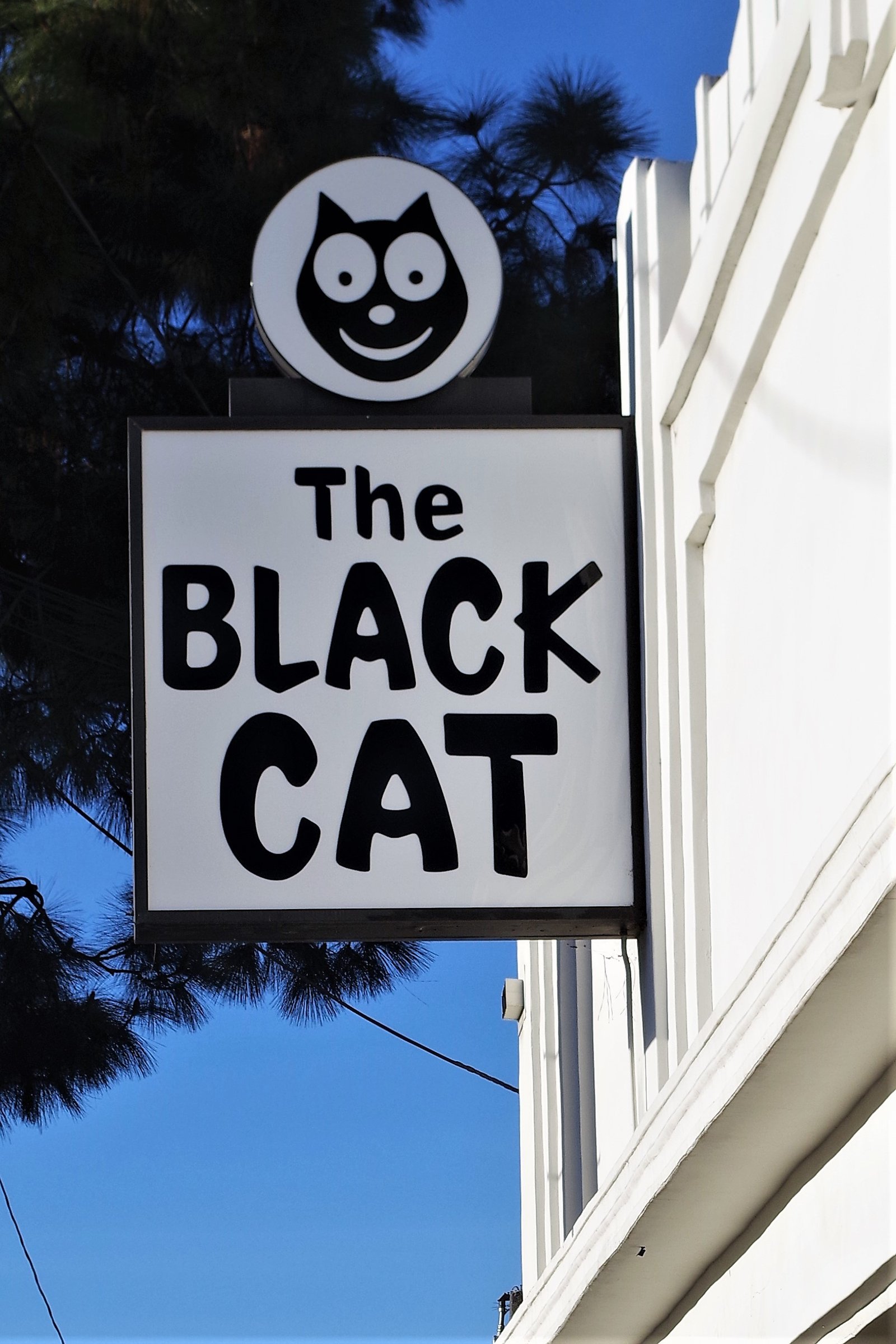
A historic gay bar in Silver Lake that became a landmark of early LGBT resistance to police violence in America.
At a glance
The Black Cat Tavern stands as one of the earliest sites of organized protest against police brutality targeting LGBT communities in the United States. Located in the Silver Lake neighborhood, the bar’s 1967 demonstration preceded the more widely known Stonewall uprising by over two years, marking a pivotal moment in the fight for LGBT rights and dignity.
History
In 1967, the Black Cat Tavern became the setting for one of America’s first public demonstrations protesting police harassment and violence directed at LGBT patrons. This act of collective resistance emerged years before Stonewall, establishing the bar as an early center of LGBT activism and community organizing in Los Angeles.
What you see
The tavern retains its character as a working gay bar in Silver Lake, a neighborhood known for its artistic and LGBTQ communities.
Cultural significance
The Black Cat Tavern holds essential historical importance as an early flashpoint for LGBT civil rights in America. The 1967 demonstration represents a crucial moment when marginalized communities confronted systemic oppression through public protest—a precursor to the broader liberation movements that would define the decades ahead. Its legacy underscores how resistance to state violence and discrimination took root in LGBTQ spaces and communities outside New York City.
Key facts
- Location: Silver Lake, Los Angeles, California, United States
- Coordinates: 34.0921, −118.2798
- Historic significance: Site of one of the first U.S. LGBT protests against police brutality (1967)
- Predates Stonewall riots by more than two years
Practical information & getting there
The Black Cat Tavern operates as an active bar in the Silver Lake neighborhood. Visitors interested in LGBT history and Los Angeles’s role in the broader movement for civil rights will find the location accessible via public transportation and local streets. Hours and current information are best confirmed before visiting.
Sources & resources
- Black Cat Tavern — Wikipedia
- Cultural Heritage Online
Find it on the map
See this place and what’s around it →📷 Become a Cultural Heritage Online photographer
Share your photos of places: they stay published under your name as the author. The more they're seen, the more you get noticed — and soon a contest will reward the most appreciated photos.
Log in or sign up free to add a photoIs this page about you?
This page is read by travellers and heritage enthusiasts who find it on Google. Tell us how you are connected to this place and we will take it from there.