
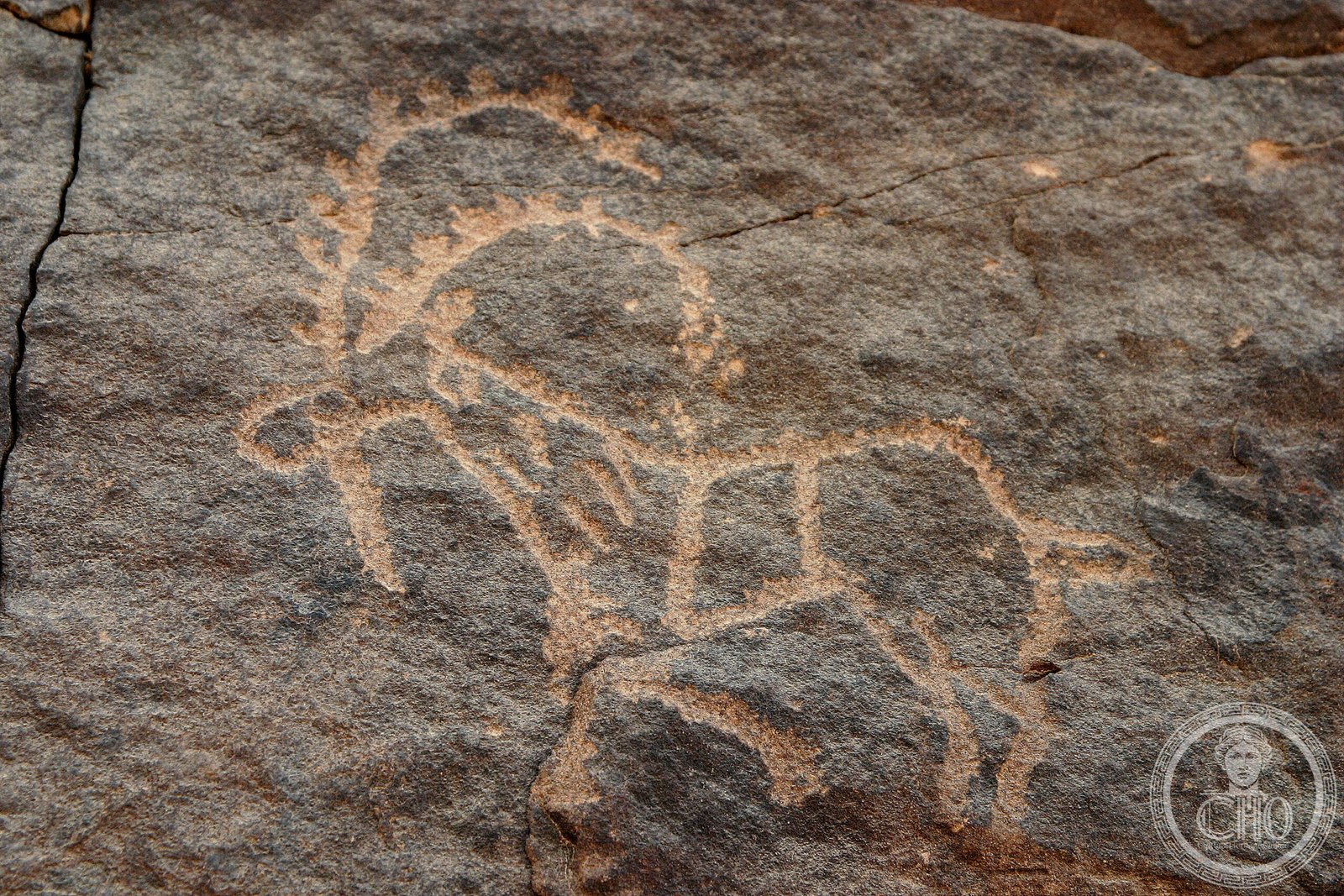
An ancient rock art site in southwest Saudi Arabia preserving millennia of Paleolithic and Neolithic settlement through petroglyphs, inscriptions, and water troughs etched into stone.
At a glance
Bir Hima is a prehistoric archaeological site located 120 kilometres north of Najran city, recognized for its extensive rock art and evidence of long-term human habitation. The site encompasses the Bir Hima Complex, spanning from 7000 to 1000 BC, and represents a crucial record of early Arabian settlement patterns and daily life.
History
Bir Hima was settled continuously during the Paleolithic and Neolithic periods, making it an important window into prehistoric Arabia. The presence of numerous rock art sites and water troughs suggests permanent or semi-permanent occupation tied to water availability and pastoral economies.
What you see
The site features extensive petroglyphs and inscriptions carved into rock surfaces, alongside a distinctive network of troughs. These troughs, comparable in type to similar structures found across North Arabia and into Yemen, likely served as water storage or management systems essential to desert life.
Cultural significance
Bir Hima documents the material culture and environmental adaptation of prehistoric Arabian peoples across seven millennia. The rock art provides direct evidence of human presence and activity, while the engineering of water troughs demonstrates technical knowledge applied to survival in arid landscapes.
Key facts
- Location: Najran province, southwest Saudi Arabia
- Coordinates: 18.25°N, 44.45°E
- Settlement period: 7000–1000 BC
- UNESCO World Heritage: Designated as part of the Hima Cultural Area in July 2021
- Notable features: Petroglyphs, inscriptions, and prehistoric water troughs
Practical information & getting there
Bir Hima lies approximately 120 kilometres north of Najran city. The site is part of the larger Hima Cultural Area UNESCO designation. For current visitor information, access conditions, and guided tour availability, consult local tourism authorities in Najran province.
Sources & resources
Find it on the map
See this place and what’s around it →📷 Become a Cultural Heritage Online photographer
Share your photos of places: they stay published under your name as the author. The more they're seen, the more you get noticed — and soon a contest will reward the most appreciated photos.
Log in or sign up free to add a photo