
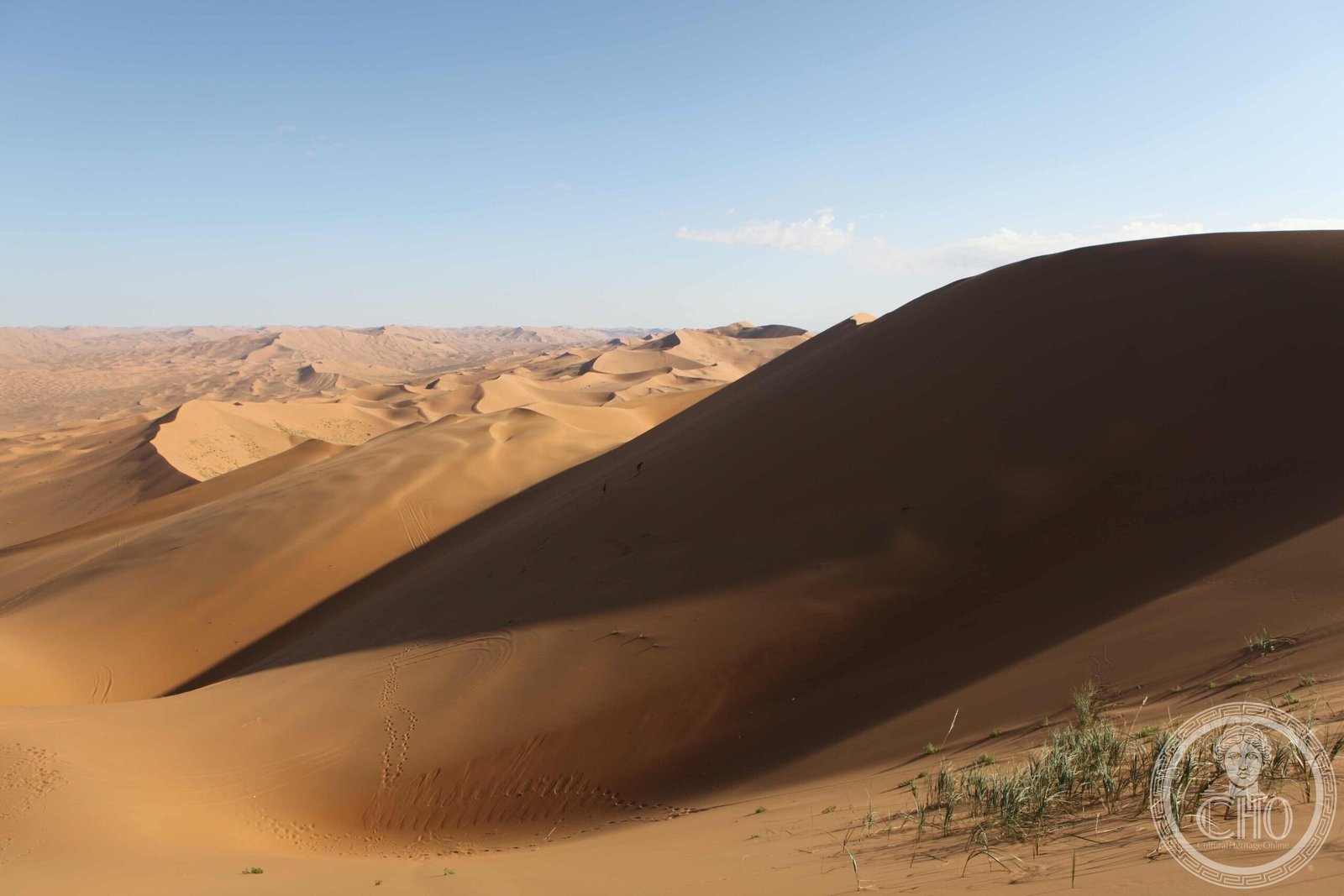
China’s third-largest desert is a vast landscape of extraordinary dunes and hidden lakes, where some of the world’s tallest stationary sand mountains rise over 500 meters above spring-fed waters.
At a glance
Spanning 49,000 square kilometers across three provinces, the Badain Jaran Desert contains over 100 lakes interspersed among massive dunes. The desert’s name derives from Mongolian words meaning “mysterious lakes”—a fitting description for an ecosystem where freshwater and hypersaline lakes sit between some of Earth’s tallest stationary dunes.
History
The Badain Jaran Desert has long been recognized by local populations and travelers crossing the Central Asian steppe. Its distinctive lakes and extraordinary dune formations have shaped both human passage and ecological development across the region over centuries.
What you see
The desert’s dominant feature is its towering dunes, which average 200 meters in height but reach over 500 meters at their peak. The world’s third-tallest dune rises here, standing as the highest stationary dune globally. These mountains of sand frame spring-fed lakes that vary dramatically in salinity—some fresh, others intensely saline. The Ruo Shui river (“weak water”) crosses the desert, creating an alluvial plain amid the dunes.
Cultural significance
The Badain Jaran Desert represents a critical ecosystem where extreme environmental conditions support distinctive plant and animal communities. The high-pH lakes particularly harbor unusual fauna adapted to harsh conditions. Its designation as a UNESCO World Heritage site reflects both its geological importance and its role in understanding desert ecology and adaptation.
Key facts
- Location: Gansu, Ningxia, and Inner Mongolia provinces, China
- Area: 49,000 square kilometers (19,000 sq mi)
- Rank: Third largest desert in China
- Highest dune: Over 500 meters; world’s third-tallest dune
- Lakes: Over 100 spring-fed lakes, freshwater and saline
- UNESCO World Heritage site: Yes
- Coordinates: 40.0725°N, 102.21°E
Practical information & getting there
Access to the Badain Jaran Desert requires careful planning due to its remote location and extreme conditions. The nearest towns lie in Gansu and Inner Mongolia. Visitors should consult local authorities and specialized tour operators familiar with desert travel before attempting to explore this challenging landscape.
Sources & resources
Find it on the map
See this place and what’s around it →📷 Become a Cultural Heritage Online photographer
Share your photos of places: they stay published under your name as the author. The more they're seen, the more you get noticed — and soon a contest will reward the most appreciated photos.
Log in or sign up free to add a photo