

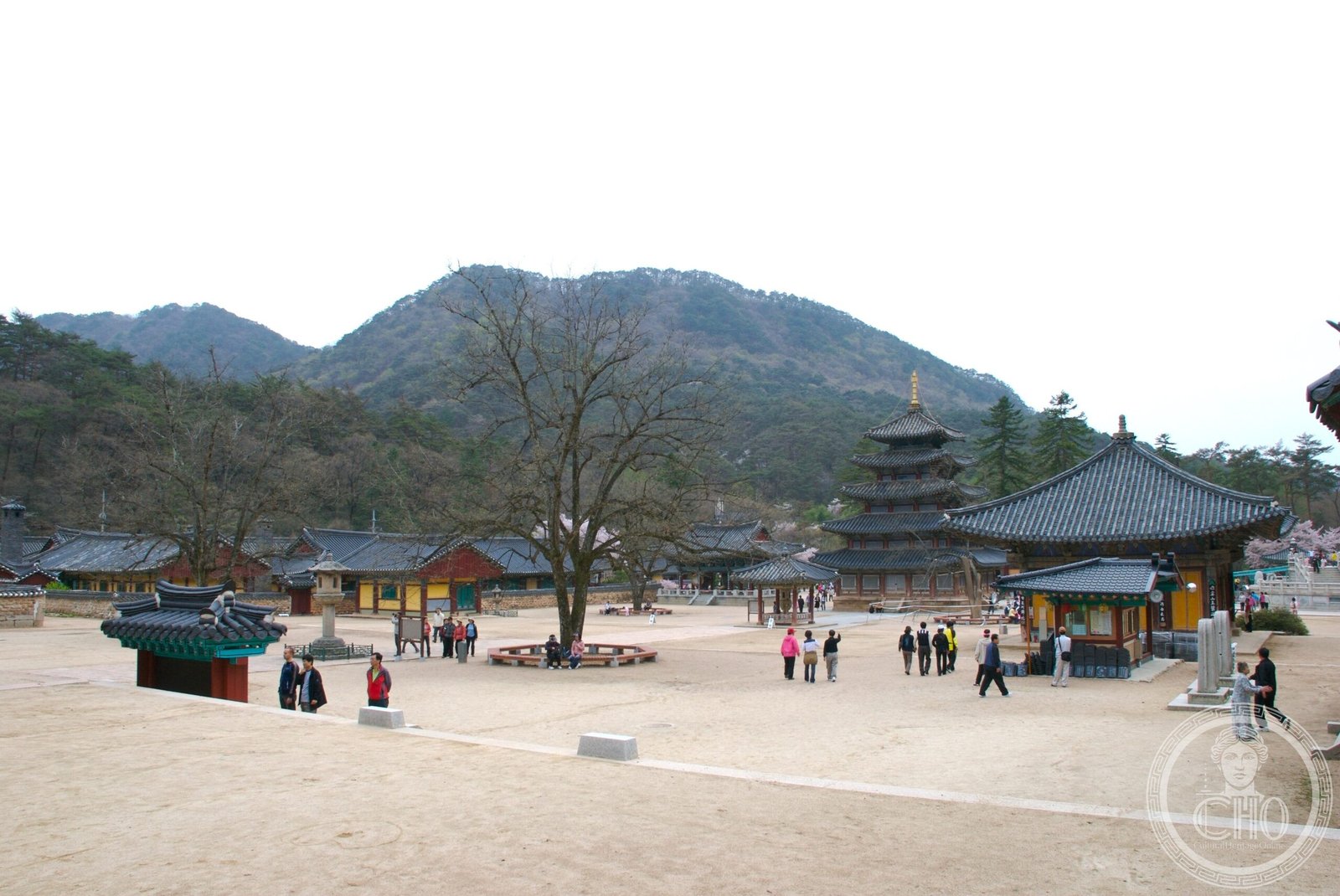
A principal temple of Korean Buddhism, Beopjusa sits on the slopes of Songnisan mountain and has served as a center for Maitreya Buddha devotion since its founding in the 6th century.
At a glance
Beopjusa is a head temple of the Jogye Order, South Korea’s largest Buddhist denomination. Located within Songnisan National Park, the temple commands the forested slopes of Songnisan in North Chungcheong Province, merging monastic architecture with mountain landscape.
History
The Silla monk Uisin established Beopjusa in 553, during the Three Kingdoms period. The temple’s name translates as ‘Residence of Dharma,’ reflecting its spiritual purpose. Throughout its history, Beopjusa became known for its association with Beopsang thought and veneration of Maitreya Buddha, the future Buddha of Buddhist cosmology.
What you see
The temple complex unfolds across Songnisan’s slopes, integrating wooden halls and stone structures into the mountain terrain. Architectural elements reflect Korean Buddhist traditions refined over fifteen centuries of continuous practice and reconstruction.
Cultural significance
As a head temple of the Jogye Order, Beopjusa holds institutional authority within Korean Buddhism. The temple’s long association with Maitreya worship connects it to popular devotional practices that have sustained Korean Buddhist communities across centuries.
Key facts
- Country: South Korea
- Location: Naesongni-myeon, Boeun County, North Chungcheong Province
- Founded: 553
- Coordinates: 36.5424, 127.83375
- Mountain: Songnisan, within Songnisan National Park
Practical information & getting there
Beopjusa is accessible via Songnisan National Park, which welcomes visitors year-round. The temple remains an active religious community; visitors should observe local customs and dress modestly.
Sources & resources
Find it on the map
See this place and what’s around it →📷 Become a Cultural Heritage Online photographer
Share your photos of places: they stay published under your name as the author. The more they're seen, the more you get noticed — and soon a contest will reward the most appreciated photos.
Log in or sign up free to add a photoIs this page about you?
This page is read by travellers and heritage enthusiasts who find it on Google. Tell us how you are connected to this place and we will take it from there.