
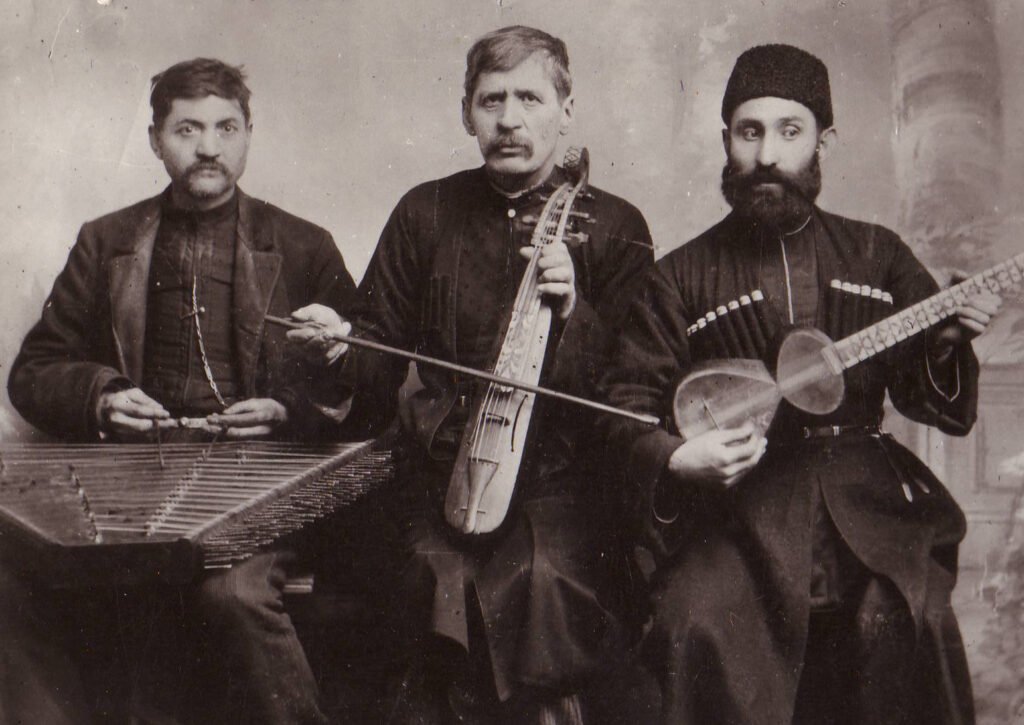
A living tradition of singer-poets who perform epic narratives and original compositions accompanied by long-necked lutes, carrying forward centuries of oral storytelling across the South Caucasus.
At a glance
An ashiq is a professional musician and bard who masters the art of narrative performance—weaving together poetry, music, and instrumental virtuosity. These singer-poets accompany their voices with traditional instruments, creating an immersive experience that blends epic storytelling with folk melody. The ashiq tradition remains a cornerstone of Azerbaijani cultural identity.
Origins & history
The ashiq tradition flourishes across Armenian, Iranian, Azerbaijani, Turkish, and Georgian cultures of the South Caucasus and surrounding regions. The name itself—derived from the Persian word for “lover”—reflects the practice’s deep roots in the cultural crossroads of the Near East. What began as an oral tradition of wandering bards has evolved into a disciplined art form passed down through formal apprenticeship.
The practice
An ashiq begins his career through apprenticeship, learning to master one or more traditional instruments: the saz (long-necked lute), duduk, kamancheh, tar, sring, or daf. The musician builds an individual repertoire that may include dastans—lengthy epic poems recounting heroic tales and historical events—or shorter, original compositions. Performance style is deeply personal; no two ashiqs interpret the same narrative identically. The voice carries the narrative weight while the instrument provides rhythmic and melodic foundation, creating dialogue between singer and strings.
Cultural significance
The ashiq tradition preserves centuries of oral history, folklore, and poetic wisdom. These artists serve as cultural custodians, ensuring that epic narratives, social commentary, and collective memory endure across generations. In communities throughout the South Caucasus, the ashiq remains a vital link to ancestral knowledge and aesthetic values.
Key facts
- Primary bearer: Azerbaijani communities
- Heartland: Ganja, Azerbaijan (40.68854°N, 46.36176°E)
- Principal instruments: saz, duduk, kamancheh, tar, sring, daf
- Related traditions: Armenian, Iranian, Turkish, and Georgian variants
- UNESCO ICH inscription: 2005 (reference 00253)
Where to experience it
Ganja, in central Azerbaijan, remains the heartland of ashiq tradition. The city and surrounding region host performances at cultural venues, festivals, and gatherings where master musicians continue to train apprentices and perform for audiences. Seek out local performance spaces and cultural organizations to encounter ashiqs in their living context.
Sources & resources
- Ashik – Wikipedia
- Art of Azerbaijani Ashiq – UNESCO Intangible Cultural Heritage
- Cultural Heritage Online
Find it on the map
See this place and what’s around it →📷 Become a Cultural Heritage Online photographer
Share your photos of places: they stay published under your name as the author. The more they're seen, the more you get noticed — and soon a contest will reward the most appreciated photos.
Log in or sign up free to add a photo