
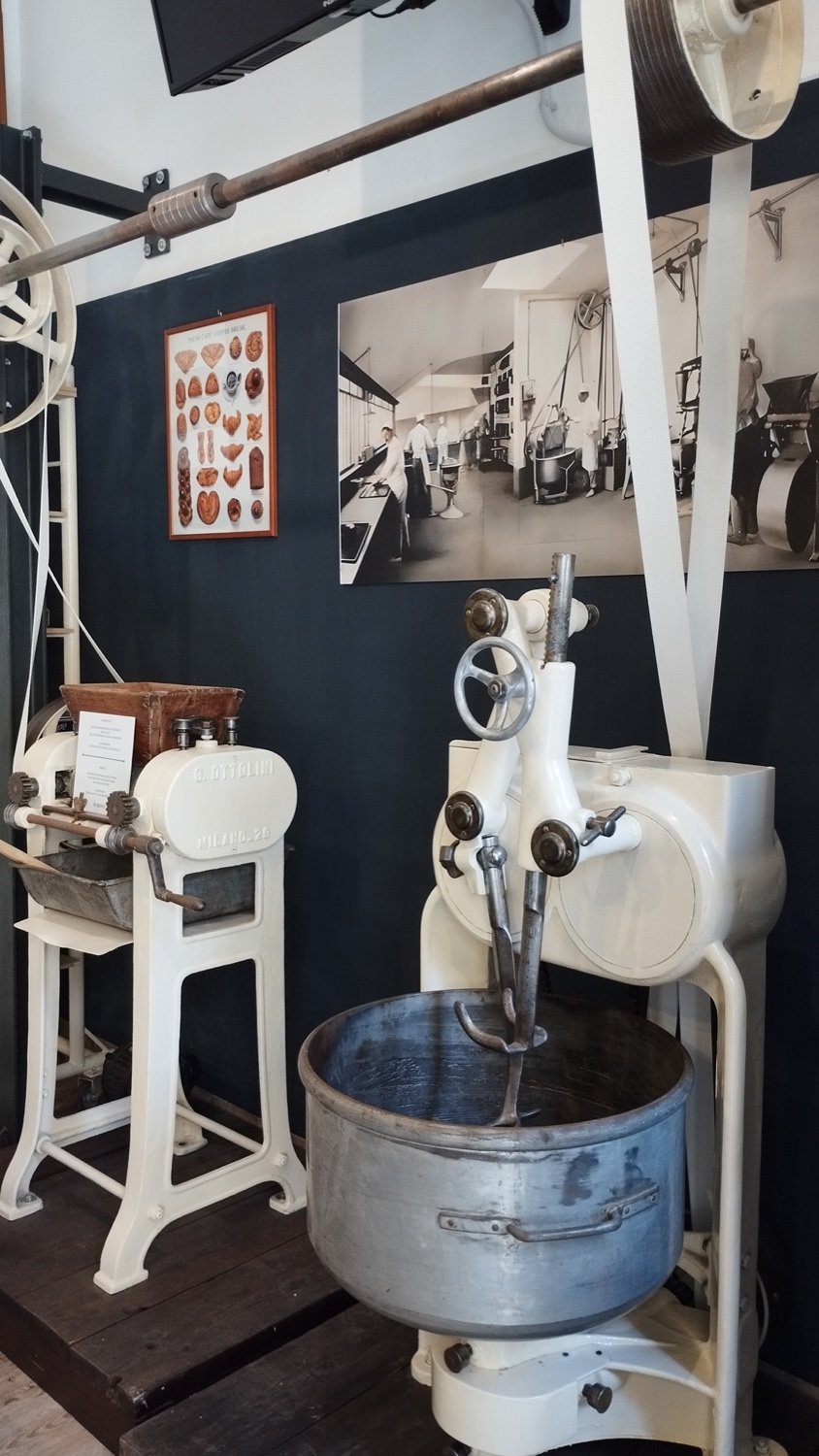
A working collection of bakery machinery in the historic centre of Frascati, built around a reconstructed mid-19th-century transmission system that ran first on water, then on steam, then on an electric motor. The coffee bar in the same room is what keeps it open.
At a glance
- Type
- Independent collection of industrial and food-production heritage
- Subject
- The technological history of breadmaking: machinery, technical knowledge, and the mechanisation of industrial work
- Founded by
- Omar Cirulli, from a personal technical archive
- Address
- Via Janari 4, 00044 Frascati (RM), Italy
- Coordinates
- 41.8091° N, 12.6830° E
Overview
Frascati is known for wine and for the villas of the Castelli Romani. Artefact is neither. It is a small room in the historic centre holding machines that made bread, kept by the person who restored them, and open because a specialty coffee bar shares the same space and pays the rent.
The machines are not decoration. They are arranged to explain a technical argument: how mechanical power was generated, how it was distributed through a workshop, and how the work of kneading — done by hand, and in some places by foot — was progressively taken over by machinery. Only part of the collection is on display; the rest is in storage, waiting for a larger space.
What you see
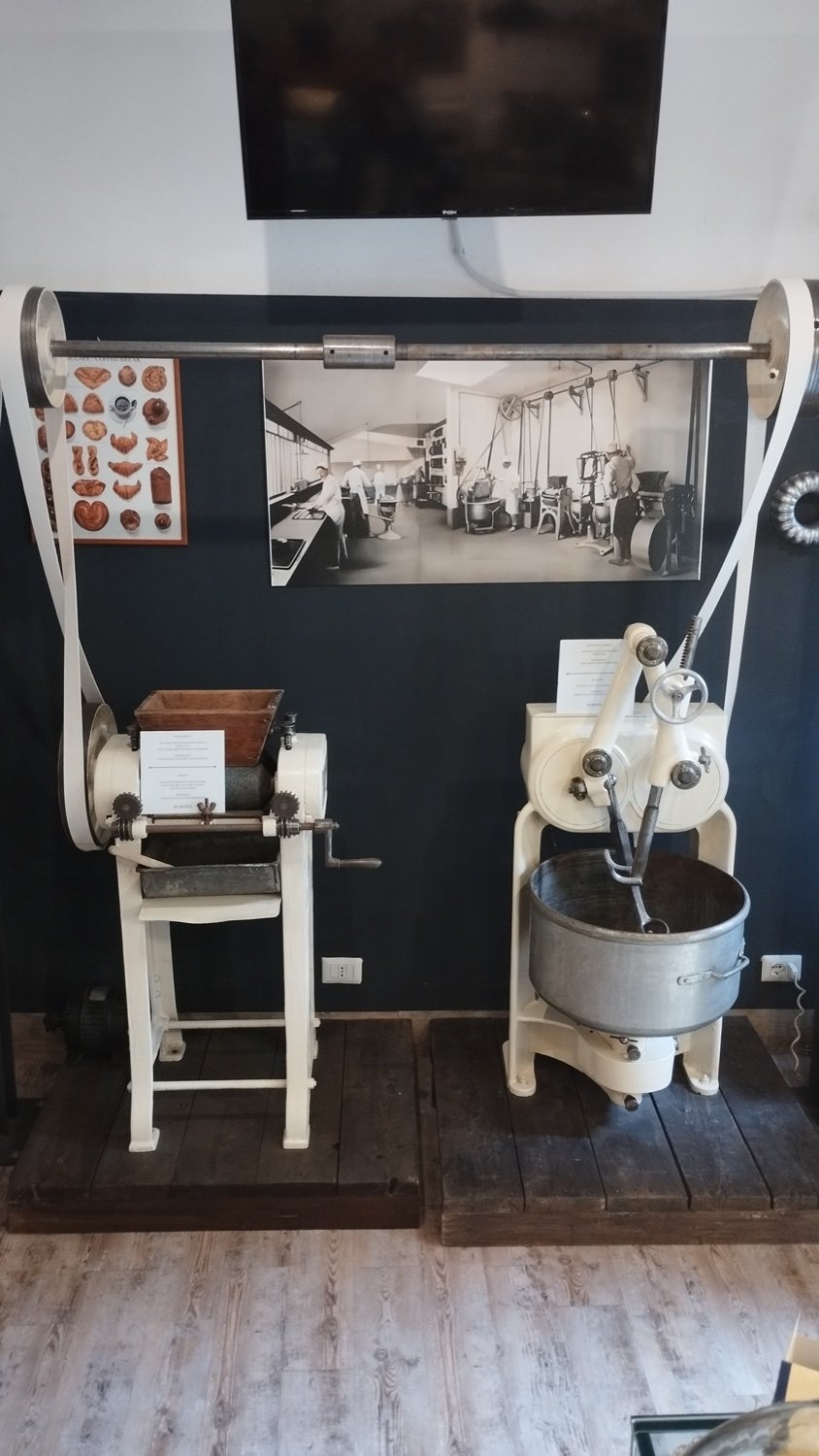
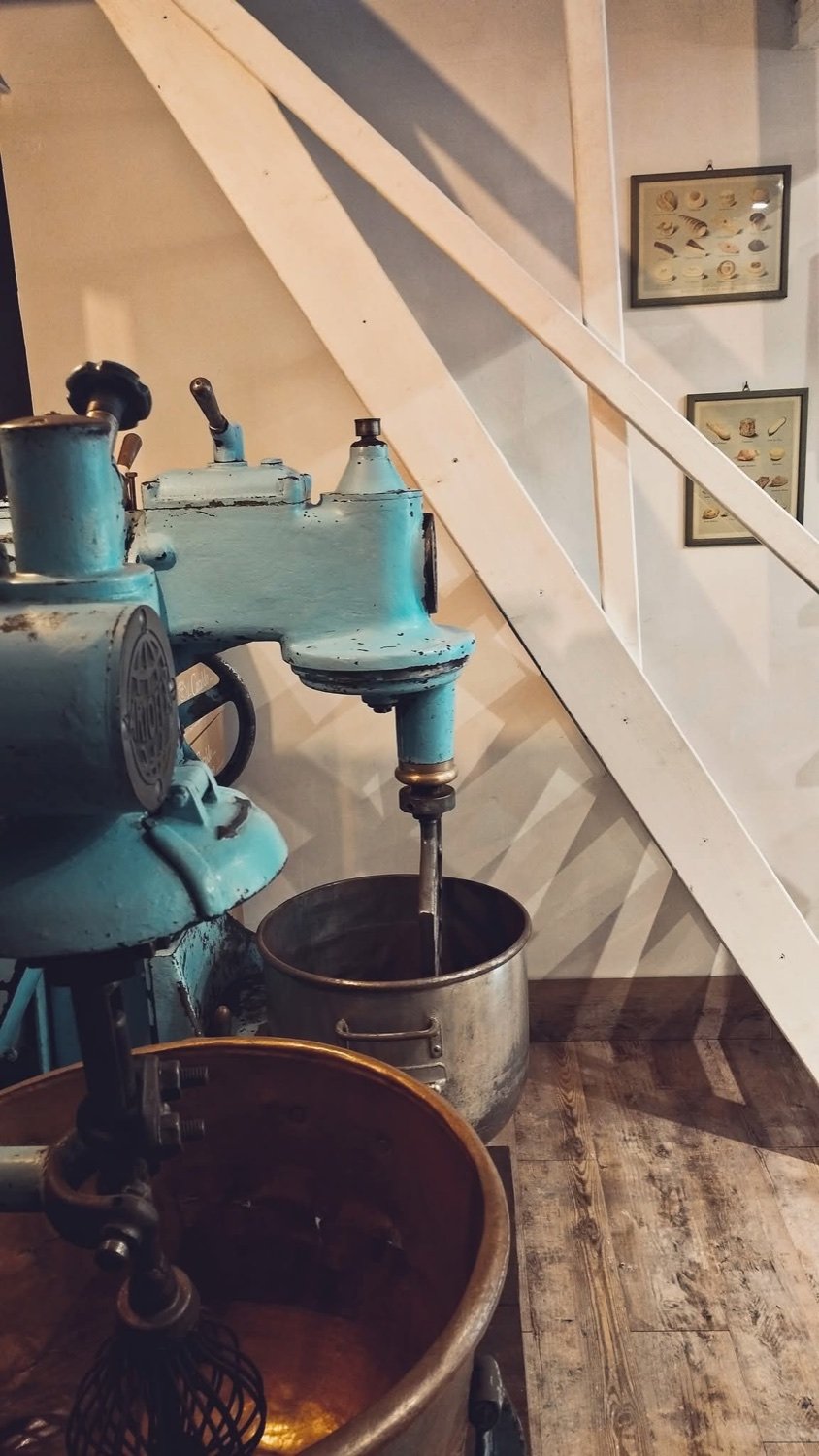
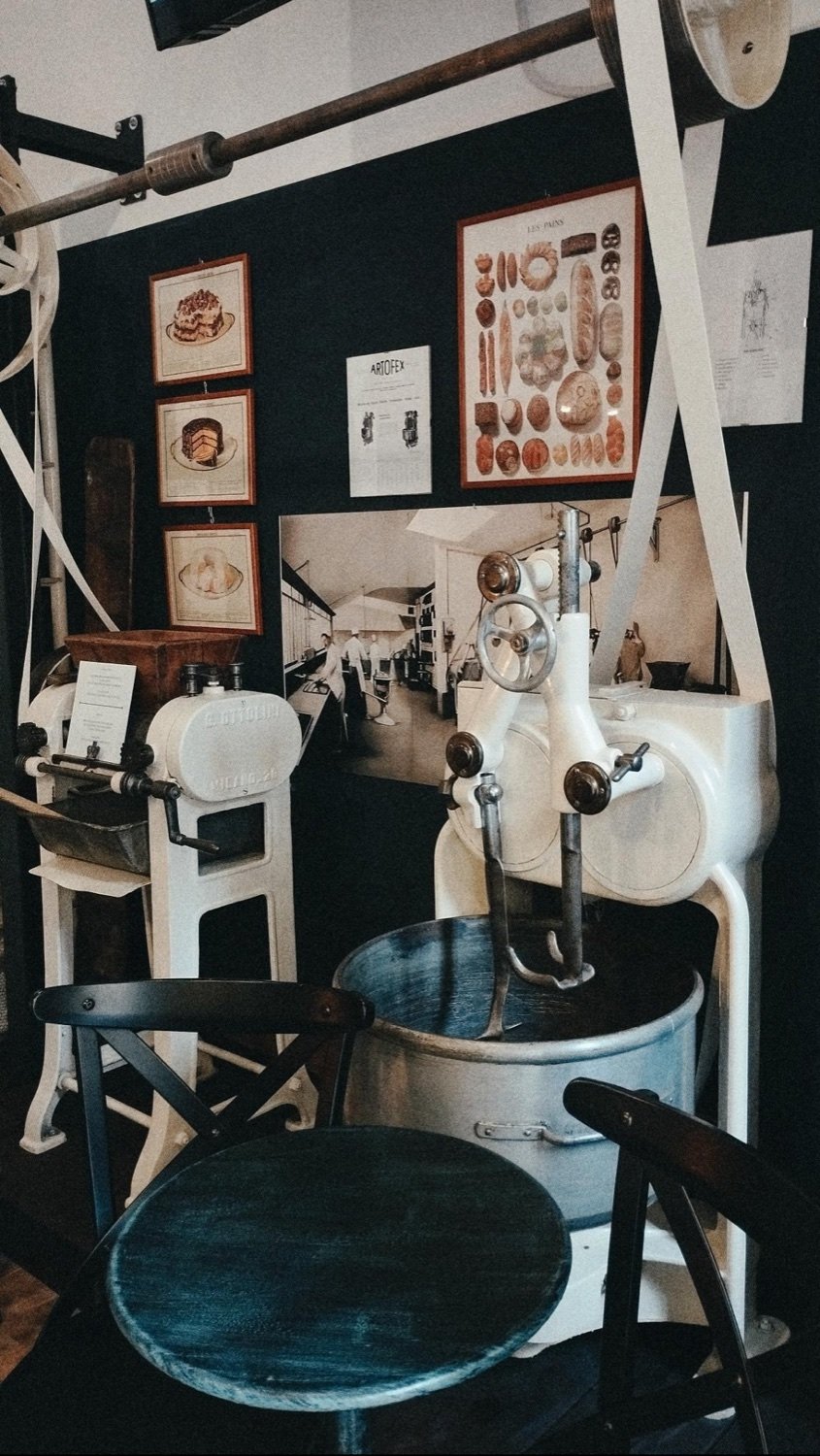
The centrepiece is a complete mechanical transmission system dating from the middle of the nineteenth century, reconstructed here. It is the clearest object in the room, because it carries its own history of energy: water first, then steam, and finally an electric motor. One power source, distributed by shafts and belts to several machines at once — the arrangement that defined the workshop before every machine had a motor of its own.
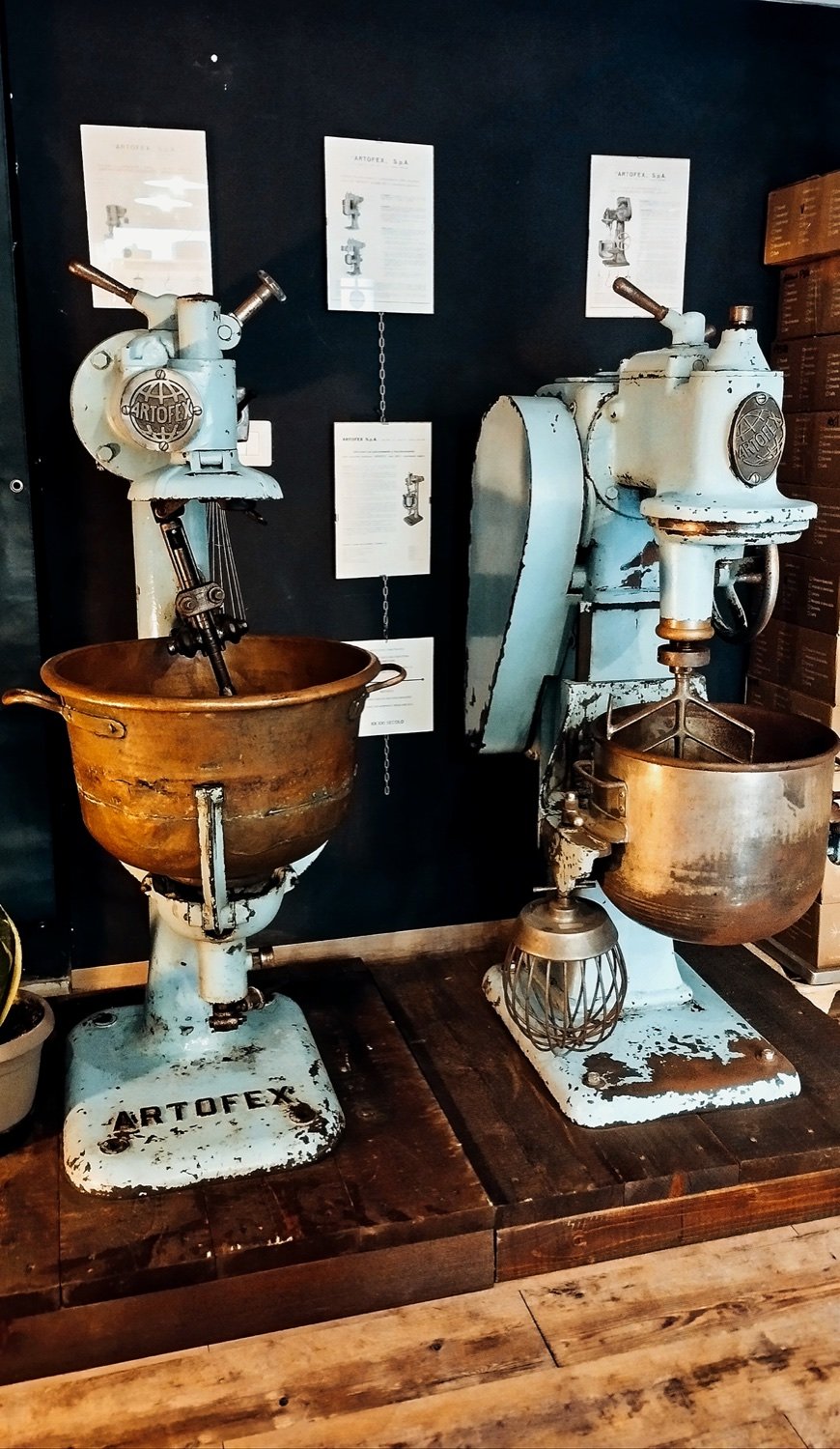
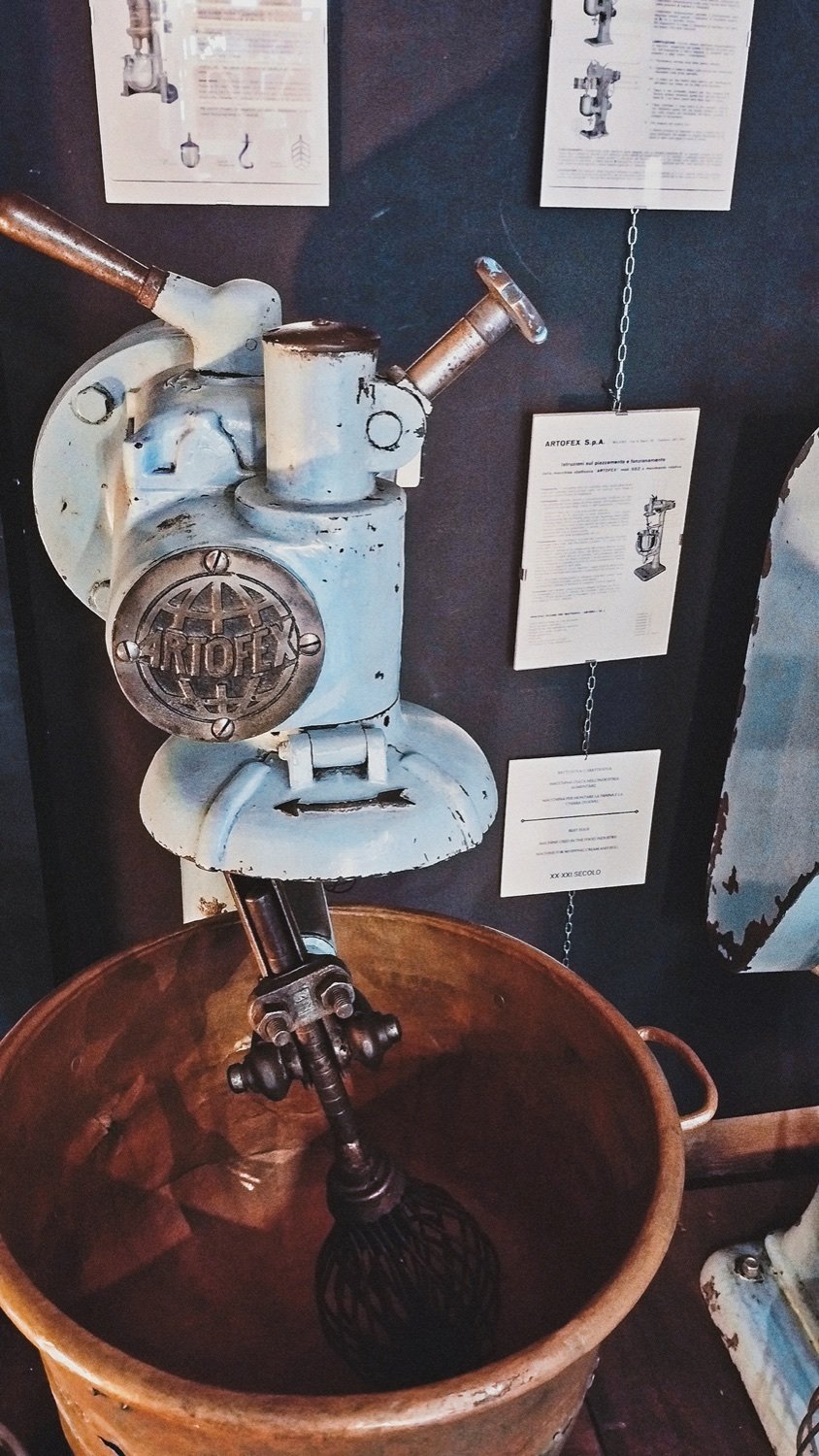
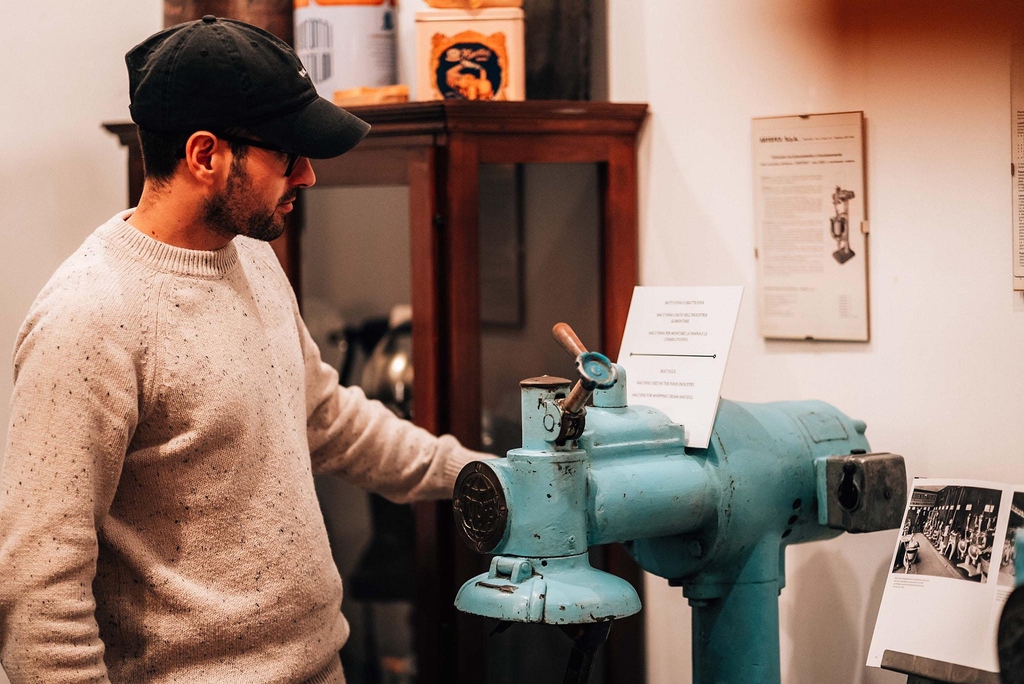
Connected to it is a refining machine from the beginning of the twentieth century. Alongside stands an arm mixer of the same period, the machine that ended hand-kneading; the same mechanical principle later moved into chemical, pharmaceutical, paint and perfume production, which is how a bakery mixer ends up being a piece of general industrial history. From the early 1940s come two independently motorised electric mixers, an egg-beater and a planetary mixer — the last of these significant because its motion allows different tools to be swapped for different processes, a principle still used in industrial processing today.
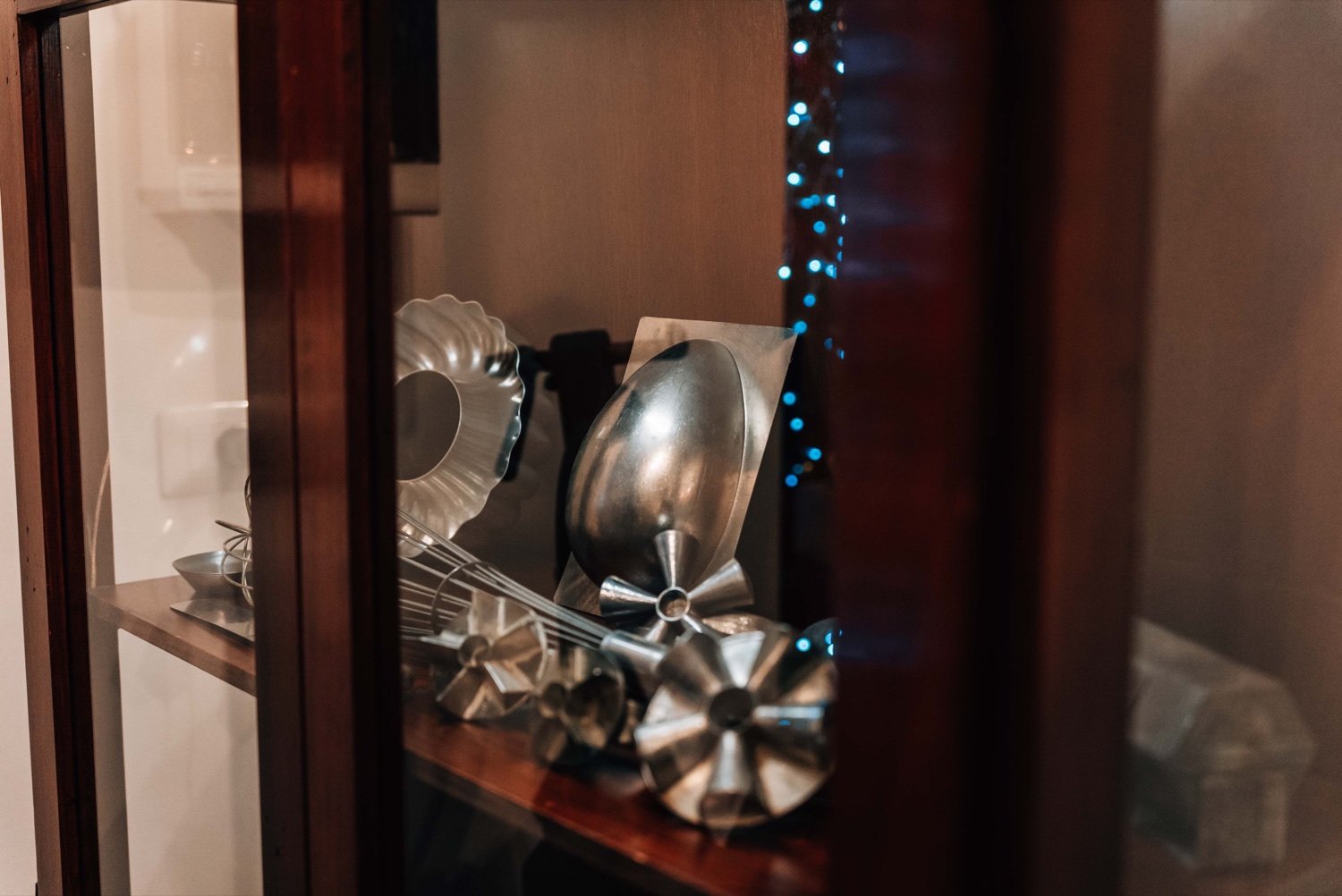
Around the machines: early twentieth-century moulds, tinplate tools and hand equipment, the artisanal knowledge that went on working alongside the mechanised kind. And a restored Faema E61 from the 1960s, which belongs to a later technology and to the coffee side of the project.
The collection, photographed by Artefact
These photographs were taken and supplied by Omar Cirulli of Artefact Frascati, and are published with his permission.
Cultural significance
Industrial heritage is usually preserved at the scale of the factory, and small machinery tends to vanish — scrapped when a bakery closes, or sold as ornament. Artefact keeps a coherent set of it together, with the transmission system that makes the other objects legible. The argument the collection makes is that these machines changed how millions of people worked while still depending on craft knowledge, and that they can be read as evidence of a social change rather than as antiques.
Practical information
- Opening hours
- Monday 09:30–16:30 · Tuesday 09:30–18:30 · Wednesday 09:30–18:30 · Thursday 09:30–16:30 · Friday 09:30–18:30 · Saturday 09:30–18:30 · Sunday closed
- Admission
- The collection is in the coffee bar’s own space and can be seen during opening hours
- Note
- The space is small. Part of the collection is not on display
Getting there
Frascati is about twenty kilometres south-east of Rome. Trains run from Roma Termini to Frascati station in roughly half an hour, and the historic centre is a short walk uphill from there. By car, the via Tuscolana or the Roma–Fiuggi road.
Sources
- Artefact Frascati — documentation of the collection provided by the founder, Omar Cirulli, August 2026
- Artefact Frascati — official page
Find it on the map
See this place and what’s around it →📷 Become a Cultural Heritage Online photographer
Share your photos of places: they stay published under your name as the author. The more they're seen, the more you get noticed — and soon a contest will reward the most appreciated photos.
Log in or sign up free to add a photoIs this page about you?
This page is read by travellers and heritage enthusiasts who find it on Google. Tell us how you are connected to this place and we will take it from there.