
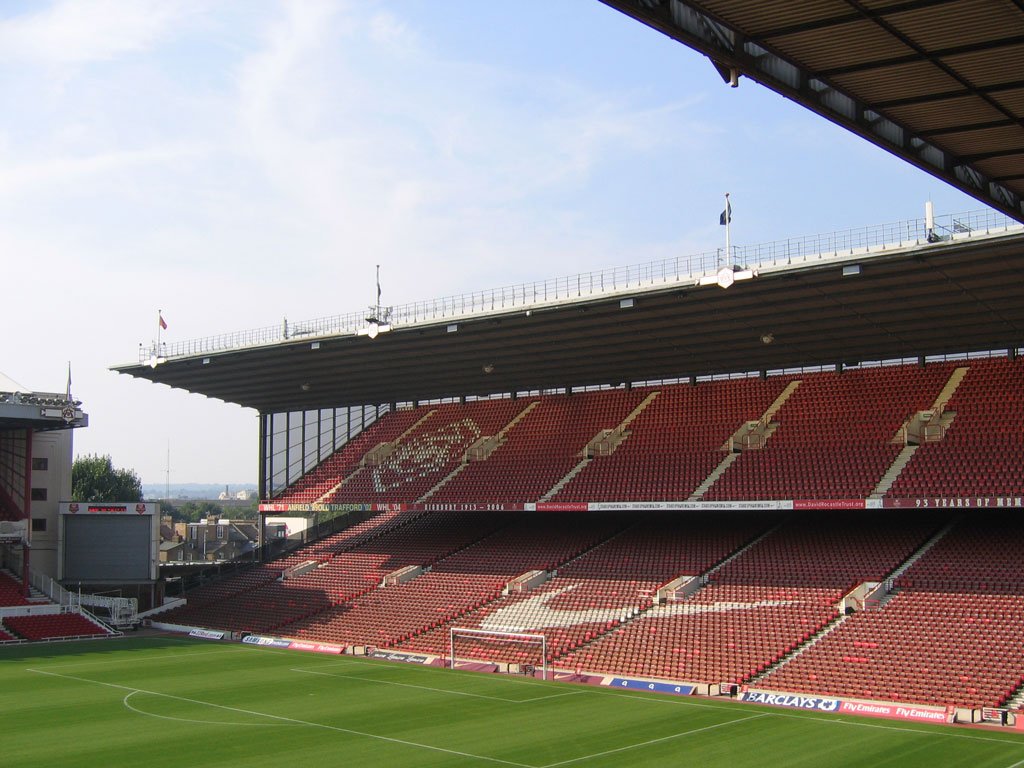
A legendary football ground in Highbury that defined Arsenal Football Club for nearly a century, blending Art Deco architecture with sporting history before giving way to residential development.
At a glance
Arsenal Stadium, popularly known as Highbury, served as the home of Arsenal Football Club from 1913 to 2006. Built on a college recreation ground, it evolved through two major reconstructions and hosted not only football but also international matches, Olympic events, and other sports. The stadium was demolished after the club’s relocation, though parts of its Art Deco stands survive as listed structures within a residential redevelopment.
History
The stadium opened on 6 September 1913, originally constructed on the site of a local college’s recreation ground. Its first major reconstruction occurred in the 1930s, introducing the distinctive Art Deco East and West Stands that would define its character for decades.
A second development phase began in 1989 with the addition of executive boxes at the Clock End, followed in 1993 by a new North Bank Stand. These changes converted the ground into an all-seater stadium with four stands, responding to post-Taylor Report safety requirements. Community opposition to further expansion limited the stadium’s capacity, ultimately prompting Arsenal to build the Emirates Stadium. The club played its final match at Highbury on 7 May 2006, concluding 93 seasons at the ground.
What you see
The 1930s Art Deco East and West Stands represented the stadium’s architectural pinnacle, their streamlined modernist design reflecting the era’s aesthetic ambitions. The Clock End and North Bank Stand, built later, completed the rectangular footprint characteristic of mid-to-late 20th-century British football grounds.
Two features became iconic: the immaculate pitch, famously small by modern standards, and the distinctive clock installed in 1930 on the southern side—a 76-year fixture that came to symbolize the ground itself. Following redevelopment as Highbury Square, sections of the East and West Stands were preserved due to their listed status.
Cultural significance
Highbury transcended its role as a football stadium, hosting England internationals, matches during the 1948 Summer Olympics, FA Cup semi-finals, and boxing, baseball and cricket events. Its cultural reach extended beyond the pitch: in 1932, the nearby London Underground station was renamed Arsenal—the only Underground station in the network named after a football club, a unique honour reflecting the ground’s prominence in London life.
Key facts
- Location: London Borough of Islington, London, United Kingdom
- Coordinates: 51.5578, -0.1028
- Opened: 6 September 1913
- Closed: 7 May 2006
- Art Deco stands: 1930s reconstruction
- Final redevelopment: North Bank Stand completed 1993
Practical information & getting there
The original stadium no longer exists as a sporting venue. The site has been redeveloped as Highbury Square, a residential complex. You can visit the location in the Highbury district of North London; the nearby Arsenal station on the London Underground provides easy access. Sections of the original Art Deco stands remain visible as part of the modern development.
Sources & resources
Find it on the map
See this place and what’s around it →📷 Become a Cultural Heritage Online photographer
Share your photos of places: they stay published under your name as the author. The more they're seen, the more you get noticed — and soon a contest will reward the most appreciated photos.
Log in or sign up free to add a photoIs this page about you?
This page is read by travellers and heritage enthusiasts who find it on Google. Tell us how you are connected to this place and we will take it from there.