
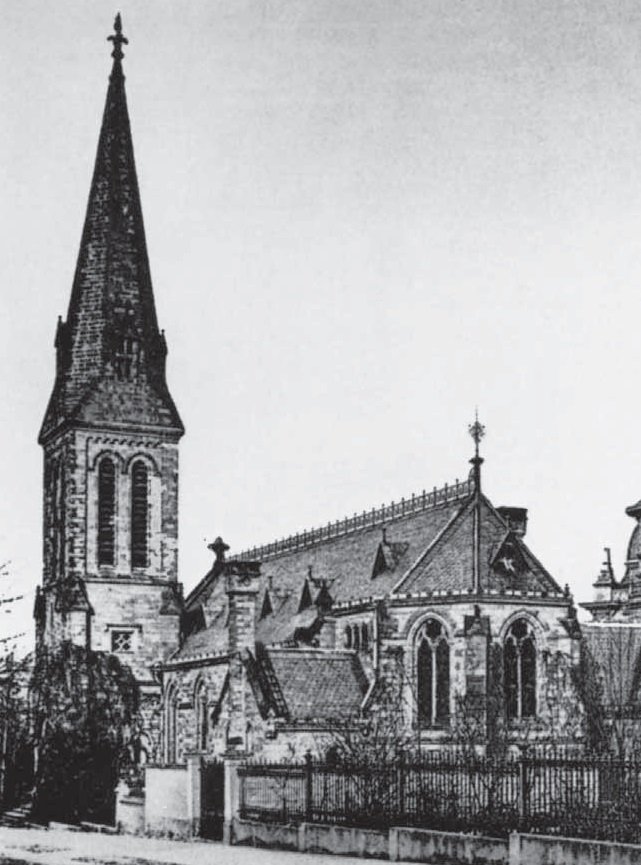
Built for Dresden’s expatriate American community in the 1880s, this church stood as a symbol of Protestant identity abroad until wartime destruction and postwar demolition erased it from the cityscape.
At a glance
The American Church of St. John was a Protestant place of worship constructed between 1883 and 1884 in Dresden, Germany. It served the English-speaking American expatriate population resident in the city. The building was destroyed during the Second World War and subsequently demolished.
History
Completed in 1884, the American Church of St. John met the spiritual and social needs of American citizens living in Dresden during the late nineteenth century. The church functioned as a cultural anchor for the expatriate community throughout the decades that followed.
In 1945, the building was damaged by bombing during the Allied assault on Dresden. Rather than restored, it was demolished in 1959.
What you see
No structures remain. The site and architectural details are known only through historical records and archival photography from before its destruction.
Cultural significance
The American Church of St. John represented a transatlantic presence in Dresden—a physical manifestation of American Protestant life in continental Europe during an era of expanding international commerce and diplomacy. Its loss reflects the profound destruction visited upon Dresden in the final months of the Second World War.
Key facts
- Country: Germany
- City: Dresden
- Coordinates: 51.03°N, 13.73°E
- Built: 1883–1884
- Status: Demolished (1959)
Practical information & getting there
The site no longer stands. The coordinates mark its former location in Dresden. Researchers interested in the building’s history are advised to consult archival collections and period photographs held by German cultural institutions and American historical societies.
Sources & resources
Find it on the map
See this place and what’s around it →📷 Become a Cultural Heritage Online photographer
Share your photos of places: they stay published under your name as the author. The more they're seen, the more you get noticed — and soon a contest will reward the most appreciated photos.
Log in or sign up free to add a photoIs this page about you?
This page is read by travellers and heritage enthusiasts who find it on Google. Tell us how you are connected to this place and we will take it from there.