
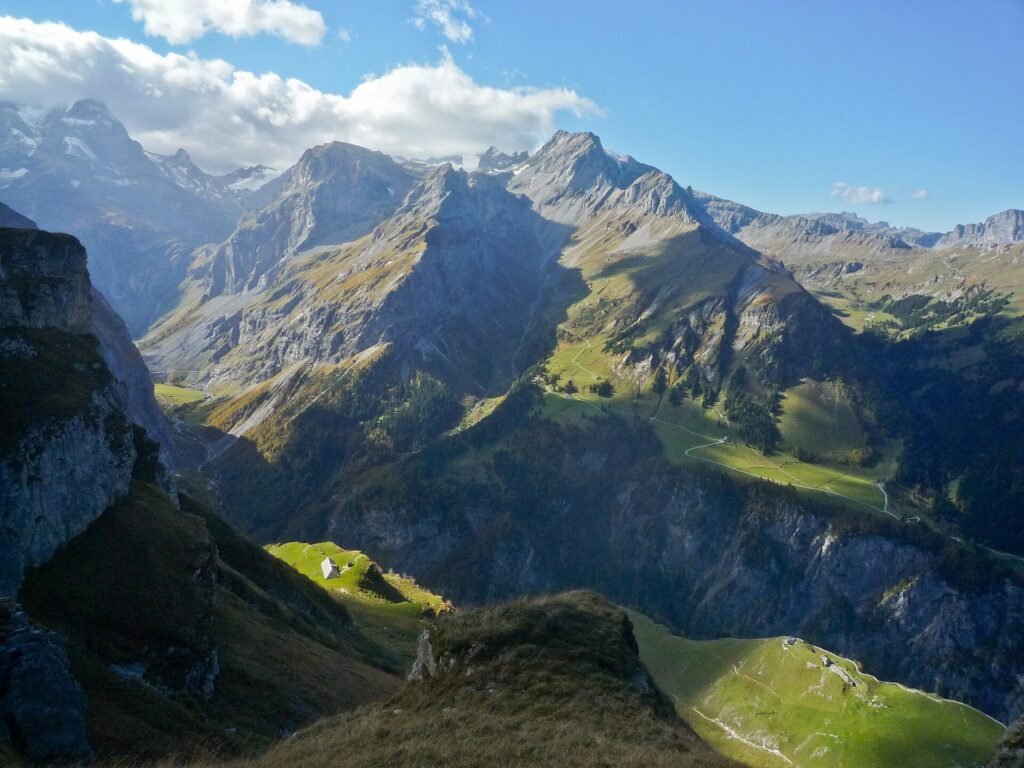
Each summer, farmers and herdsmen drive cattle from Alpine valleys to high mountain pastures, following a seasonal rhythm that has sculpted the landscape for centuries. This ancient migration—known as transhumance—remains a living practice across six European nations.
At a glance
Alpine pasture season is the seasonal droving of grazing livestock between lowland valleys in winter and high mountain pastures in summer. The practice shapes both the ecology and culture of the Alps, preventing forest encroachment and sustaining rural communities. Today it persists in Bavaria, Austria, Slovenia, Italy, France, and Switzerland, though it has retreated from the most intensively developed tourist zones.
Origins & history
Transhumance in the Alps represents a centuries-old adaptation to Alpine geography and climate. The practice has fundamentally shaped the landscape: without seasonal migration to high pastures, most areas below 2,000 metres would be forested rather than open meadow. This symbiotic relationship between herders, animals, and land has endured as a defining feature of Alpine life.
The practice
In spring and early summer, cattle herds are driven upward from valley settlements to alpine meadows, where they graze on fresh vegetation at elevations between 2,000 and 2,400 metres—with no pastures exceeding 2,800 metres. The herds remain there through the summer months before returning to lower valleys as autumn approaches and snow threatens the heights.
The work falls to two distinct groups. In some communities, local farming families undertake the seasonal migration themselves, moving upland with their animals. Elsewhere, professional herdsmen employed by cooperative pasture associations manage the herds. Both arrangements require intimate knowledge of weather patterns, grazing cycles, and animal welfare.
Cultural significance
Alpine pasture season embodies a sustainable relationship between people and mountain ecology. The practice maintains open grasslands, prevents forest succession, and supports biodiversity adapted to meadow environments. Beyond ecology, it sustains rural livelihoods, cultural identity, and intergenerational knowledge transmission in Alpine communities.
Key facts
- Practiced across six countries: Switzerland, Austria, Bavaria (Germany), Slovenia, Italy, and France
- Anchor community: Appenzell District, Switzerland (47.33204, 9.41885)
- Most pastures lie between 2,000 and 2,400 metres elevation
- UNESCO Intangible Cultural Heritage inscription: 2019
- UNESCO reference number: 01966
Where to experience it
Appenzell District and the broader Alpine regions of Switzerland remain heartlands of this practice. The seasonal movement typically occurs in spring (May–June) and autumn (September–October), when herds transition between valleys and mountain pastures. Summer months offer the best opportunity to observe cattle grazing in high Alpine meadows.
Sources & resources
- Alpine transhumance – Wikipedia
- Alpine pasture season – UNESCO Intangible Cultural Heritage
- Cultural Heritage Online
Find it on the map
See this place and what’s around it →📷 Become a Cultural Heritage Online photographer
Share your photos of places: they stay published under your name as the author. The more they're seen, the more you get noticed — and soon a contest will reward the most appreciated photos.
Log in or sign up free to add a photo