
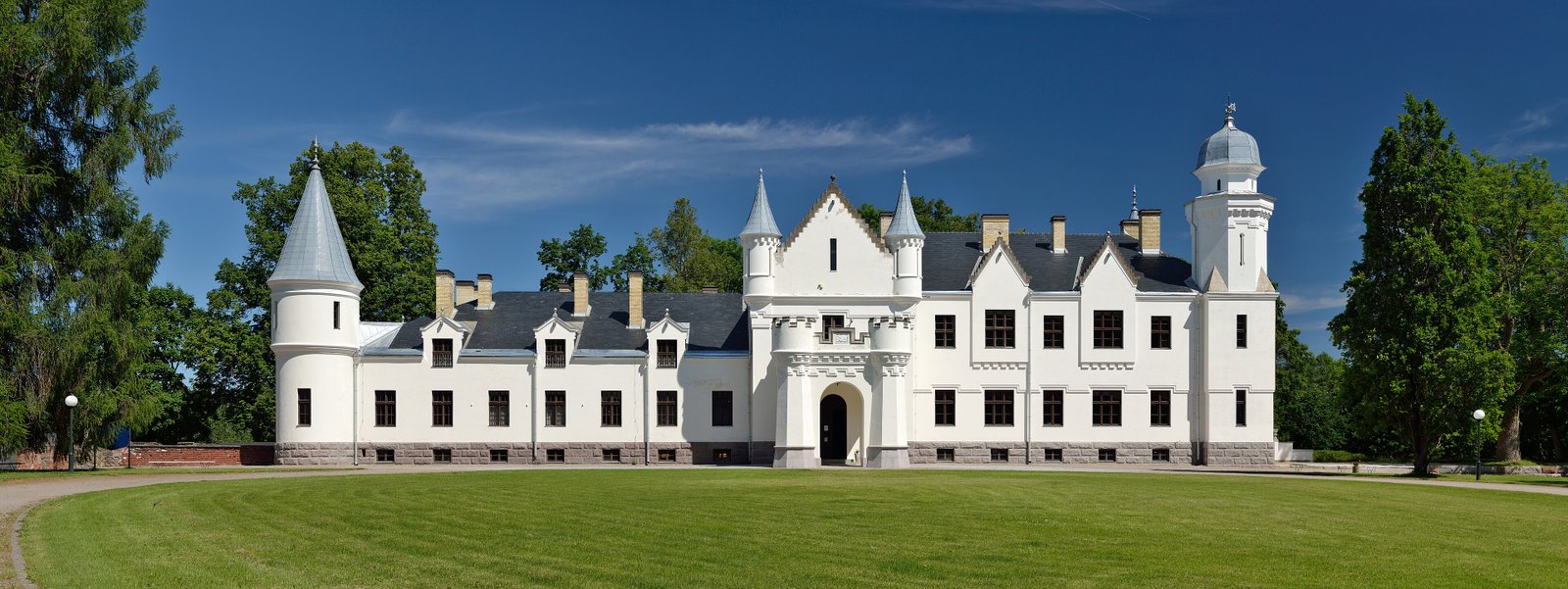
A neo-Gothic castle reinvented in the late 19th century, Alatskivi combines Estonian heritage with Scottish Romantic design. Today it houses a museum dedicated to composer Eduard Tubin.
At a glance
Alatskivi Castle stands as a striking example of 19th-century baronial ambition in rural Tartu County. Set within Estonia’s largest parkland, it bridges two centuries of architectural vision and cultural stewardship.
History
The castle dates to the 17th century, but its present form owes everything to Baron Arved von Nolcken’s late 19th-century reconstruction. Von Nolcken modeled his redesign on Balmoral, the Scottish royal residence, transplanting Romantic castle aesthetics to the Estonian countryside. A comprehensive renovation between 2005 and 2011 restored the building for contemporary use.
What you see
The neo-Gothic design dominates—towers, crenellations, and period detail characteristic of 19th-century castle revival. Five rooms on the first floor have been adapted as museum galleries. The castle’s setting amplifies its impact: a 130-hectare forested park, the largest in Tartu County, surrounds the building with mature oaks, ashes, maples, and alders. An avenue of linden trees marks the approach.
Cultural significance
Alatskivi represents the intersection of European aristocratic taste and local Estonian identity. The Eduard Tubin museum honors one of Estonia’s most significant 20th-century composers and conductors, anchoring the castle as a living cultural venue rather than a static monument.
Key facts
- Country: Estonia
- Located in: Peipsiääre Parish, Tartu County
- Coordinates: 58.6039, 27.1297
- Park area: 130 hectares (320 acres)
- Reconstructed by: Baron Arved von Nolcken, late 19th century
- Modeled on: Balmoral, Scotland
- Recent renovation: 2005–2011
Practical information & getting there
The castle is located in Peipsiääre Parish, Tartu County, in southeastern Estonia. For current opening hours, admission prices, and directions, consult the official castle website or contact the local tourism office in Tartu.
Sources & resources
Find it on the map
See this place and what’s around it →📷 Become a Cultural Heritage Online photographer
Share your photos of places: they stay published under your name as the author. The more they're seen, the more you get noticed — and soon a contest will reward the most appreciated photos.
Log in or sign up free to add a photoIs this page about you?
This page is read by travellers and heritage enthusiasts who find it on Google. Tell us how you are connected to this place and we will take it from there.