

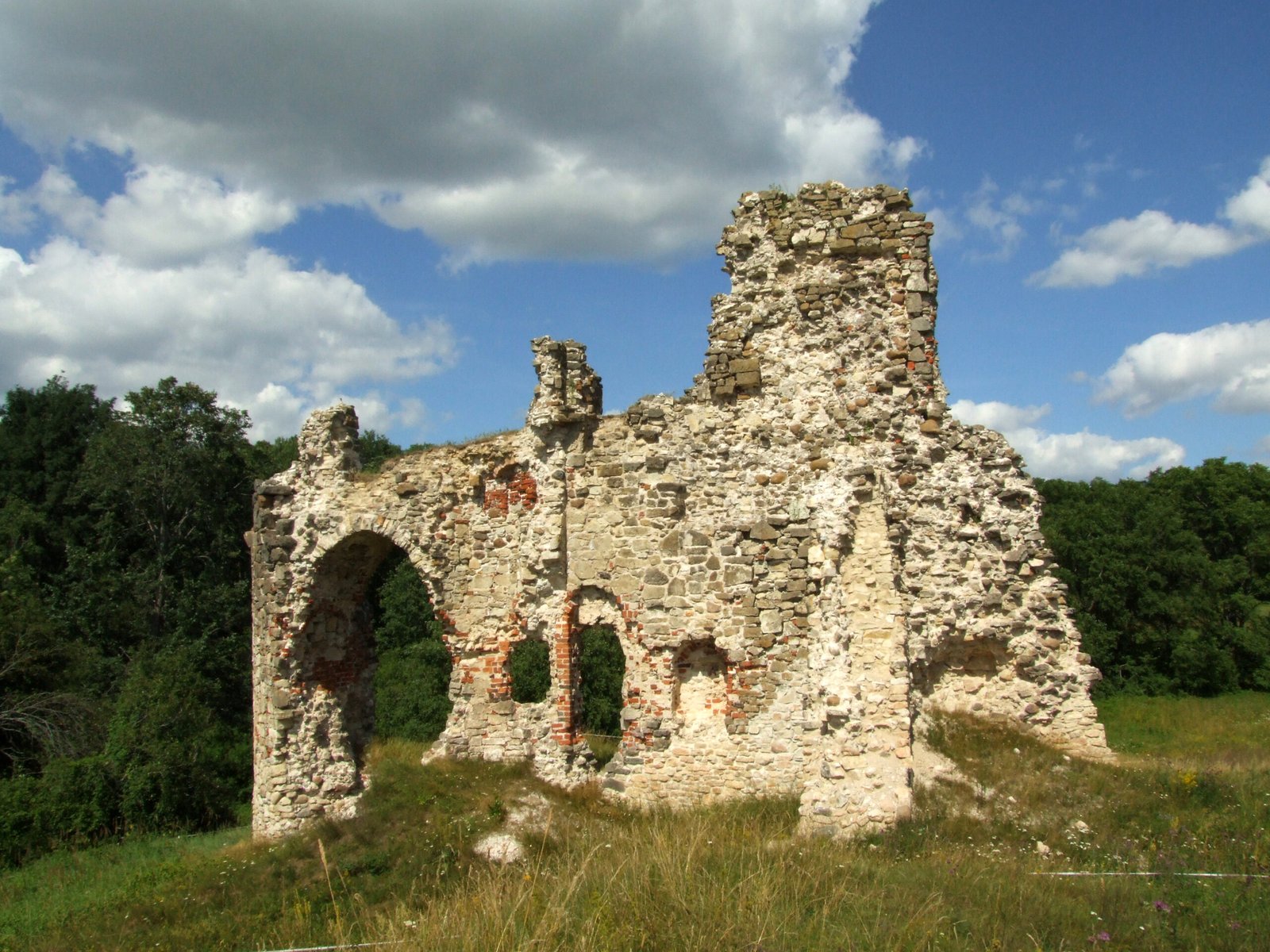
A ruined medieval fortress on the Daugava river, built by the Livonian Order and once seat of a regional military commander.
At a glance
Aizkraukle Castle stands on the right bank of Latvia’s principal river in the Vidzeme region, west of the modern town of Aizkraukle. The remains of this stone stronghold testify to the military architecture of the Livonian Order during the late medieval period.
History
The Livonian Order constructed the castle during the second half of the 14th century as part of their network of fortifications across the Baltic territories. From 1334 to 1480, it served as the residence of a Komtur—the German military commander responsible for administering the castle and its surrounding lands. This long tenure reflects the strategic importance of the site to the Order’s control of regional commerce and defense.
What you see
Today the castle exists in ruined form, its stone walls and foundations marking its medieval footprint on the riverbank. The Daugava’s proximity shaped both the castle’s defensive capabilities and its access to vital trade routes.
Cultural significance
Aizkraukle Castle represents the material legacy of the Livonian Order’s expansion and rule in medieval Latvia. It stands among the chain of fortifications that defined the political geography of the eastern Baltic during the 14th and 15th centuries.
Key facts
- Country: Latvia
- Location: Vidzeme region, right bank of the Daugava river
- Built: Second half of the 14th century
- Builder: Livonian Order
- Function: Seat of a Komtur, 1334–1480
- Coordinates: 56.6144°N, 25.1533°E
Practical information & getting there
The castle ruins are accessible from the town of Aizkraukle, located in central Latvia along the Daugava valley. For current visiting hours and site conditions, consult local tourism information.
Sources & resources
Find it on the map
See this place and what’s around it →📷 Become a Cultural Heritage Online photographer
Share your photos of places: they stay published under your name as the author. The more they're seen, the more you get noticed — and soon a contest will reward the most appreciated photos.
Log in or sign up free to add a photoIs this page about you?
This page is read by travellers and heritage enthusiasts who find it on Google. Tell us how you are connected to this place and we will take it from there.