
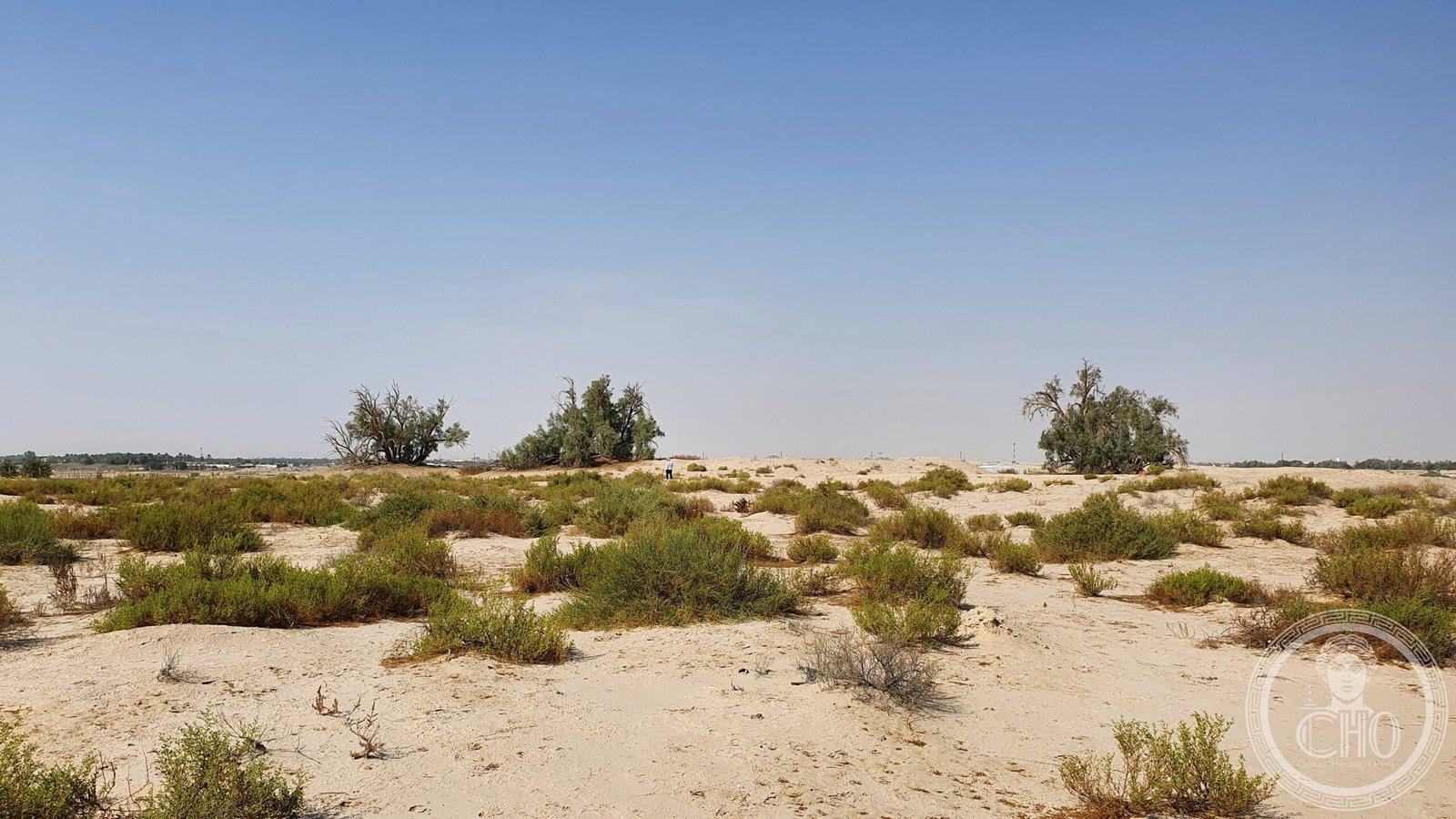
An archaeological site near Al-Murah village preserving evidence of early Arabian Neolithic settlement and cultural exchange during the Ubaid period.
At a glance
Ain Qannas is an open-air archaeological site in the Al-Hasa region of Eastern Saudi Arabia. Dating to between the late 6th and early 5th millennium BCE, it documents a crucial phase in Arabian prehistory when the peninsula participated in wider Neolithic networks extending into Mesopotamia.
History
The site is related to the Ubaid period, which represents the Arabian Neolithic era. This archaeological horizon marks a time of increasing cultural contact and technological exchange across the Arabian Peninsula and the Persian Gulf region, when communities adopted new subsistence strategies and material practices.
What you see
The site comprises surface scatters and subsurface deposits characteristic of Neolithic occupation. Visitors will encounter artifacts and settlement remains that reflect daily life and economic practices of the period, though specific architectural features have not been detailed in current archaeological literature.
Cultural significance
Ain Qannas contributes essential evidence to understanding pre-Islamic Arabian societies and their integration into broader Neolithic cultural spheres. The site illuminates the human geography of the Arabian Peninsula during a transformative period when pastoral and agricultural practices were reshaping settlement patterns.
Key facts
- Location: Near Al-Murah village, Al-Hasa, Eastern Saudi Arabia
- Coordinates: 25.5923°N, 49.6°E
- Period: Late 6th–early 5th millennium BCE
- Cultural affiliation: Ubaid period (Arabian Neolithic)
Practical information & getting there
The site is located in Al-Hasa, a major oasis region in Eastern Saudi Arabia. Access details and visitor facilities are not well documented; you should contact local heritage authorities or arrange visits through regional archaeological organizations familiar with Neolithic sites in the area.
Sources & resources
Find it on the map
See this place and what’s around it →📷 Become a Cultural Heritage Online photographer
Share your photos of places: they stay published under your name as the author. The more they're seen, the more you get noticed — and soon a contest will reward the most appreciated photos.
Log in or sign up free to add a photoIs this page about you?
This page is read by travellers and heritage enthusiasts who find it on Google. Tell us how you are connected to this place and we will take it from there.