
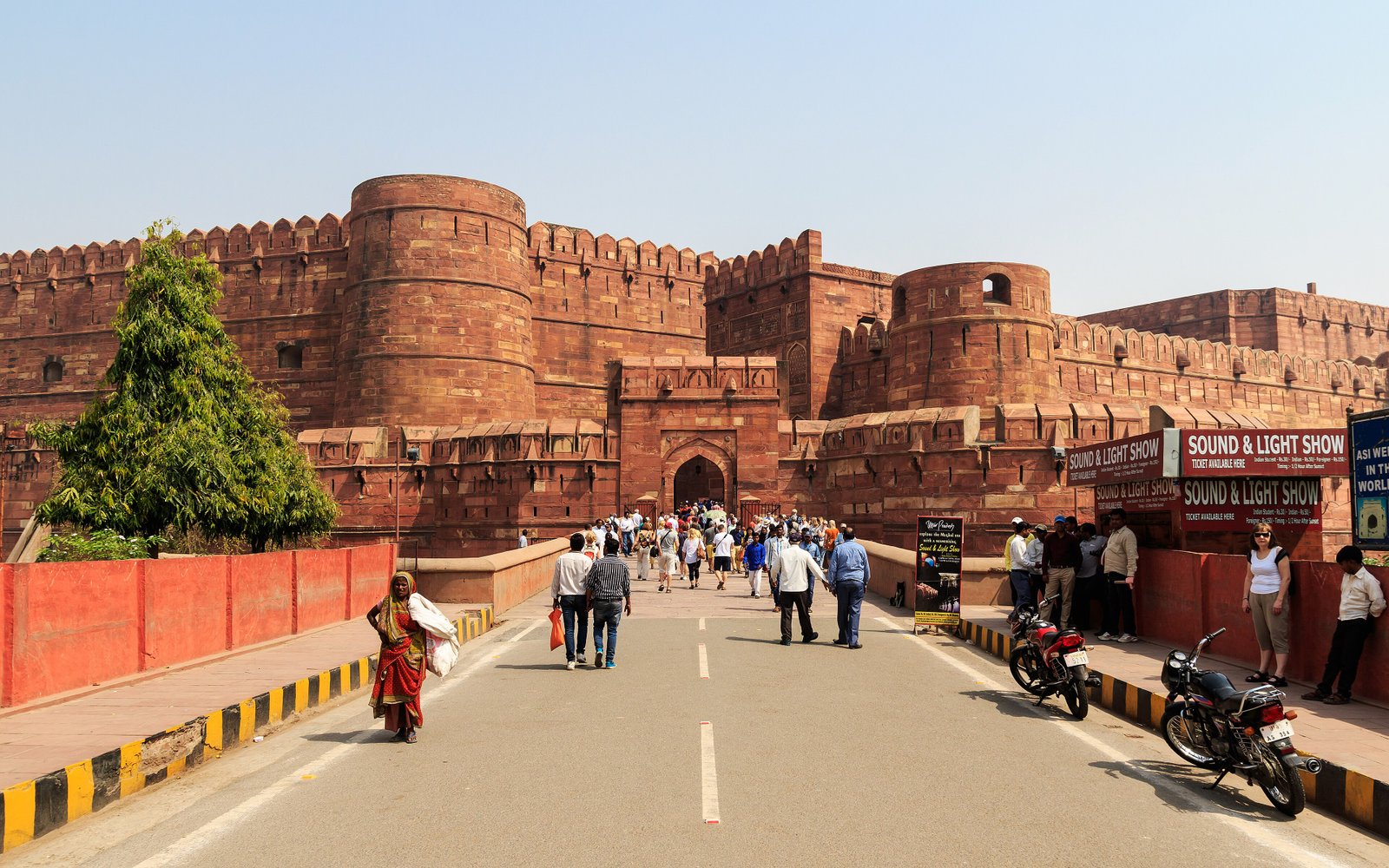
A monumental Mughal fortress that served as the imperial residence and seat of power for the dynasty’s greatest rulers, Agra Fort remains one of India’s most significant architectural achievements.
At a glance
Agra Fort, also called the Red Fort or Lal-Qila, is a walled city rather than a traditional fort. Built and rebuilt by successive Mughal emperors, it dominated the skyline of Agra for over a century as the dynasty’s primary seat. Located 2.5 kilometers northwest of the Taj Mahal, the fort commands a strategic position on the Yamuna River.
History
The fort’s pre-15th-century history remains obscure. By the 1400s, Chauhan Rajputs controlled the site. When Sikandar Khan Lodi (1487–1517) relocated his capital from Delhi to Agra, he fortified and expanded the existing structure. After the first Battle of Panipat in 1526, the Mughals seized control.
Humayun was crowned here in 1530, establishing the fort as a seat of imperial authority. Akbar transformed it entirely between 1565 and 1573, creating the monument we recognize today. Shah Jahan later undertook additional renovations. The fort remained the Mughal rulers’ principal residence until 1638, when the capital shifted to Delhi. The Marathas subsequently held it before British occupation. The Jats of Bharatpur ruled the fort for 13 years during a period of transition.
What you see
The fort’s present appearance reflects Akbar’s vision and later modifications by Shah Jahan. Its distinctive red sandstone walls enclose a complex walled city containing palaces, courtyards, mosques, and administrative buildings—a miniature version of imperial Mughal urban planning.
Cultural significance
Agra Fort stands as a testament to Mughal architectural ambition and imperial power at its zenith. It witnessed the reigns of India’s greatest emperors and served as the administrative heart of a vast empire. UNESCO recognized its outstanding universal value in 1983.
Key facts
- Country: India
- City: Agra
- Coordinates: 27.179542, 78.021101
- UNESCO World Heritage Site: Yes (inscribed 1983)
- Construction period: 15th–17th century
- Primary builders: Sikandar Khan Lodi, Akbar, Shah Jahan
Practical information & getting there
The fort stands in central Agra, easily accessible from the city center and a short distance from the Taj Mahal. Detailed opening hours and admission fees are available from local tourism offices.
Sources & resources
Find it on the map
See this place and what’s around it →📷 Become a Cultural Heritage Online photographer
Share your photos of places: they stay published under your name as the author. The more they're seen, the more you get noticed — and soon a contest will reward the most appreciated photos.
Log in or sign up free to add a photo