

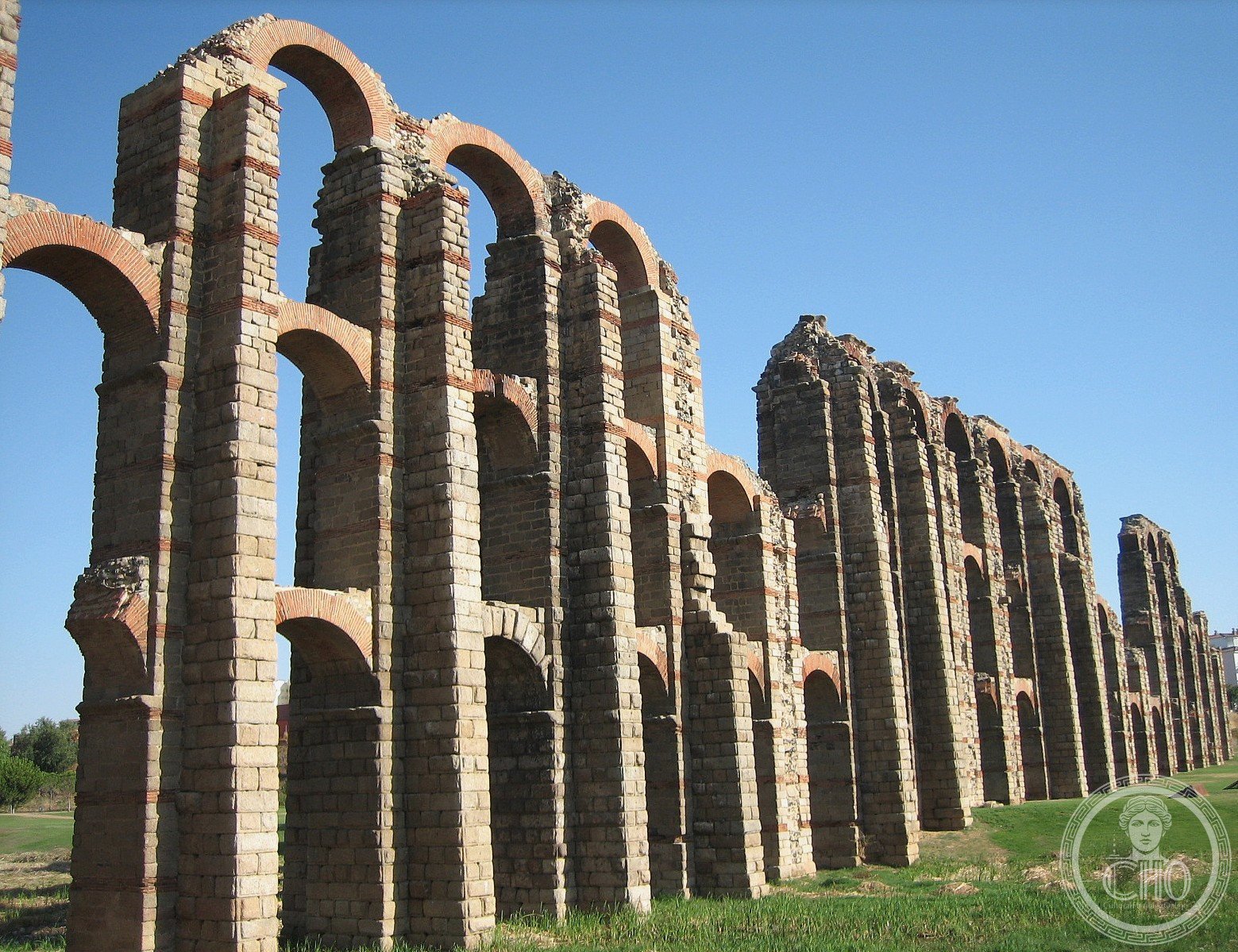
A Roman engineering marvel in the heart of Lusitania, this first-century aqueduct channelled water across the landscape into the provincial capital of Emerita Augusta. Its surviving arches stand as silent testimony to the hydraulic sophistication of the early imperial age.
At a glance
The Aqueduct of the Miracles (Acueducto de los Milagros) is a Roman aqueduct built in the first century AD to supply water from the Proserpina Dam into Mérida, ancient Emerita Augusta. Today, sections of its distinctive masonry bridge remain, though much of the structure has decayed since the fall of Rome. The aqueduct forms part of Mérida’s Archaeological Ensemble, designated a UNESCO World Heritage Site in 1993.
History
Constructed during the early Roman imperial period, the aqueduct was engineered to transport water from the Proserpina Dam across the landscape into Emerita Augusta, capital of the Roman province of Lusitania. The system exemplified Roman mastery of long-distance water conveyance. Following the collapse of imperial authority, the aqueduct gradually fell into disrepair, and today only fragments survive—most notably a section of the arched bridge that originally carried water across the city’s outskirts.
What you see
The standing remains consist primarily of a distinctive arched bridge section constructed in stone. Its surviving arches reveal the engineering principles employed to span difficult terrain while maintaining the gentle gradient necessary for water flow. The architecture reflects both functional necessity and the Roman capacity to harmonize practical infrastructure with monumental scale.
Cultural significance
The aqueduct represents Roman provincial infrastructure at its most ambitious. As part of Mérida’s extraordinary concentration of classical monuments, it documents the extent of Roman urban development in Hispania and the technological systems that sustained life in distant provinces. The site’s UNESCO designation recognizes Mérida as one of Spain’s most significant archaeological repositories.
Key facts
- Built: First century AD
- Location: Mérida, Spain (38.9244° N, 6.3467° W)
- Source: Proserpina Dam
- Function: Water supply to Emerita Augusta
- UNESCO World Heritage Site: 1993 (as part of Archaeological Ensemble of Mérida)
Practical information & getting there
The aqueduct ruins are accessible to visitors in Mérida. Contact local tourism offices or the Archaeological Ensemble of Mérida for current visiting hours and conditions. The site’s location within Spain’s largest classical archaeological zone makes it ideal to visit alongside other Roman monuments in the city.
Sources & resources
Find it on the map
See this place and what’s around it →📷 Become a Cultural Heritage Online photographer
Share your photos of places: they stay published under your name as the author. The more they're seen, the more you get noticed — and soon a contest will reward the most appreciated photos.
Log in or sign up free to add a photoIs this page about you?
This page is read by travellers and heritage enthusiasts who find it on Google. Tell us how you are connected to this place and we will take it from there.