
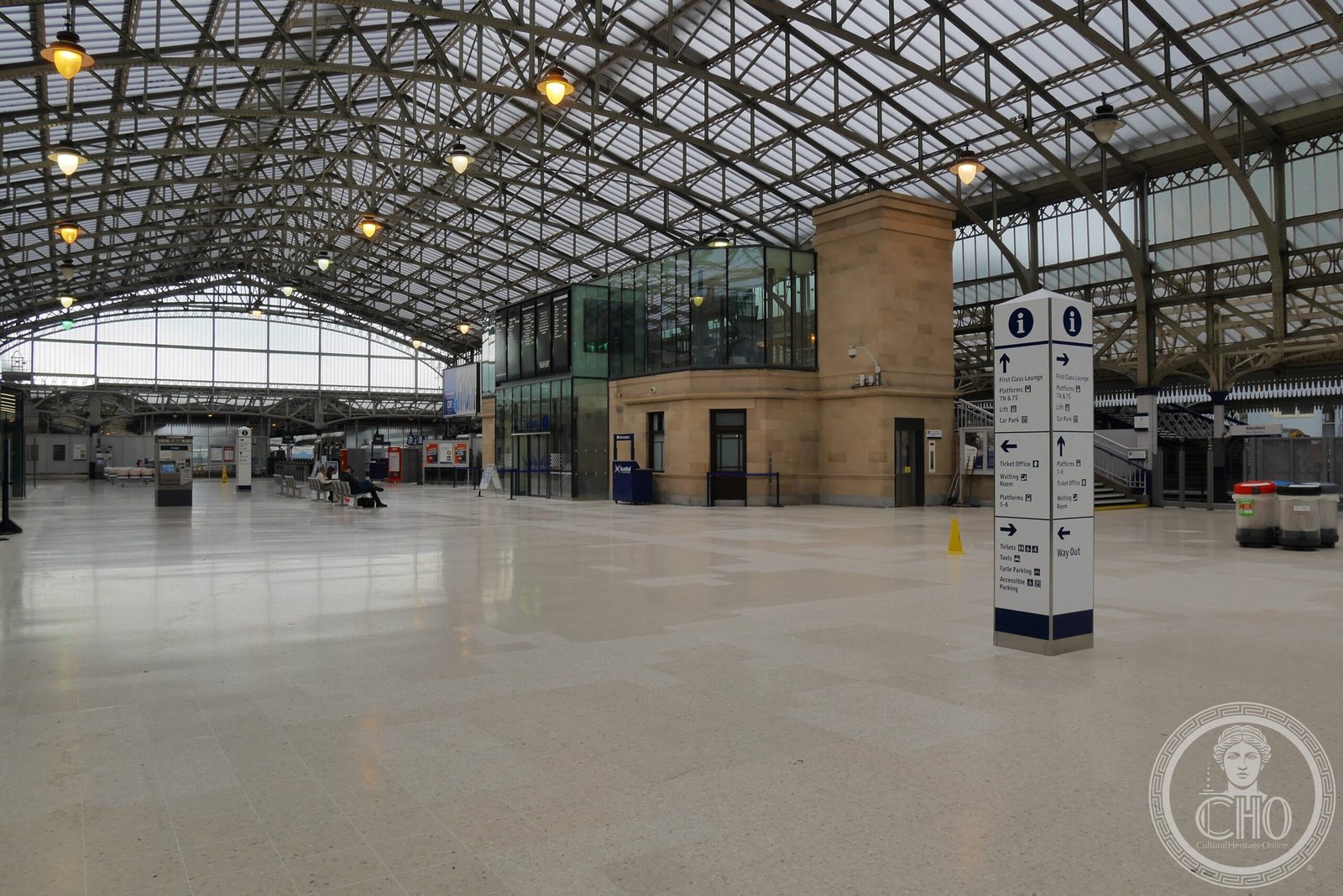
A Victorian-era transport hub and the busiest railway station in Scotland north of Edinburgh and Glasgow, serving as a vital junction for rail services across Great Britain.
At a glance
Aberdeen Railway Station stands on Guild Street in the city centre, adjacent to Union Square. It functions as both the northern terminus of the Dundee–Aberdeen line and the southern terminus of the Aberdeen–Inverness line, measured 241 miles 6 chains (388.0 km) from Carlisle via Perth.
History
The station evolved to become Scotland’s principal rail gateway north of the major urban centres. Its strategic position reflects Aberdeen’s historical importance as a regional hub connecting the northeast to major cities and the Highlands.
What you see
The station occupies a prominent position on Guild Street, integrated into the urban fabric adjacent to Union Square. Its architecture reflects the Victorian era of Scottish railway development.
Cultural significance
Aberdeen Railway Station represents a key piece of Scotland’s transport infrastructure, enabling connections between the northeast, central belt, and Highlands. It remains essential to regional economic and social connectivity.
Key facts
- Country: United Kingdom
- City: Aberdeen, Scotland
- Location: Guild Street, city centre
- Coordinates: 57.1436, -2.0985
- Managed by: ScotRail
- Services: Inter-city, regional, local and sleeper trains via ScotRail, Caledonian Sleeper, CrossCountry and London North Eastern Railway
- Distance from Carlisle via Perth: 241 miles 6 chains (388.0 km)
Practical information & getting there
The station is located on Guild Street in Aberdeen’s city centre, near Union Square. Multiple train operators provide services to destinations throughout Great Britain. Check with individual operators for current timetables and ticketing.
Sources & resources
- Aberdeen Railway Station – Wikipedia
- Cultural Heritage Online
Find it on the map
See this place and what’s around it →📷 Become a Cultural Heritage Online photographer
Share your photos of places: they stay published under your name as the author. The more they're seen, the more you get noticed — and soon a contest will reward the most appreciated photos.
Log in or sign up free to add a photoIs this page about you?
This page is read by travellers and heritage enthusiasts who find it on Google. Tell us how you are connected to this place and we will take it from there.