
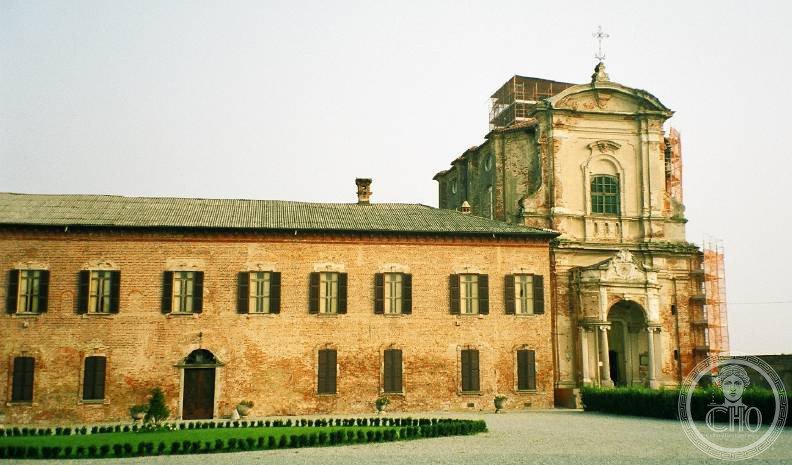
Founded in 1123 by monks who came from La Ferté — the first daughter of Cîteaux — Lucedio brought to Piedmont not only the Cistercian reform but also, by tradition, the techniques of growing rice on the Po plain. The Black Madonna kept in its church is among the most venerated in Piedmont.
At a glance
Lucedio Abbey stands in the rice-growing Po plain near Trino, in the province of Vercelli, Piedmont. It was founded in 1123 by Cistercian monks from La Ferté at the invitation of Raniero, Marquis of Montferrat — making it the first Cistercian house in Piedmont and one of the earliest in Italy. The abbey grew quickly, accumulating large landholdings in the surrounding plain and becoming a major centre for agricultural production, including (according to tradition) the introduction of systematic rice cultivation in the Po valley in the 14th or 15th century. After Napoleonic suppression in 1802, the complex became a private agricultural estate. Today it is privately owned by the Conti Rossi di Montelera family and is not regularly open to the public, though the church (which retains the famous Black Madonna) can be visited at certain times. The abbey is best known outside Italy for being the setting of Dario Argento's horror film Inferno (1980) and for its role in the folk tradition of the Madonna Nera (Black Madonna), whose image dates from the 14th century.
Key facts
- Founded: 1123 by monks from La Ferté, at the invitation of Raniero of Montferrat; first Cistercian house in Piedmont
- Black Madonna: 14th-century image of the Madonna Nera di Lucedio, one of the most venerated in Piedmont; kept in the abbey church; associated with the legend of miraculous apparitions during the construction of the abbey
- Rice: Lucedio is traditionally credited with introducing systematic rice cultivation to the Vercelli plain; the abbey's agricultural economy is documented from the 12th century; rice cultivation in the Po valley developed significantly in the 14th–16th centuries
- Architecture: Romanesque-Cistercian church (12th–13th c.) in brick; chapter house; cloister; refectory; the monastic buildings are among the best-preserved Cistercian complexes in northern Italy
- Suppressed: 1802 by Napoleon; became a private estate (Marchesi di Trino, later Conti Rossi di Montelera); still privately owned
- Film: setting of Dario Argento's Inferno (1980), which increased the abbey's popular fame in Italy
History
The foundation of Lucedio in 1123 by monks from La Ferté was part of the rapid Cistercian expansion in Italy in the decade after Bernard of Clairvaux became abbot: within a generation, the Cistercians had founded houses in Lombardy, Piedmont, Tuscany, and Umbria. Lucedio was established on a site donated by Raniero, Marquis of Montferrat, in the marshy plain of the Po — the kind of marginal land that the Cistercians preferred and were skilled at draining and improving. By the 13th century the abbey held extensive properties in the Vercellese and was one of the major landowners in the region. The famous Black Madonna, a devotional image of the 14th century, became a centre of pilgrimage and gave the abbey a popular religious importance beyond its role as a Cistercian monastic centre.
The agricultural legacy of Lucedio is closely tied to the history of rice in Piedmont. While the exact role of the Cistercians in introducing rice cultivation to the Po valley is debated by historians, the abbey's estates in the Vercellese were among the earliest documented rice-growing areas in northern Italy, and Cistercian hydraulic engineering (the system of canals and drainage ditches) was well suited to the management of rice paddies. After the Napoleonic suppression of 1802, the estate passed to the Marchesi di Trino and later to the Conti Rossi di Montelera, under whom it has operated as an agricultural estate producing rice, wine, and grappa to the present day.
What you see
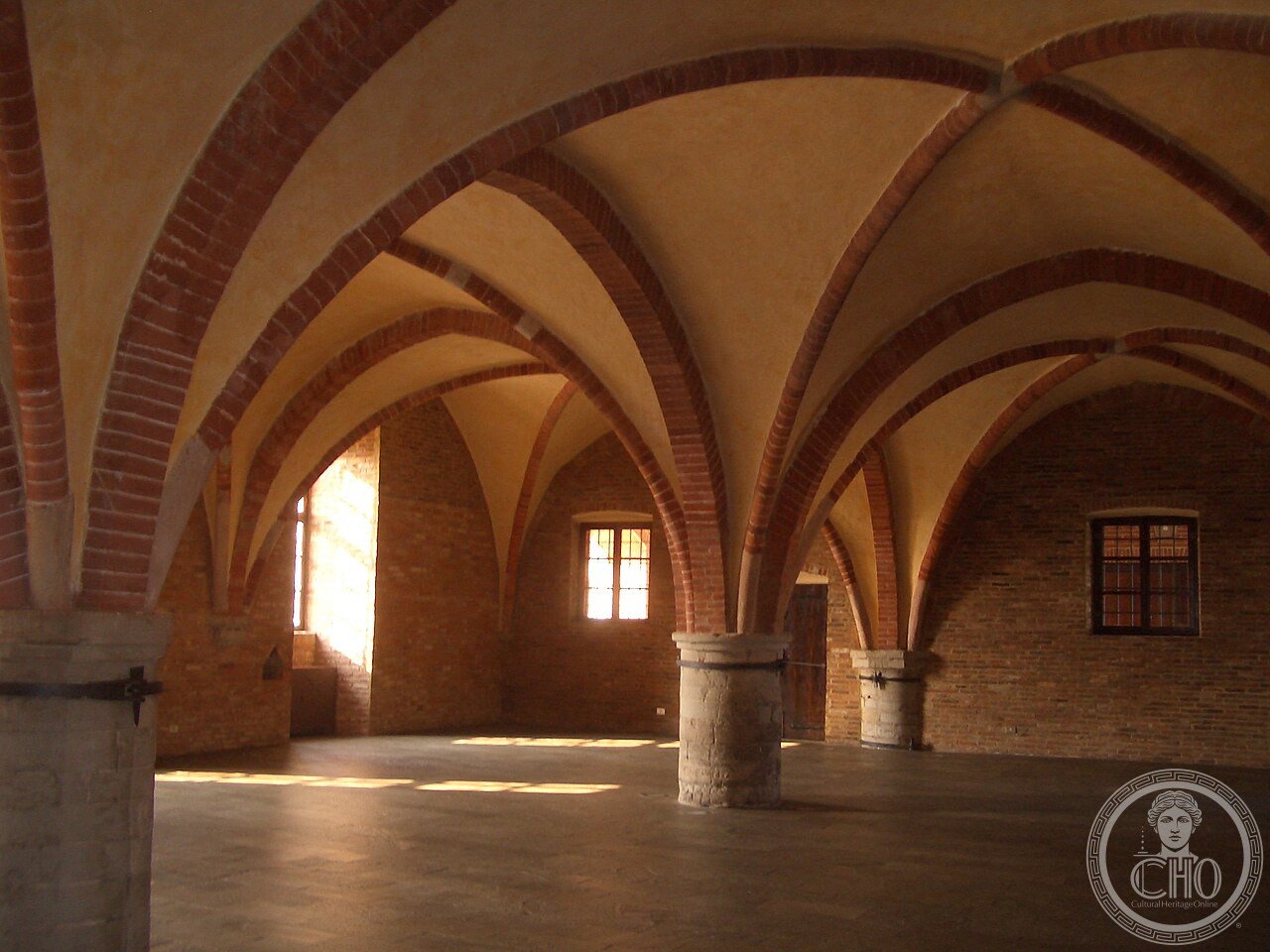
The exterior of the abbey complex, approached along a tree-lined avenue across the rice paddies, is a dramatic composition of brick buildings: the church facade (12th–13th century) with its Cistercian austerity, the bell tower, the chapter house (one of the finest Cistercian chapter houses in Italy, with a ribbed vault supported on two columns), and the cloister. The interior of the church retains its Cistercian proportions and the original Romanesque brick construction; the Black Madonna is in a side chapel, surrounded by ex-votos. The setting in the rice plain — flat, wide, and extraordinary especially during the flooding of the paddies in spring — gives Lucedio a landscape character unlike any other Italian abbey.
Practical information
- Access: private estate; the church can be visited at limited times (contact the estate: abbaziadilucedio.it for current opening)
- Shop: rice, wine and grappa from the estate available at the abbey shop
- Time needed: 30–45 minutes for the church visit
Getting there
By car from Vercelli (20 km south-east): SP85 toward Trino, then local road. By car from Turin (65 km): A26 motorway, exit Casale Monferrato Nord, then SP85. GPS: 45.2008° N, 8.4044° E.
Nearby
- Vercelli — city 20 km north-west; Sant'Andrea Basilica (1219, earliest Gothic-Cistercian in Italy), Museo Borgogna (Piedmontese painting)
- Casale Monferrato — the Monferrat capital, 20 km east; Duomo, Palaeocristian baptistry, Romanesque and Baroque architecture
- Vercelli rice plain — the largest rice-growing area in Europe; spectacular in spring (flooding) and autumn (harvest)
Sources
- Wikipedia — “Lucedio Abbey” (en.wikipedia.org/wiki/Lucedio_Abbey)
- Abbazia di Lucedio — abbaziadilucedio.it
- Adriano Sodo, Lucedio: storia di un'abbazia cistercense, 1985
Find it on the map
See this place and what’s around it →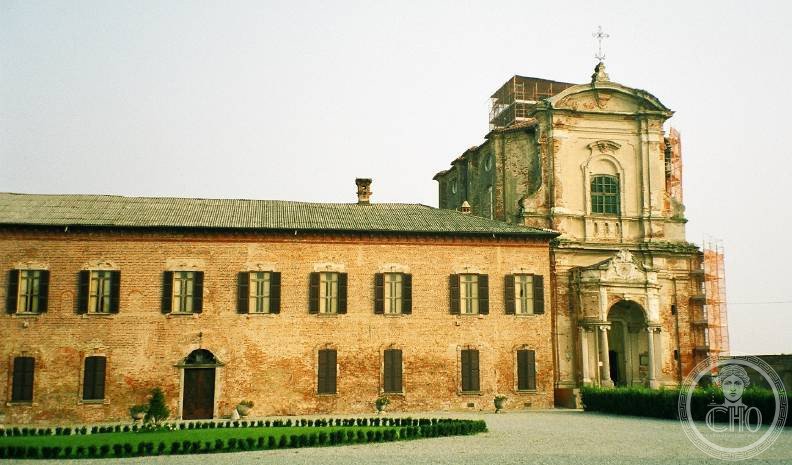
📷 Become a Cultural Heritage Online photographer
Share your photos of places: they stay published under your name as the author. The more they're seen, the more you get noticed — and soon a contest will reward the most appreciated photos.
Log in or sign up free to add a photoIs this page about you?
This page is read by travellers and heritage enthusiasts who find it on Google. Tell us how you are connected to this place and we will take it from there.