
Master craftspeople create delicate, durable paper from plant fibers using techniques refined over centuries, producing a material prized worldwide for art, ritual, and conservation.
In UNESCO’s words
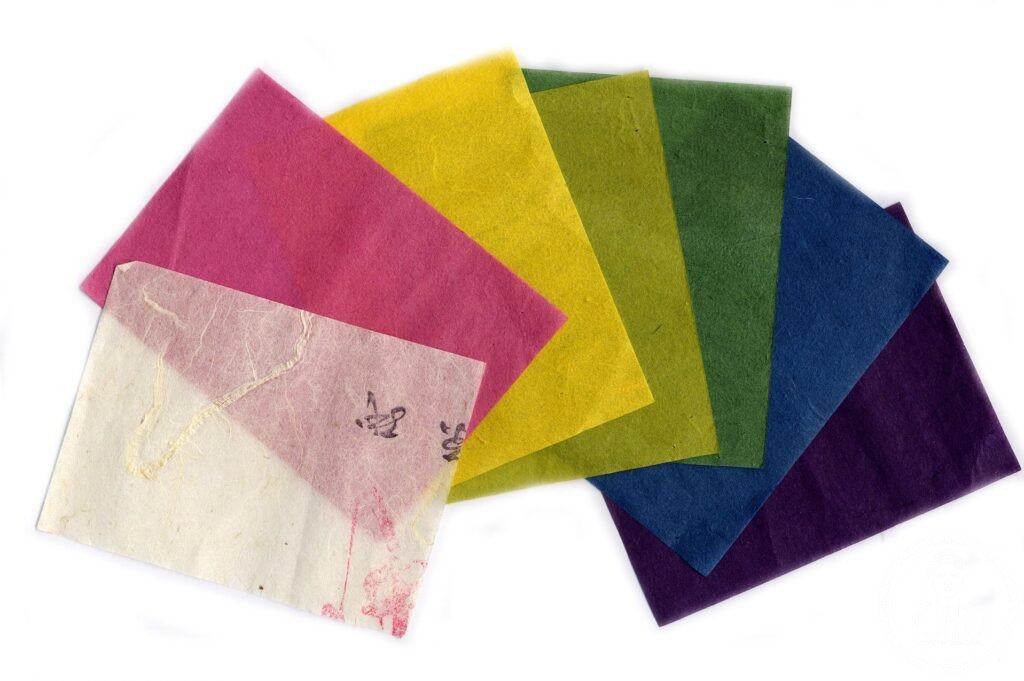
Washi craftsmanship refers to the traditional practice of making paper by hand using the fibres of the paper mulberry plant. The fibres are first separated, then soaked in clear river water to thicken before being filtered through a bamboo screen. This traditional, hand-made paper is used not only for letter writing, books and documents, but also for home interiors, such as to make paper screens, room dividers and sliding doors. Most of the inhabitants of the practising communities contribute to the process, undertaking roles ranging from the cultivation and harvesting of the mulberry plant to the creation of new Washi products to promote the craft both domestically and abroad. The knowledge and skills related to Washi papermaking are transmitted on three levels: within families of Washi craftspeople; through preservation associations; and by local municipalities. Practising families and their employees work and learn under Washi masters, who, in turn, inherited the techniques from their parents. Community members take pride in their tradition of Washi-making and regard it as a symbol of their cultural identity. As the communities are generally composed of people who are directly engaged in or closely related to the practice, the craft also fosters social cohesion.
Official description, UNESCO Intangible Cultural Heritage List — Washi, craftsmanship of traditional Japanese hand-made paper
At a glance
Washi is traditional paper made by hand from the fibres of the paper mulberry plant. The fibres are separated, soaked in clear river water to thicken, and then filtered through a bamboo screen. Beyond writing and documents, washi serves practical purposes in homes as paper screens, room dividers and sliding doors. The craft sustains entire communities, with most inhabitants contributing to different stages of production.
Origins & history
Knowledge of washi papermaking is transmitted across three levels: within families of craftspeople, through preservation associations, and by local municipalities. Practising families and their employees learn directly from washi masters, who themselves inherited the techniques from their parents. This family-centred transmission has allowed the craft to endure and evolve while maintaining its core methods.
The practice
The process begins with cultivating and harvesting the paper mulberry plant. Workers separate the fibres and soak them in clear river water to thicken before filtering through a bamboo screen. Most inhabitants of the practising communities participate in different roles, from plant cultivation to the creation of finished washi products. Contemporary craftspeople continue to produce items for letter writing, books, documents, and interior use.
Cultural significance
Community members take pride in washi-making as a symbol of their cultural identity. The craft fosters social cohesion, as practising communities consist largely of people directly engaged in or closely related to the work. Beyond local importance, washi is promoted domestically and abroad as a marker of cultural heritage. The practice faces pressure as communities adapt to modern life.
Key facts
- Country: Japan
- Inscribed: 2025
- UNESCO list: Representative List of the Intangible Cultural Heritage of Humanity
- UNESCO reference: 02291
- UNESCO vocabulary: Paper; Paper technology; Technical skills
- Map: not shown — UNESCO’s official description of this element names no locality, and a living tradition is practised across a community, not at one address.
Where to experience it
Washi papermaking thrives within practising communities across Japan, where families and preservation associations keep the craft alive through apprenticeship and local knowledge transmission. Visitors can observe master papermakers at work in these communities, witnessing the entire process from mulberry plant cultivation to the creation of finished paper products. Workshops and preservation centres offer opportunities to see craftspeople demonstrate their techniques and purchase authentic washi sheets, while community festivals celebrate the tradition as a vital symbol of cultural identity.
Sources & resources
- UNESCO — official element page: Washi, craftsmanship of traditional Japanese hand-made paper
- UNESCO — open data record: Intangible Heritage List, reference 02291
- UNESCO — official video: UNESCO film on this element — embedded on this page
- UNESCO — official photograph: Community members plant trees as a way of securing raw materials for Japanese handmade papermaking — Agency for Cultural Affairs, 2024
- Reference — Wikipedia (secondary): Washi — consulted as a secondary reference, not as confirmation
- Cultural Heritage Online: Our archive and city guides

Sources
- S1 — Hughes, Sukey. Washi: The World of Japanese Paper. Kodansha International, 1978. ISBN 978-0-87011-318-5.
- S2 — Barrett, Timothy. Japanese Papermaking: Traditions, Tools, and Techniques. Weatherhill, 1983. ISBN 978-0-8348-0185-1.
Spotted an error? Write to editorial@culturalheritageonline.com and we correct it the same day.