
The urban song of Greece’s working poor, rebetiko emerged from disparate musical traditions in the early 20th century to become a genre of defiant beauty and social witness.
In UNESCO’s words
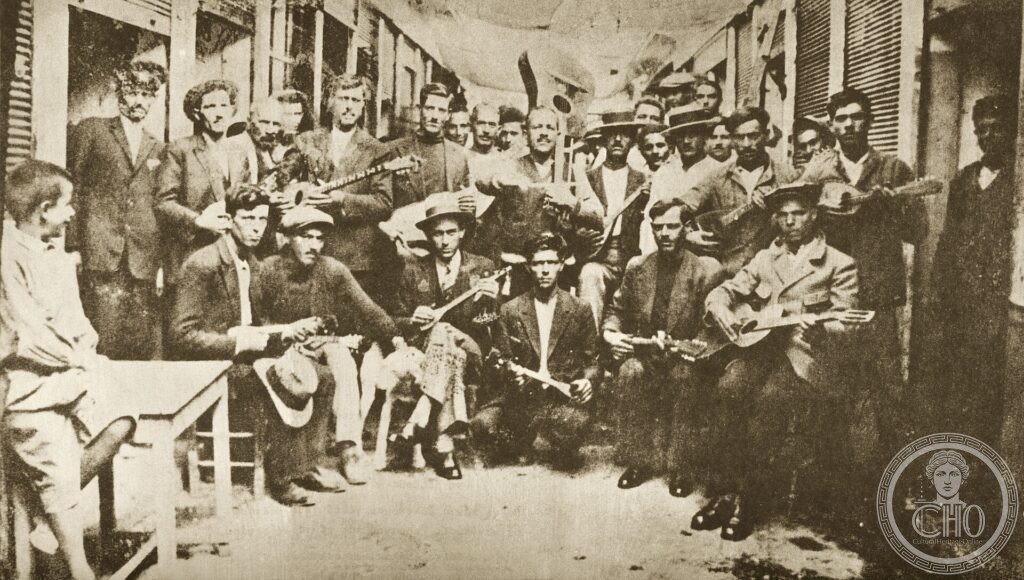
Rebetiko is a musical and cultural expression directly linked to song and dance that initially spread among the urban lower and working-class populations in the early twentieth century. Rebetiko songs are now a standardized repertoire in almost every social occasion involving music and dance. The element is performed in public and performers encourage audience participation. The practice is open to all and bearers could include any Greek or Greek-speaking person who enjoys this form of music and dance. Rebetiko songs contain invaluable references to the customs, practices and traditions of a particular way of life, but above all the practice is a living musical tradition with a strong symbolic, ideological and artistic character. Initially, transmission occurred exclusively orally, through the live performance of songs and the instruction of younger performers with older instrumentalists and singers. This non-formal method of learning is still important, but the recent spread of sound recordings, the mass media and cinema have reinforced other methods of transmission. In the past decade, Rebetiko has increasingly been taught in music schools, conservatories and universities, contributing to its wider dissemination, and the musicians and people who enjoy Rebetiko continue to play a key role in keeping the practice alive.
Official description, UNESCO Intangible Cultural Heritage List — Rebetiko
At a glance
Rebetiko is a musical and cultural expression combining song and dance that emerged among urban working-class populations in the early twentieth century. It has become a standard repertoire at social occasions involving music and dance throughout Greek communities. The practice is open to anyone who enjoys this form of music, and performances encourage audience participation. Rebetiko songs preserve invaluable references to the customs and traditions of a particular way of life, operating as a living musical tradition with strong symbolic, ideological and artistic character.
Origins & history
Rebetiko initially spread among urban lower and working-class populations in the early twentieth century. Transmission occurred exclusively through oral methods—live performance and instruction between older instrumentalists and singers with younger performers. Over time, sound recordings, mass media and cinema introduced additional transmission methods alongside this traditional practice. In the past decade, teaching in music schools, conservatories and universities has contributed to wider dissemination of rebetiko.
The practice
Rebetiko is performed by musicians and singers who work with audiences in public settings, actively encouraging participation. Transmission traditionally occurs through live performance and direct instruction from experienced performers to younger learners. The practice remains grounded in oral, non-formal methods of learning, though recordings and media now support the teaching process. Musicians and people who enjoy rebetiko continue to play a key role in keeping the practice alive.
Cultural significance
Rebetiko songs contain invaluable references to the customs, practices and traditions of a particular way of life, making the practice culturally significant to Greek and Greek-speaking communities. As a living musical tradition with strong symbolic, ideological and artistic character, rebetiko holds meaning beyond its musical elements. The community of musicians and enthusiasts who sustain the practice ensures its continued transmission to future generations.
Key facts
- Country: Greece
- Inscribed: 2017
- UNESCO list: Representative List of the Intangible Cultural Heritage of Humanity
- UNESCO reference: 01291
- UNESCO vocabulary: Plucked string instruments; Vocal music
- Map: not shown — UNESCO’s official description of this element names no locality, and a living tradition is practised across a community, not at one address.
Where to experience it
Rebetiko thrives wherever Greek and Greek-speaking communities gather to share music and dance. You can encounter the tradition in tavernas, concert venues, and cultural spaces, where both traditional singers and contemporary musicians perform and encourage audience participation. Music schools, conservatories, and universities now teach rebetiko alongside its living transmission through performance and mentorship. Festivals and public performances remain central to how this musical tradition stays alive, with bearers of all backgrounds keeping the practice vital across social occasions.
Sources & resources
- UNESCO — official element page: Rebetiko
- UNESCO — open data record: Intangible Heritage List, reference 01291
- UNESCO — official photograph: Photograph of this element — Lia Koniari — Greek Ministry of Culture and Sports, 2016
- Reference — Wikipedia (secondary): Rebetiko — consulted as a secondary reference, not as confirmation
- Cultural Heritage Online: Our archive and city guides

Sources
- S1 — Holst-Warhaft, Gail. Road to Rembetika: Music of a Greek Sub-Culture. Denise Harvey, 1975. ISBN 978-960-7120-07-6.
- S2 — Cowan, Jane K. Dance and the Body Politic in Northern Greece. Princeton University Press, 1990. ISBN 978-0-691-02854-5.
Spotted an error? Write to editorial@culturalheritageonline.com and we correct it the same day.