
.jpg "Villaggio del Pescatore: Exiles, Dinosaurs, and Maritime Heritage")
In April 2022, the cultural heritage of Villaggio del Pescatore, a small settlement in Duino Aurisina in northeastern Italy, encompassed both recent human history and ancient geological significance. Built between 1951 and 1952 on the Bocadin site, the village was established to shelter forty families of Istrian and Dalmatian fishermen and their descendants who had fled territories ceded to Yugoslavia after World War II. The settlement takes its name from one of the patron saints of Istrian cities, though it is known locally in the dual Italian and Slovene form, Ribiško Naselje.
A Village Shaped by Exile and the Sea
Located between the Cernizza woods and the mouth of the Timavo River, Villaggio del Pescatore marks the last Italian sandy coastline before the rocky cliffs that characterize the Trieste coast from Sistiana eastward. The village developed around a port-canal, or darsena, which remains its focal point. By the time this article was written, the settlement had grown to approximately 300 inhabitants, with new residents joining the original exile families from the 1990s onward. The village contains a recently renovated piazza, a parish church, the Istrian Fishermen’s Cooperative Center named for San Marco del Timavo, and a kindergarten. A monument dedicated to “Exiled Fishermen of Istria” stands as a simple but powerful reminder of the mass exodus that created the village.
Life in Villaggio del Pescatore maintains a deliberately unhurried quality. Limited services mean residents typically travel to nearby Monfalcone, Gorizia, or Trieste for shopping; locally, one bar-shop, a fishmonger, a nautical supply store, a fish-tourism enterprise, and several restaurants serve daily needs. Since 2005, a permanent exhibition titled “History and Prehistory around the Timavo” has operated near the shipyard at the start of the port-canal, managed by the Flondar speleological group and attracting approximately 7,000 visitors annually. The exhibition presents panels and artifacts spanning the Roman period, World War I, and the village’s own founding.
A World-Class Paleontological Site
A limestone quarry between Duino and Villaggio del Pescatore holds paleontological significance of global importance. In 1994, excavation at this site yielded the most complete medium-to-large dinosaur skeleton ever recovered in Europe. Named Antonio, the specimen belonged to Tethyshadros insularis, an island-dwelling hadrosaur that lived approximately 70 million years ago. Standing nearly one meter tall, measuring four meters in length, and weighing 700 kilograms, Antonio possessed an elongated head with a distinctive beaked snout featuring protruding ridges. The animal was vegetarian, though not herbivorous in the modern sense, as grasses did not yet exist on Earth at that time. The fossil was preserved in exceptional condition. Today, Antonio’s skeleton is displayed in the Natural History Museum of Trieste in a dedicated gallery.
The same thick limestone layers that preserved Antonio yielded additional fossils: fish remains, shrimp, crocodiles, pterosaurs, and a second dinosaur subsequently named Bruno. These artifacts provide evidence of life in the Tethys region during the Cretaceous period.
Visiting and the Timavo Trail
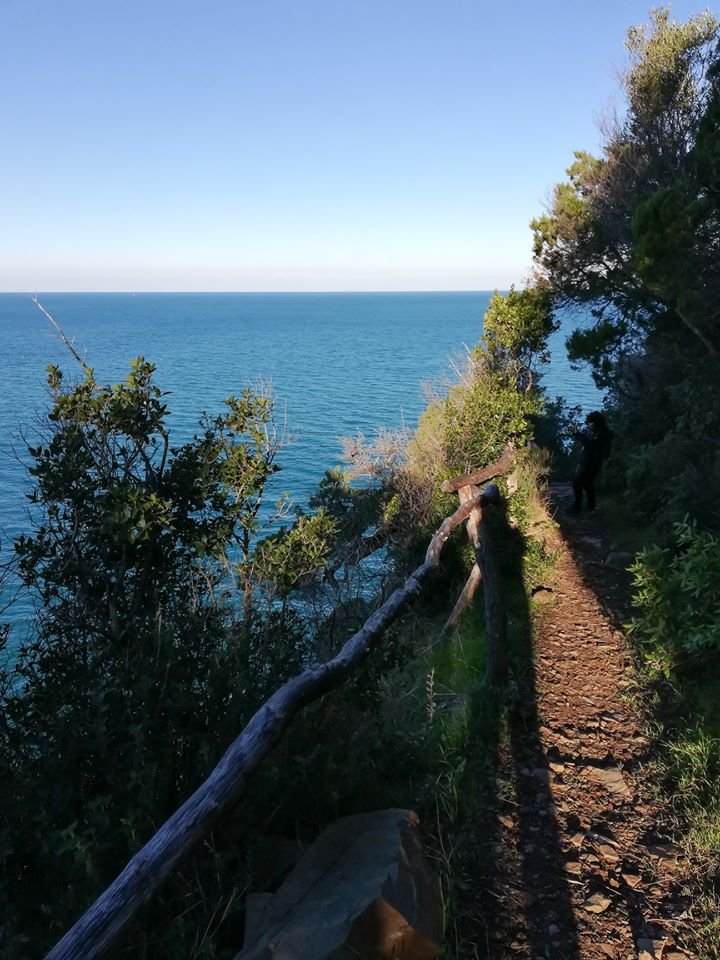
Near the shipyard begins a historical-naturalistic footpath through Punta Bratina, which follows Austro-Hungarian trenches from World War I and touches several Roman-era sites while leading to the Timavo River. The village rewards visitation in any season under sunny conditions, but a Sunday visit during Mass creates a distinctive atmosphere: church services broadcast through a loudspeaker mounted on the bell tower carry across much of the village and into the surrounding woods, evoking cultures and places far removed from this small Adriatic settlement.
On video
Frequently asked questions
When was Villaggio del Pescatore established?
The village was built between 1951 and 1952 to house forty families of Istrian and Dalmatian fishermen displaced by territory ceded to Yugoslavia after World War II.
What dinosaur was found near the village?
In 1994, a nearly complete skeleton of Tethyshadros insularis, an island-dwelling hadrosaur from 70 million years ago, was discovered in a nearby limestone quarry and named Antonio. It remains the most complete medium-to-large dinosaur skeleton ever found in Europe.
Where can the dinosaur fossil be seen today?
Antonio’s skeleton is displayed in the Natural History Museum of Trieste, which houses a dedicated gallery containing this and many other fossils from the same paleontological site.

.jpg?w=768&resize=768,0&ssl=1 "Cernizza Wood and Fioravante Grotto: Duino's Natural Heritage")