
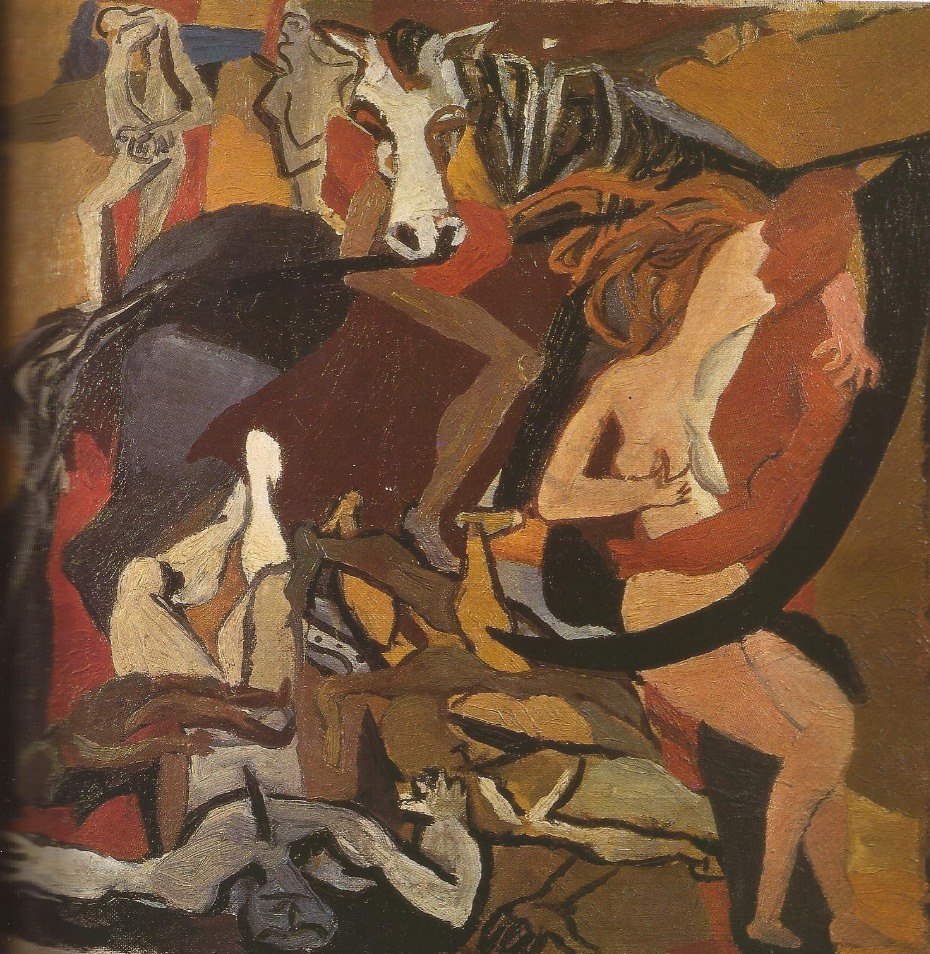
Renato Guttuso’s Trionfo della morte dates to 1943, the final year of the Second World War in Italy. Created by one of the most significant Italian artists of the twentieth century, the work exemplifies Guttuso’s commitment to Expressionism infused with social and political meaning.
Guttuso’s artistic practice is rooted in social and political commentary. A founding member of the Italian Communist Party, he would later serve as its senator from 1976 to 1983 under Enrico Berlinguer’s leadership. This painting emerges from a moment of profound national upheaval, when Italy’s wartime experience was reshaping artistic consciousness and forcing artists to confront questions of mortality, destruction, and human suffering.
About Renato Guttuso
Aldo Renato Guttuso stands among the key figures of twentieth-century Italian Expressionism. His work consistently engaged with themes of social justice and historical crisis, drawing artistic power from political conviction. His dual career as painter and senator from 1976 to 1983 underscores the integration of art and politics in his public identity.
Details
- Creator: Renato Guttuso
- Year: 1943
- Movement: Italian Expressionism
- Themes: Social and political commentary
Frequently asked questions
Who was Renato Guttuso?
Renato Guttuso was an Italian painter and politician considered among the most important Italian artists of the twentieth century and a key figure in Italian Expressionism. He was a member of the Italian Communist Party and served as its senator from 1976 to 1983.
What period did Guttuso paint in?
Guttuso was active throughout the twentieth century, working across the Fascist period, the Second World War, and the postwar decades. His art consistently engaged with social and political themes across these turbulent historical moments.
Why was 1943 significant for Italian artists?
1943 marked the final year of the Second World War in Italy, a moment of national collapse and moral reckoning. For artists like Guttuso, this crisis demanded artistic responses rooted in the gravity of historical experience.
Sources
- S1 — Calvesi, Maurizio. Renato Guttuso: dipinti dal 1934 al 1984. Fabbri Editori, 1985. ISBN 978-88-450-1376-8.
- S2 — Braun, Emily. Italian Art in the 20th Century: Painting and Sculpture 1900-1988. Prestel, 1989. ISBN 978-3-7913-0986-6.
Spotted an error? Write to editorial@culturalheritageonline.com and we correct it the same day.


