
Myanmar’s New Year festival transforms cities into arenas of joyful water play, spiritual cleansing, and communal merit-making, marking the transition between the old year and new across the lunisolar calendar.
In UNESCO’s words
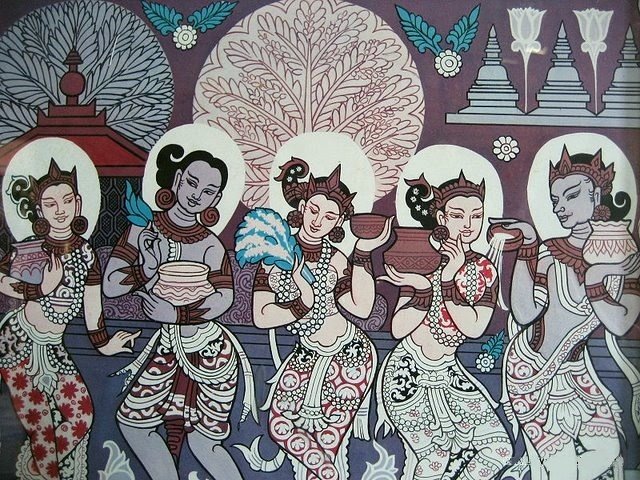
Atā Thingyan is a five-day festival that is observed in Myanmar to celebrate the traditional new year. The Myanmar Calendar Advisory Board determines the date on which Thingyan falls each year (typically in mid-April). Each community celebrates the festival in accordance with its traditions and customs, but common activities include pouring water on Buddha images, giving older community members manicures and pedicures, donating food, giving to charity and joining meditation retreats. There are also community-based song and dance performances. Flowers and leaves symbolizing the seven days of the week are arranged in an earthenware vase, which is placed at the front of the house to welcome the new year. People also enjoy pouring water on each other, an act that is believed to bring good fortune through its symbolic cleansing effects. Thingyan is transmitted by participating in the festivities and through media, schools, and regional and state contests. In addition to promoting unity and harmony, the festival represents a symbolic cleansing of the old year’s ‘dirt’, enabling a physical and mental ‘fresh start’. As the entire festival period is a national holiday, many people return to their native towns and villages to reunite with their families and pay homage to their elders.
Official description, UNESCO Intangible Cultural Heritage List — Myanmar traditional New Year Atā Thingyan festival
At a glance
Atā Thingyan is a five-day festival celebrated in Myanmar to mark the traditional new year, typically falling in mid-April. Each community observes the festival according to its own traditions and customs. Common activities include pouring water on Buddha images, giving manicures and pedicures to older community members, donating food, giving to charity, and joining meditation retreats. Community-based song and dance performances are central to the celebrations. People also pour water on each other, believed to bring good fortune through symbolic cleansing.
Origins & history
The Myanmar Calendar Advisory Board determines Thingyan's date each year based on the traditional calendar. The festival is transmitted through direct participation in festivities, as well as through media, schools, and regional and state contests. It represents a symbolic cleansing of the old year's 'dirt', allowing people a physical and mental 'fresh start' as they move into the new year.
The practice
Flowers and leaves symbolizing the seven days of the week are arranged in an earthenware vase and placed at the front of houses to welcome the new year. During the festival, people participate in pouring water on each other and on Buddha images. Communities organize song and dance performances. Common practices also include giving manicures and pedicures to elders, donating food and giving to charity, and joining meditation retreats. As Thingyan is a national holiday, many people return to their native towns and villages to be with family.
Cultural significance
The festival promotes unity and harmony within communities while enabling individual spiritual renewal. It holds deep meaning as a time for people to reunite with families and pay homage to elders. The symbolic cleansing represented by water marks a significant transition in the year, preparing communities physically and mentally for what lies ahead.
Key facts
- Country: Myanmar
- Inscribed: 2024
- UNESCO list: Representative List of the Intangible Cultural Heritage of Humanity
- UNESCO reference: 02085
- UNESCO vocabulary: Festivals; New year
- Map: not shown — UNESCO’s official description of this element names no locality, and a living tradition is practised across a community, not at one address.
Where to experience it
Thingyan is observed throughout Myanmar's communities, each celebrating according to its own traditions and customs. During the festival period—typically mid-April, as determined by the Myanmar Calendar Advisory Board—streets and neighborhoods transform with community-based song and dance performances, water-pouring activities, and meditation retreats. Visitors can witness the arrangement of symbolic flowers and leaves in earthenware vases at house fronts, participate in the shared cleansing rituals, and observe how families reunite in their native towns and villages. Since the entire festival is a national holiday, communities across the country come alive with festivities that promote unity, harmony, and spiritual renewal.
Sources & resources
- UNESCO — official element page: Myanmar traditional New Year Atā Thingyan festival
- UNESCO — open data record: Intangible Heritage List, reference 02085
- UNESCO — official video: UNESCO film on this element — embedded on this page
- UNESCO — official photograph: Foreigners participating in Myanmar New Year Atā Thingyan Festival — Ministry of Information, Myanmar, 2014
- Reference — Wikipedia (secondary): Thingyan — consulted as a secondary reference, not as confirmation
- Cultural Heritage Online: Our archive and city guides

Sources
- S1 — Spiro, Melford E. Buddhism and Society: A Great Tradition and Its Burmese Vicissitudes. University of California Press, 1982. ISBN 978-0-520-04672-6.
- S2 — Houtman, Gustaaf. Mental Culture in Burmese Crisis Politics. Institute for the Study of Languages and Cultures of Asia and Africa, 1999. ISBN 978-4-87297-748-6.
Spotted an error? Write to editorial@culturalheritageonline.com and we correct it the same day.