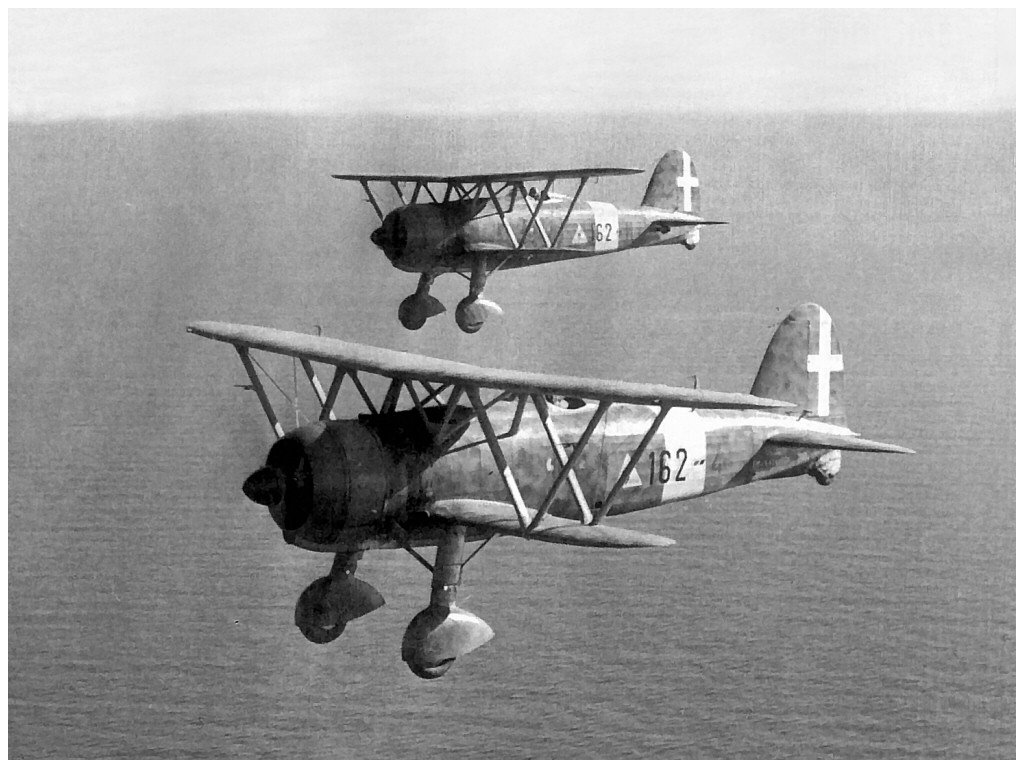
The Fiat CR.42 Falco, a single-seat biplane fighter on display at RAF Museum Hendon in London, was manufactured by the Turin-based Fiat company in the late 1930s. The aircraft featured a sesquiplane configuration with fixed landing gear and a mixed-construction airframe combining metal and fabric. It became the last series-production biplane fighter ever built.
Service and Production
The CR.42 Falco entered service with Italy’s Regia Aeronautica and was also purchased by Belgium, Hungary, Finland, and Sweden. Production continued until 1944, with approximately 1,800 examples manufactured—a record that makes the CR.42 the most-produced Italian aircraft of all time. Alongside the British Gloster Gladiator and the Soviet Polikarpov I-15, it was among the last biplane fighters to see combat during World War II.
Historical Significance
The CR.42 holds a unique place in aviation history as the final biplane fighter to shoot down an enemy aircraft in combat, achieving this feat in 1945. Its longevity in active service during an era increasingly dominated by monoplane designs underscored the robust engineering of its construction and the tactical value of biplane fighters in certain operational roles.
On video
Explore more: 82 heritage places in London
Frequently asked questions
What made the CR.42 Falco unique among biplane fighters?
The CR.42 was the last biplane fighter constructed in series production and the last to shoot down an enemy aircraft in combat, in 1945, distinguishing it from other biplane designs that had been retired earlier.
How many CR.42 Falcos were built?
Approximately 1,800 examples were manufactured between the late 1930s and 1944, making it the most-produced Italian aircraft ever built.
Which countries used the CR.42?
The aircraft was primarily operated by Italy’s Regia Aeronautica but was also purchased by Belgium, Hungary, Finland, and Sweden.
Sources
- S1 — Ferrari, Paolo, a cura di. L'aeronautica italiana: Una storia del Novecento. FrancoAngeli, 2004. ISBN 978-88-464-5109-5.
- S2 — Berta, Giuseppe. L'Italia delle fabbriche. Il Mulino, 2001. ISBN 978-88-15-25257-9.
Spotted an error? Write to editorial@culturalheritageonline.com and we correct it the same day.