
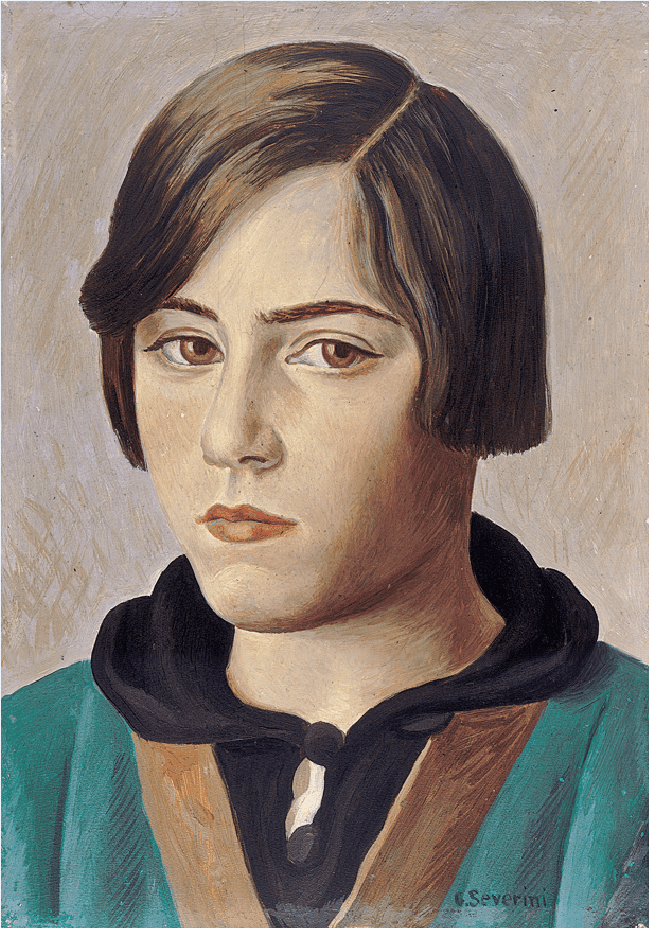
Ritratto di Gina is a portrait painting by Gino Severini, completed in 1927. Created during a formative decade in the artist’s career, the work reflects his engagement with neo-classical principles and the broader cultural movement toward order that followed the First World War.
Severini’s career spanned multiple artistic languages and geographies. Based alternately in Paris and Rome, he established himself as a leading figure in the Futurist movement before shifting toward the formal discipline and figural clarity associated with the return to order. By the late 1920s, when this portrait was painted, Severini had integrated classical restraint into his vocabulary while maintaining the intensity of his artistic vision. His exhibition record included prestigious venues such as the Rome Quadrennial, and his work garnered recognition from major cultural institutions.
About Gino Severini
Severini was an Italian painter whose practice extended across multiple media, including mosaic and fresco. His career traced a significant arc from Futurism toward neo-classicism, positioning him at the center of Italy’s artistic developments during the early twentieth century.
Details
- Title: Ritratto di Gina
- Artist: Gino Severini
- Date: 1927
- Medium: Oil on canvas (presumed)
- Movement: Futurism, neo-classicism, return to order
On video
Frequently asked questions
Who was Gino Severini?
Gino Severini was an Italian painter and a leading member of the Futurist movement who later embraced neo-classical principles. He divided his time between Paris and Rome throughout much of his career and worked across painting, mosaic, and fresco.
What artistic movement does this work represent?
The portrait was created during Severini’s engagement with the neo-classical return to order that emerged in the decade following the First World War, a period when he reconciled Futurist dynamism with classical formal discipline.
Where did Severini exhibit his work?
Severini showed at major venues including the Rome Quadrennial and received art prizes from significant cultural institutions throughout his career.


