
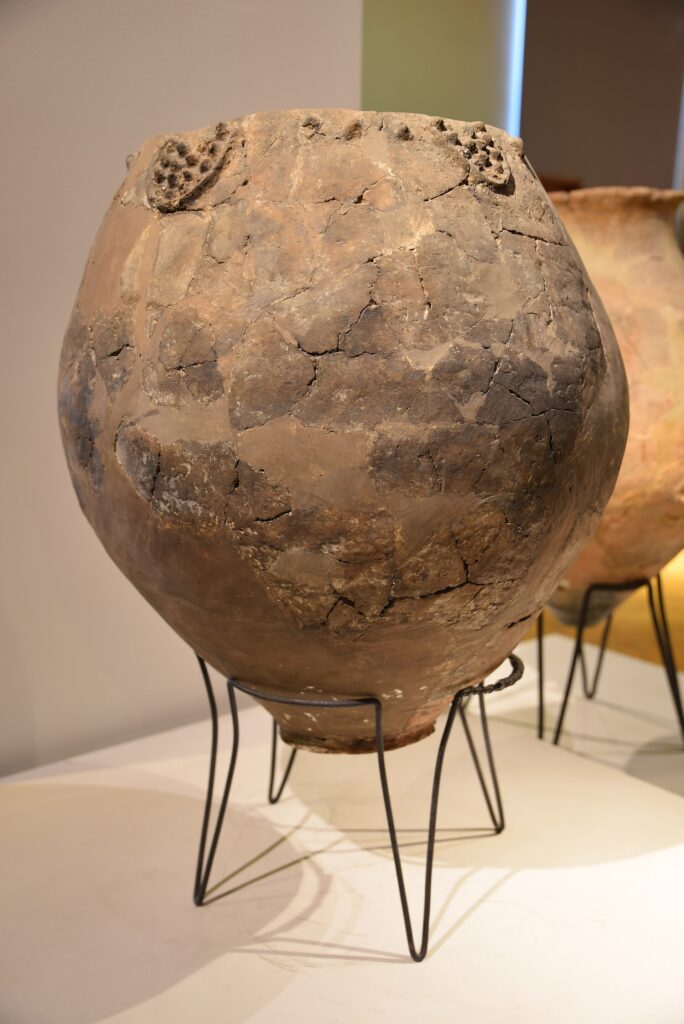
Georgian winemakers ferment, store and age wine in large earthenware vessels called qvevri, a practice spanning thousands of years and rooted in the country’s identity as one of the world’s oldest wine regions.
In UNESCO’s words
Qvevri wine-making is practised throughout Georgia, particularly in village communities where unique varieties of grapes are grown. The Qvevri is an egg-shaped earthenware vessel used for making, ageing and storing the wine. Knowledge and experience of Qvevri manufacture and wine-making are passed down by families, neighbours, friends and relatives, all of whom join in communal harvesting and wine-making activities. Children learn how to tend the vines, press grapes, ferment wine, collect clay and make and fire Qvevris through observing their elders. The wine-making process involves pressing the grapes and then pouring the juice, grape skins, stalks and pips into the Qvevri, which is sealed and buried in the ground so that the wine can ferment for five to six months before being drunk. Most farmers and city dwellers use this method of making wine. Wine plays a vital role in everyday life and in the celebration of secular and religious events and rituals. Wine cellars are still considered the holiest place in the family home. The tradition of Qvevri wine-making defines the lifestyle of local communities and forms an inseparable part of their cultural identity and inheritance, with wine and vines frequently evoked in Georgian oral traditions and songs.
Official description, UNESCO Intangible Cultural Heritage List — Ancient Georgian traditional Qvevri wine-making method
At a glance
Qvevri wine-making is an ancient Georgian method in which grapes—juice, skins, stalks and pips together—are fermented and aged in egg-shaped earthenware vessels buried in the ground. Knowledge of how to make the vessels and how to work with them passes through families and communities, learned by children through watching their elders tend vines, press grapes, and manage fermentation. Most farmers and city dwellers in Georgia use this method today.
Origins & history
The practice has been handed down through generations of Georgian families and neighbours, who share knowledge and experience across households and seasons. Children learn the craft by observing elders and participating in communal harvesting and wine-making work. This continuity of learning—from family to family, friend to friend—has kept the tradition alive as part of Georgia's cultural inheritance.
The practice
Grape harvesting is communal work. Grapes are pressed, then poured into a qvevri along with their skins, stalks and pips. The vessel is sealed and buried underground, where fermentation takes five to six months. Winemakers collect local clay and hand-shape the qvevri in sections, joining them seamlessly. Each vessel is unique. Wine cellars, where the qvevris are kept, remain the holiest space in the family home.
Cultural significance
Wine is central to everyday Georgian life and to secular and religious celebrations. The qvevri tradition defines the lifestyle and cultural identity of local communities, appearing frequently in Georgian oral traditions and songs. The practice ties people to their ancestors, their land, and to distinctive local grape varieties—making qvevri wine-making inseparable from what it means to be part of a Georgian community.
Key facts
- Country: Georgia
- Inscribed: 2013
- UNESCO list: Representative List of the Intangible Cultural Heritage of Humanity
- UNESCO reference: 00870
- UNESCO vocabulary: Alcoholic beverages; Ceramic art; Food preparation
- Map: not shown — UNESCO’s official description of this element names no locality, and a living tradition is practised across a community, not at one address.
- Related World Heritage site: Upper Svaneti (a different UNESCO designation, not the place of the tradition)
Where to experience it
Qvevri wine-making is practised throughout Georgia's village communities, where families continue this ancient tradition across generations. Visitors can experience the craft by visiting family wineries and traditional wine cellars, where qvevri vessels remain buried in the ground during fermentation. Many local producers welcome guests to observe the seasonal rhythms of grape harvesting, pressing, and the five to six-month fermentation process. Wine cellars, considered the holiest spaces in Georgian homes, reveal how deeply this practice shapes daily life and cultural identity. Local tourism offices can direct visitors to working producers who maintain these time-honoured methods.
Sources & resources
- UNESCO — official element page: Ancient Georgian traditional Qvevri wine-making method
- UNESCO — open data record: Intangible Heritage List, reference 00870
- UNESCO — official photograph: Photograph of this element — Shalva Samkharadze — 2012 by Ministry of Culture and Monument protection of Georgia
- Reference — Wikipedia (secondary): Kvevri — consulted as a secondary reference, not as confirmation
- Cultural Heritage Online: Our archive and city guides
