
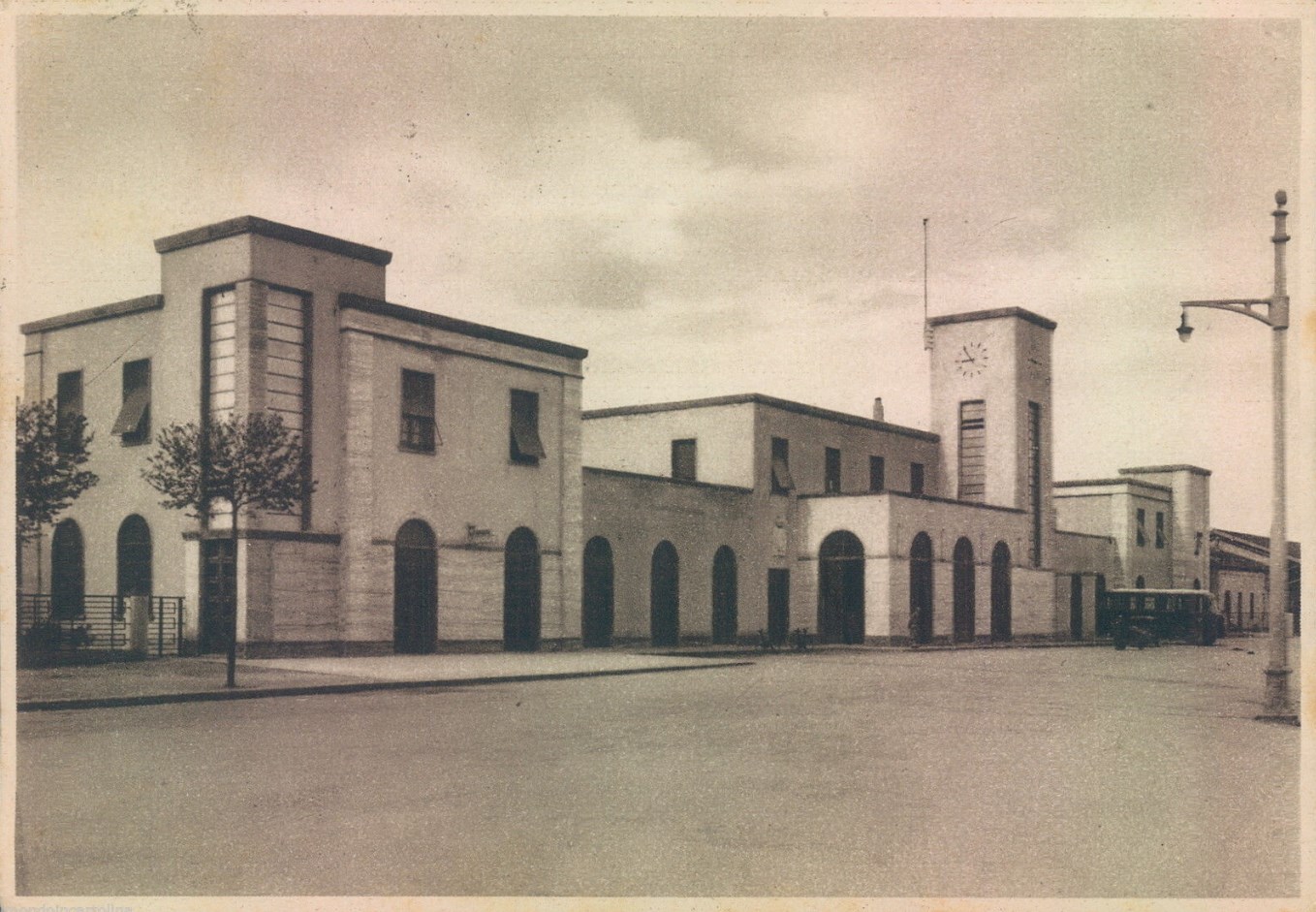
Pesaro Railway Station was designed by Italian architect and engineer Roberto Narducci in 1935. The station represents Narducci’s work within the Modernist and Novecento movements, executed for the Italian state railway company, Ferrovie dello Stato.
Narducci trained at the Regia Scuola Superiore di Architettura, graduating in Civil Architecture in 1923. From 1909 onwards, he served as a designer for the state railway, a position that defined much of his professional career. Over his lifetime, Narducci designed approximately 40 railway stations alongside ten post offices, frequently collaborating with architect Angiolo Mazzoni. The Pesaro station exemplifies his institutional architectural vocabulary during the interwar period.
About Roberto Narducci
Born in Rome in 1887, Narducci pursued formal architectural training and secured early employment designing for Italy’s national railway infrastructure. His practice encompassed both new construction and post-war reconstruction projects. He maintained professional activity through the mid-twentieth century, dying in Rome in 1979 at age 91.
Details
- Architect: Roberto Narducci
- Year: 1935
- Location: Pesaro, Marche region, Italy
- Architectural movements: Modernism, Novecento Italiano
- Client: Ferrovie dello Stato (Italian state railways)
- Building type: Railway station
Explore more: 5 heritage places in Pesaro
Frequently asked questions
Who designed Pesaro Railway Station?
Roberto Narducci, an Italian architect and engineer trained in civil architecture, designed the station. Narducci was born in Rome in 1887 and specialized in railway architecture for the Italian state railway company throughout his career.
When was the station built?
The station was completed in 1935 as part of Narducci’s extensive work designing railway infrastructure across Italy.
What architectural style does the station represent?
The station exemplifies Modernism and Novecento Italiano, movements that shaped Narducci’s institutional designs during the interwar period.
Sources
- S1 — Ciucci, Giorgio. Gli architetti e il fascismo: architettura e città 1922-1944. Einaudi, 2002. ISBN 978-88-06-16310-5.
- S2 — Nicoloso, Paolo. Mussolini architetto: Propaganda e paesaggio urbano nell'Italia fascista. Einaudi, 2008. ISBN 978-88-06-19086-6.
Spotted an error? Write to editorial@culturalheritageonline.com and we correct it the same day.


