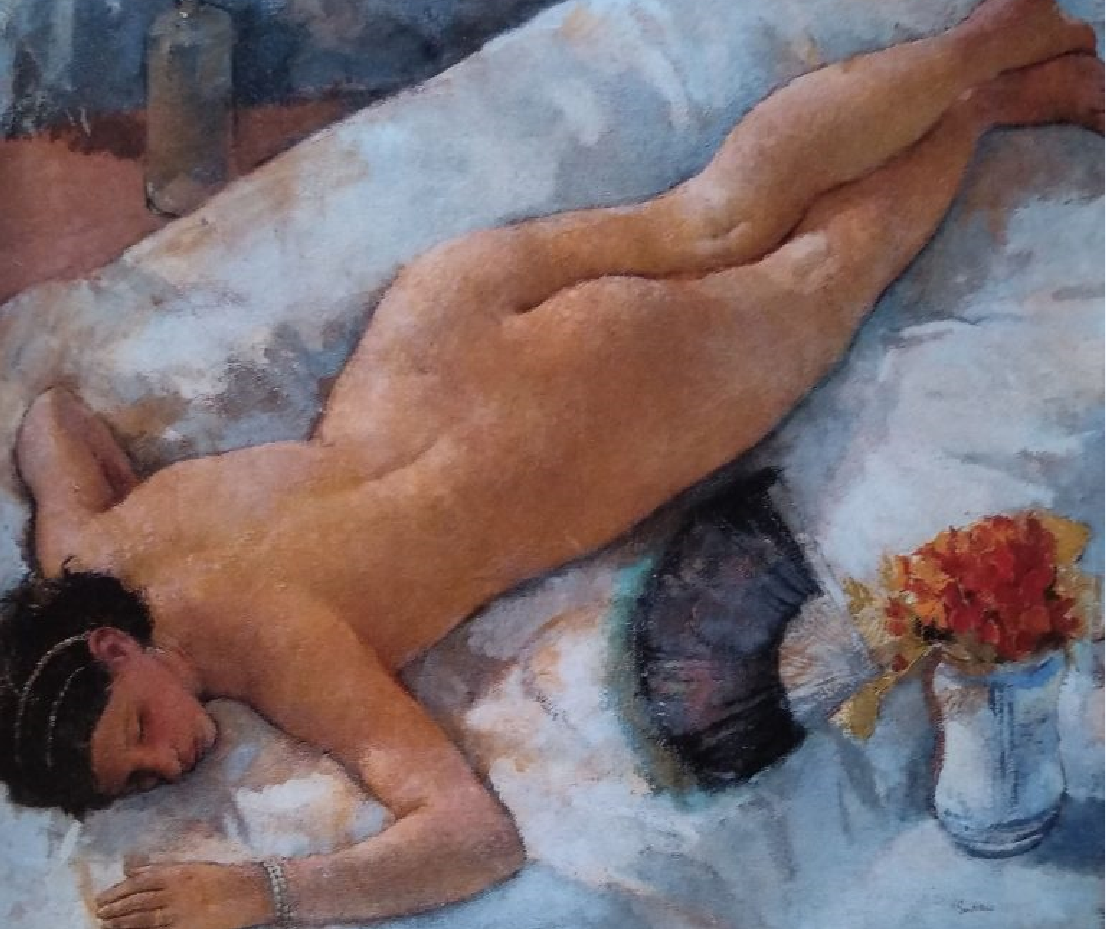
Nudo disteso is a painting by Franco Gentilini completed in 1929, during the artist’s formative years in Italian modernism. The work represents a reclining female figure, a subject central to twentieth-century figurative practice.
Gentilini was working in ceramics and painting during this period, having collaborated with Giorgio Morandi in Bologna before relocating to Rome in 1932. The year 1929 marks a pivotal moment in his career: his work would be accepted for the 17th Venice Biennale in 1930, bringing him international recognition. His early style drew inspiration from pre-Renaissance Italian art, a historicizing approach that positioned him within broader currents of Novecento Italian painting. The artist went on to participate in major exhibitions including the 1933 Milan Decorative Arts Exposition and the 1935 Rome Quadriennale.
About Franco Gentilini
Gentilini (1909–1981) worked across painting, fresco, and ceramics. He collaborated with leading modernist figures early in his career and became closely associated with the Roman School in the late 1930s. His work found considerable patronage among Italian collectors after World War II.
Details
- Artist: Franco Gentilini
- Year: 1929
- Subject: Reclining nude figure
- Period: Italian interwar modernism
On video
Frequently asked questions
Who was Franco Gentilini?
Franco Gentilini (1909–1981) was an Italian painter, ceramist, and fresco artist who worked with Giorgio Morandi in Bologna before establishing himself in Rome in 1932. He participated in the Venice Biennale beginning in 1930 and became associated with the Roman School in the late 1930s.
What artistic movements influenced this work?
Gentilini drew inspiration from pre-Renaissance Italian art in his early years, positioning himself within the broader Novecento Italiano movement. His approach combined modernist figuration with historical Italian artistic traditions.
How was Gentilini’s work received after World War II?
There was considerable demand for his paintings among private Italian collectors, and he participated in numerous exhibitions, establishing himself as a significant figure in modern Italian art.
Sources
- S1 — Pontiggia, Elena. Il Novecento Italiano. Abscondita, 2003. ISBN 978-88-8416-048-5.
- S2 — Ciucci, Giorgio. Gli architetti e il fascismo: architettura e città 1922-1944. Einaudi, 2002. ISBN 978-88-06-16310-5.
Spotted an error? Write to editorial@culturalheritageonline.com and we correct it the same day.