
Vietnamese court music performed from the 13th century Trần dynasty through the Nguyễn dynasty in the 20th century, nhã nhạc—meaning “elegant music”—was the ceremonial and entertainment music of the imperial court.
In UNESCO’s words
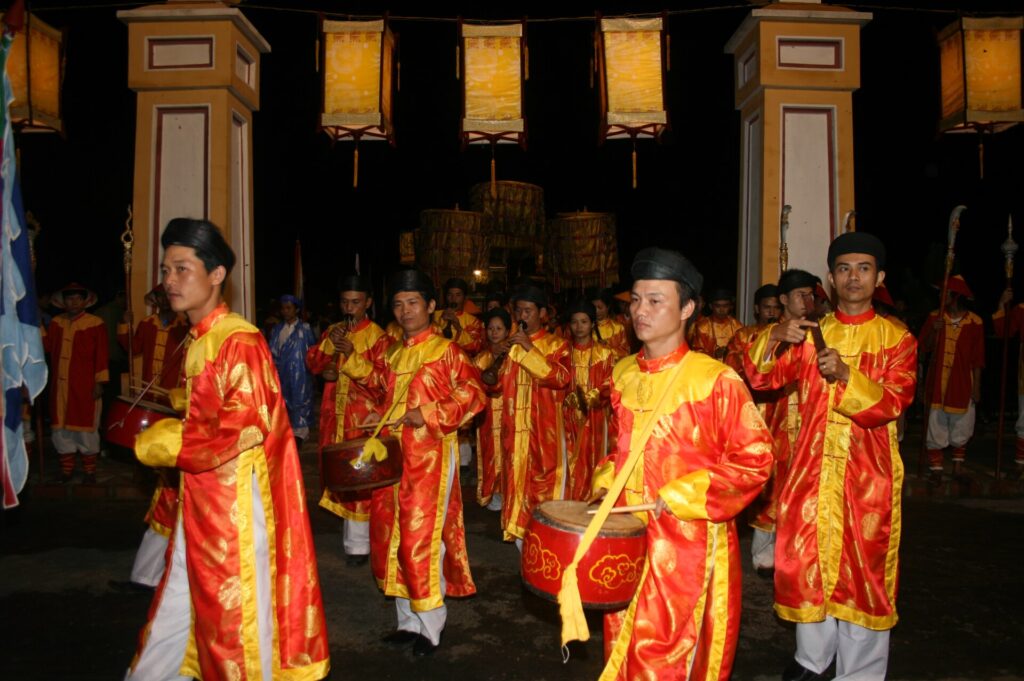
Nha Nhac, meaning “elegant music”, refers to a broad range of musical and dance styles performed at the Vietnamese royal court from the fifteenth to the mid-twentieth century. Nha Nhac was generally featured at the opening and closing of ceremonies associated with anniversaries, religious holidays, coronations, funerals and official receptions. Among the numerous musical genres that developed in Vietnam, only Nha Nhac can claim a nationwide scope and strong links with the traditions of other East Asian countries. Nha Nhac performances formerly featured numerous singers, dancers and musicians dressed in sumptuous costumes. Large-scale orchestras included a prominent drum section and many other types of percussion instruments as well as a variety of wind and string instruments. All performers had to maintain a high level of concentration since they were expected to follow each step of the ritual meticulously. Nha Nhac developed during the Le dynasty (1427-1788) and became highly institutionalized and codified under the Nguyen monarchs (1802-1945). As a symbol of the dynasty’s power and longevity, Nha Nhac became an essential part of the court’s many ceremonies. However, the role of Nha Nhac was not limited to musical accompaniment for court rituals: it also provided a means of communicating with and paying tribute to the gods and kings as well as transmitting knowledge about nature and the universe. The events that shook Vietnam in the twentieth century – especially the fall of the monarchy and the decades of war – seriously threatened the survival of Nha Nhac. Deprived of its court context, this musical tradition lost its original function. Nevertheless, the few surviving former court musicians continue to work to keep the tradition alive. Certain forms of Nha Nhac have been maintained in popular rituals and religious ceremonies and serve as a source of inspiration for contemporary Vietnamese music.
Official description, UNESCO Intangible Cultural Heritage List — Nha Nhac, Vietnamese court music
At a glance
Nha Nhac, meaning "elegant music," encompasses musical and dance styles that graced the Vietnamese royal court from the fifteenth to the mid-twentieth century. Among Vietnam's musical genres, only Nha Nhac achieved nationwide recognition and connected deeply with East Asian musical traditions. Performances brought together numerous singers, dancers and musicians in sumptuous costumes, supported by large orchestras featuring prominent drum sections, percussion, wind and string instruments.
Origins & history
Nha Nhac developed during the Le dynasty beginning in 1427 and became highly institutionalized under the Nguyen monarchs between 1802 and 1945. As a symbol of dynastic power and longevity, it became essential to court ceremonies. Beyond musical accompaniment, Nha Nhac communicated with and paid tribute to gods and kings while transmitting knowledge about nature and the universe.
The practice
Nha Nhac performances typically opened and closed ceremonies marking anniversaries, religious holidays, coronations, funerals and official receptions. Large orchestras combined numerous percussion instruments with varied wind and string instruments. All performers maintained high concentration to follow each ritual step meticulously, their coordinated performance demonstrating the precision demanded by court protocol.
Cultural significance
Events of the twentieth century—particularly the fall of the monarchy and decades of war—severely threatened Nha Nhac's survival by removing its original court context and function. Former court musicians have continued working to preserve the tradition, while certain forms persist in popular rituals and religious ceremonies, inspiring contemporary Vietnamese music and keeping the heritage alive.
Key facts
- Country: Viet Nam
- Inscribed: 2008
- UNESCO list: Representative List of the Intangible Cultural Heritage of Humanity
- UNESCO reference: 00074
- UNESCO vocabulary: Dance; Instrumental music; Orchestras
- Map: not shown — UNESCO’s official description of this element names no locality, and a living tradition is practised across a community, not at one address.
Where to experience it
Nha Nhac survives today through the dedication of former court musicians who continue to transmit the tradition despite the loss of its royal court context. Visitors may encounter this elegant music at popular rituals and religious ceremonies throughout Vietnam, where certain forms have been maintained as living practice. Some performances and educational initiatives preserve the repertoire and performance techniques for contemporary audiences, though specific venues and schedules are best confirmed through local cultural organizations.
Sources & resources
- UNESCO — official element page: Nha Nhac, Vietnamese court music
- UNESCO — open data record: Intangible Heritage List, reference 00074
- UNESCO — official video: UNESCO film on this element — embedded on this page
- UNESCO — official photograph: An essential part of royal ceremonies, court music was a means of communicating with and paying tribute to the gods and kings as well as transmitting knowledge about nature and the universe. This musical tradition has been kept alive by the few surviving former court musicians. — Hue Monument Conservation Centre
- Reference — Wikipedia (secondary): Nh%C3%A3 nh%E1%BA%A1c — consulted as a secondary reference, not as confirmation
- Cultural Heritage Online: Our archive and city guides
