Founded on Murano in 1925 after Giacomo Cappellin’s split from Paolo Venini, M.V.M. Cappellin hired a nineteen-year-old Carlo Scarpa as artistic director, sweeping away Victorian frills in favour of radical modernist transparency.
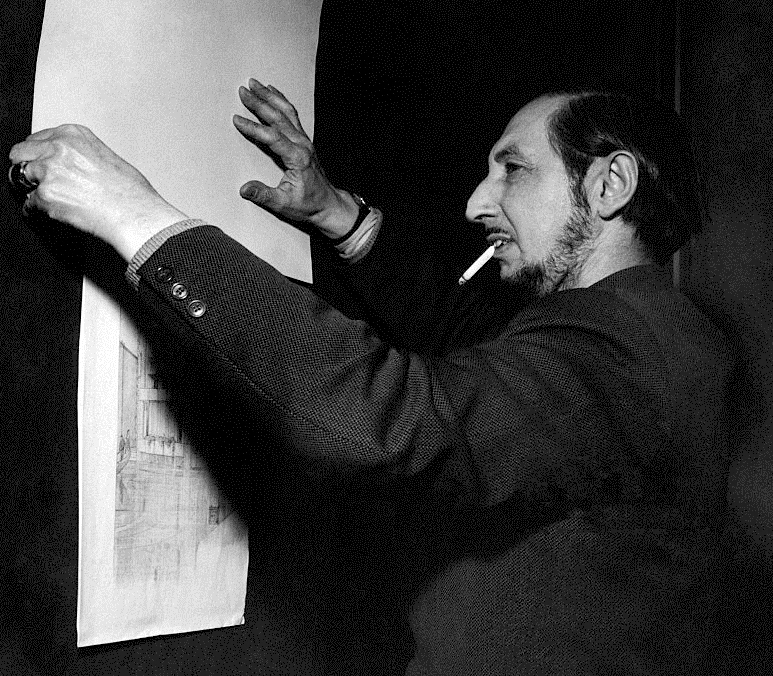
The year 1925 in Europe belonged to the Exposition Internationale des Arts Décoratifs et Industriels Modernes in Paris—the landmark fair that christened Art Deco. Across the continent, decorative arts were discarding historical revivalism and embracing clean lines, geometric geometry, and industrial discipline. Yet on the island of Murano, glass furnaces were largely still trapped in the nineteenth century, turning out ornate chandeliers heavy with applied leaves, multicoloured millefiori paperweights, and Neo-Rococo goblets built for Victorian drawing rooms.
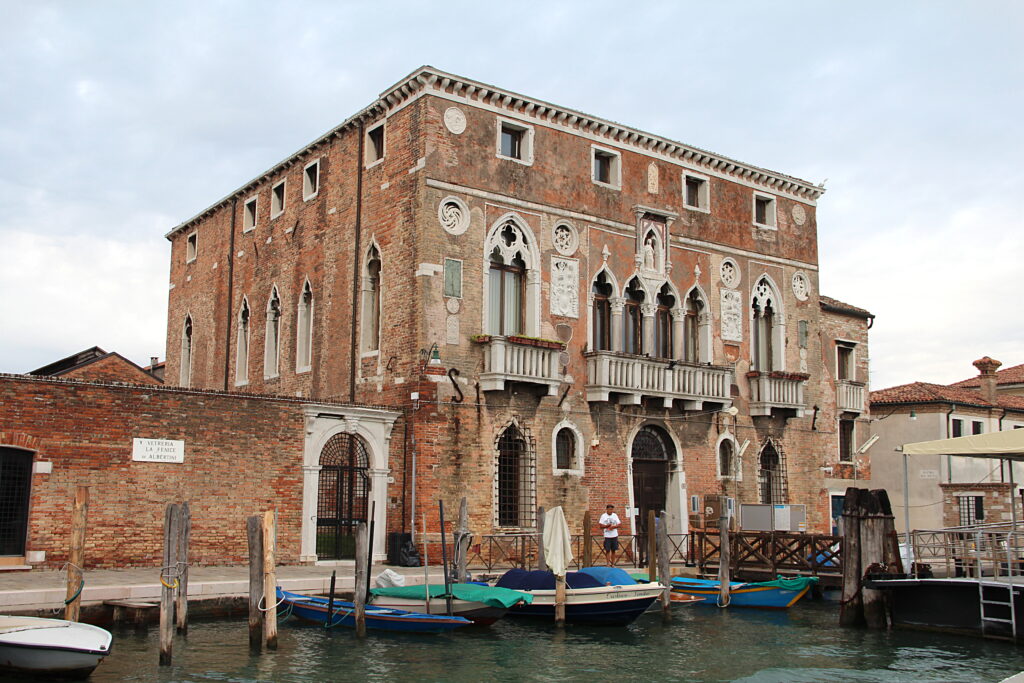
That spring, Giacomo Cappellin (1887–1968), a Milanese antiquarian turned Murano entrepreneur, severed his four-year partnership with Paolo Venini. Taking a substantial body of the firm’s most skilled master blowers with him, Cappellin took up premises inside the Gothic Palazzo da Mula on the Canale degli Angeli and incorporated Maestri Vetrai Muranesi Cappellin & C. (M.V.M. Cappellin). To define his firm’s aesthetic, Cappellin took an astonishing gamble: he hired an unknown nineteen-year-old student from the Accademia di Belle Arti in Venice, Carlo Scarpa (1906–1978), and made him artistic director.
The aesthetic revolution of transparent forms
Scarpa did not know how to blow glass, but he possessed an uncanny structural vision and an architect’s eye for proportion. Working side by side at the roaring glory holes with master glassmaker Ferdinando Toso (called *Fei*), the young Scarpa banished all superficial ornamentation. No applied flowers, no gilded scrollwork, no heavy polychromy. Instead, he stripped the glass down to pure mathematical volume.
Taking inspiration from the spare, elegant glassware depicted in Renaissance masterworks by Paolo Veronese and Andrea Mantegna, as well as the geometric severity of the Wiener Werkstätte, Scarpa created the famous vetri soffiati trasparenti. Blown to paper-thin delicacy in smoked amethyst, pale straw-yellow, sage green, and water-clear crystal, these vases, compotes, and bottles relied entirely on tension between foot, body, and neck. M.V.M. Cappellin turned Murano glass into an architectural medium.
Monza triumphs and the Wall Street shock
At the Monza Biennali of 1927 and 1930, the firm caused a sensation. Critics across Europe praised Cappellin for delivering Italian glass from provincial tourist souvenir status into the front ranks of international modernism. The German architect Mies van der Rohe and the leaders of the Bauhaus took notice.
Yet the financial foundation was fragile. Giacomo Cappellin was an uncompromising aesthete rather than a disciplined accountant. He insisted on maintaining opulent showrooms in Paris and Milan and refused to compromise on hand-blown precision. When the Great Depression struck in the winter of 1929, the American and European luxury export markets collapsed overnight. Orders dried up, debt mounted, and in January 1932 M.V.M. Cappellin was forced into liquidation. Carlo Scarpa immediately crossed the canal to Venini, carrying with him six years of intense, fiery experimentation that would shape his legendary career as Italy’s premier twentieth-century architect.
What remains today
Because M.V.M. Cappellin existed for only seven years (1925–1932), its output is among the rarest and most intensely collected decorative art of the interwar era. Masterpieces designed by Scarpa for the Palazzo da Mula furnace are conserved in the permanent collection of the Museo del Vetro in Murano and the Musée des Arts Décoratifs in Paris. On the Venetian island of San Giorgio Maggiore, the research institute Le Stanze del Vetro (Fondazione Giorgio Cini) houses the definitive photographic and drawing archives of the firm. The Palazzo da Mula itself, with its fourteenth-century pointed arches overlooking the Murano canal, still stands as an architectural monument to the incandescent moment when modern design first took root in Venetian sand and ash.
Historic Views & Archives
From the Archives: Historical Newsreels
Murano. Museo dei vetri artistici e i maestri del vetro soffiato
Historic 1932 newsreel capturing the masters of blown glass working at the Murano furnaces and the gallery of transparent glass creations at the Museo del Vetro.
Visiting the Site: Street View & Modern Geography
The 14th-century Venetian Gothic Palazzo da Mula overlooks the Canale degli Angeli in Murano. Overlooking Fondamenta da Mula, it preserves the pointed arches, marble paterae, and furnace quays where Giacomo Cappellin and young Carlo Scarpa revolutionized 20th-century Murano glass design.
Historic Address: Palazzo da Mula, Fondamenta da Mula 152, 30141 Murano (VE), Italy
Sources
- S1 — Barovier, Marino. Carlo Scarpa: I vetri di un architetto 1926-1947. Skira, 1997. ISBN 978-88-8118-212-1.
- S2 — Dorigato, Attilia. Il vetro di Murano alle Biennali 1895-1972. Leonardo Arte, 1995. ISBN 978-88-7813-542-0.
Spotted an error? Write to editorial@culturalheritageonline.com and we correct it the same day.