
A fresco titled La perennità dell’idea di Roma (The Permanence of the Idea of Rome) was painted by Massimo Campigli in the Palazzo Liviano, Padua, between 1939 and 1940. The work exemplifies the artist’s engagement with monumental figuration during this period of his career.
Campigli, born in Berlin in 1895 and raised primarily in Italy, developed his artistic practice in Paris during the 1920s, where he studied ancient Egyptian art at the Louvre—a influence that would shape his distinctive style. By the late 1930s, he had returned to Italy and undertaken significant public commissions, including this fresco cycle in Padua’s newly constructed university building.
About Palazzo Liviano
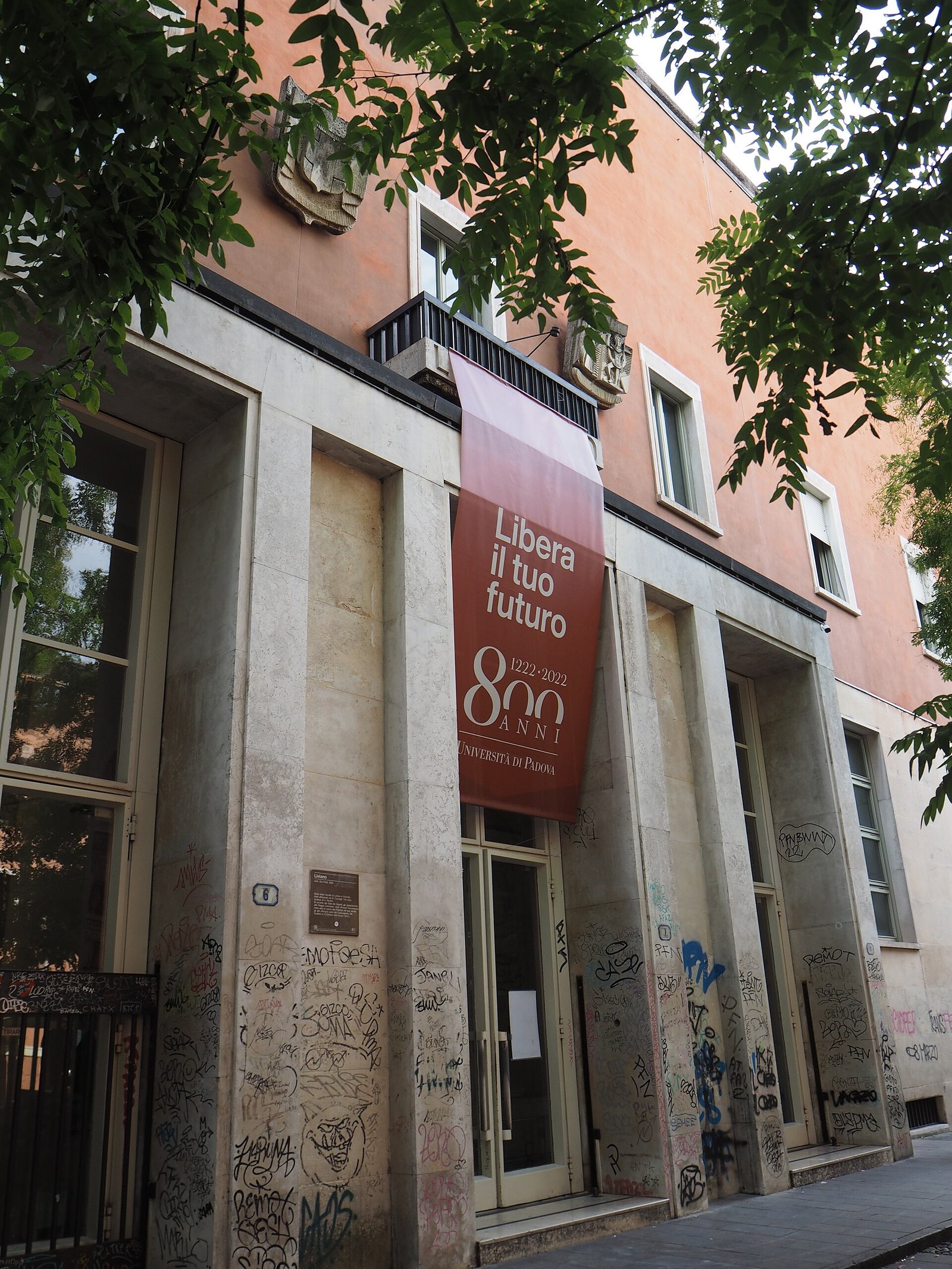
The Palazzo Liviano is a twentieth-century building in Padua, erected in the district of the former Capitaniato. Named in honour of the historian Livy (Titus Livius), it incorporates the remains of the ancient Palazzo del Capitanio. Today it houses the School of Humanities, Social Sciences and Cultural Heritage, the Department of Cultural Heritage, Archaeology, Art, Cinema and Music History of the University of Padua, as well as the Museum of Archaeological and Artistic Sciences. The building is also connected to the Sala dei Giganti, an ancient frescoed hall now used for concerts and conferences.
Details
- Artist: Massimo Campigli (1895–1971), Italian painter and journalist
- Work: Fresco, La perennità dell’idea di Roma
- Date: 1939–1940
- Location: Palazzo Liviano, Padua, Italy
- Current use: Part of the University of Padua campus
Frequently asked questions
Who was Massimo Campigli?
Massimo Campigli was an Italian painter and journalist born in Berlin in 1895. He spent his childhood in Florence and worked in Milan’s avant-garde circles before moving to Paris, where he developed his distinctive painting style under the influence of ancient Egyptian art.
Where is this fresco located?
The fresco is located in the Palazzo Liviano in Padua, a twentieth-century university building that incorporates the remains of the former Palazzo del Capitanio and now houses departments of the University of Padua, including the School of Humanities and the Museum of Archaeological and Artistic Sciences.
What does the fresco’s title mean?
La perennità dell’idea di Roma translates as The Permanence of the Idea of Rome. The work was created between 1939 and 1940 as part of the artistic programme of the newly constructed Palazzo Liviano.
Sources
- S1 — Campigli, Nicola, Eva Weiss, and Marcus Weiss. Massimo Campigli: catalogo ragionato dell'opera grafica 1930-1969. Silvana Editoriale, 2013. ISBN 978-88-366-2673-1.
- S2 — Pontiggia, Elena. Il Novecento Italiano. Abscondita, 2003. ISBN 978-88-8416-048-5.
Spotted an error? Write to editorial@culturalheritageonline.com and we correct it the same day.


