
A genre of regional Mexican music blending violin, trumpet, and guitar, mariachi emerged from the countryside of western Mexico and evolved into a national symbol of Mexican identity, performed by ensembles whose members sing and play in rotation.
In UNESCO’s words
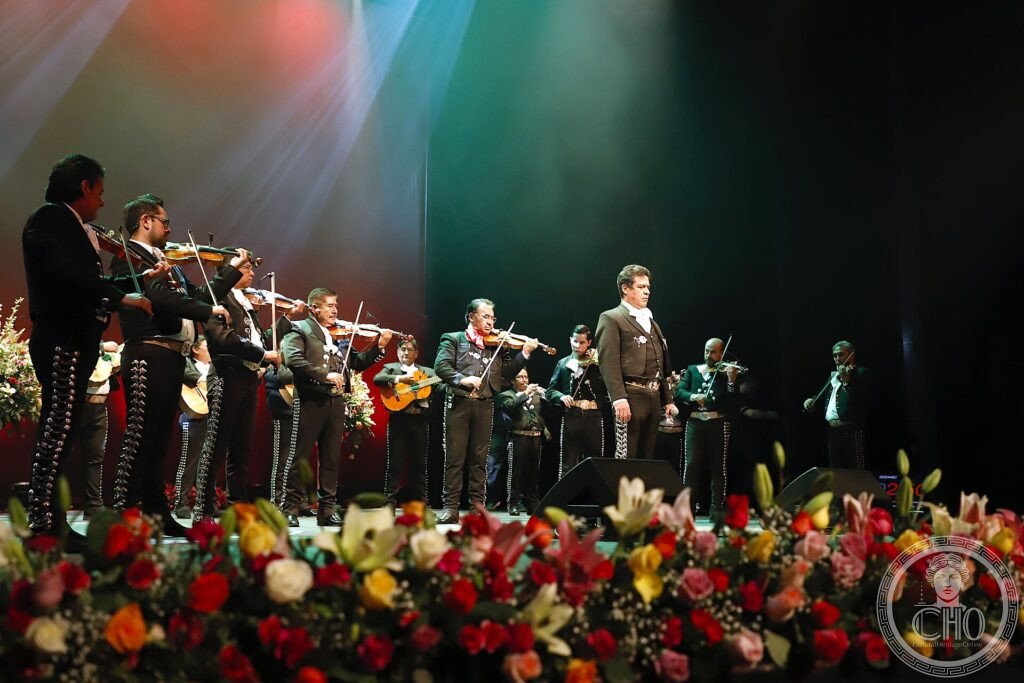
Mariachi is a traditional Mexican music and a fundamental element of Mexican culture. Traditional Mariachi groups, made up of two or more members, wear regional costumes adapted from the charro costume and interpret a broad repertoire of songs on stringed instruments. Ensembles playing ‘modern Mariachi’ include trumpets, violins, the vihuela and ''guitarrón'' (bass guitar), and may have four or more musicians. The wide repertoire includes songs from different regions, jarabes, minuets, polkas, ''valonas,'' schottisches, waltzes and serenades, in addition to ''corridos'' (typical Mexican ballads narrating stories of battles, outstanding deeds and love affairs) and traditional songs depicting rural life. Modern Mariachi music has adopted other genres such as ranchera songs, the bolero ranchero and even the ''cumbia'' from Colombia. The lyrics of Mariachi songs portray love of the earth, hometown, native land, religion, nature, fellow countrywomen and the strength of the country. Learning by ear is the main means of transmission of traditional Mariachi, and the skill is usually passed down from fathers to sons and through performance at festive, religious and civil events. Mariachi music transmits values of respect for the natural heritage of the regions of Mexico and local history in the Spanish language and the different Indian languages of Western Mexico.
Official description, UNESCO Intangible Cultural Heritage List — Mariachi, string music, song and trumpet
At a glance
Mariachi is a traditional Mexican ensemble music performed by groups of two or more musicians wearing regional costumes adapted from the charro style. Players interpret a broad repertoire on stringed instruments, with modern groups adding trumpets and typically numbering four or more members. The ensemble repertoire spans corridos, ranchera songs, bolero ranchero, cumbia, and various regional forms including jarabes, minuets, polkas, waltzes and serenades. Lyrics celebrate love of the earth, homeland, religion, nature and national strength.
Origins & history
Mariachi emerged as a fundamental element of Mexican culture through transmission across generations, primarily learned by ear and passed from fathers to sons. The tradition absorbed influences from multiple genres and developed its characteristic sound through incorporation of different musical styles over time.
The practice
Modern Mariachi ensembles feature trumpets, violins, the vihuela and guitarrón bass guitar. Musicians wear regional costumes adapted from the charro style. The practice centres on performance at festive, religious and civil events, where skill and repertoire are demonstrated through live interpretation of songs. Learning occurs mainly by ear through participation in these community gatherings.
Cultural significance
Mariachi transmits core values rooted in respect for the natural heritage and local history of Mexican regions, expressed in Spanish and indigenous languages of Western Mexico. The tradition connects communities to their homeland, fellow countrypeople and shared cultural identity, maintaining these bonds through ongoing performance and intergenerational learning.
Key facts
- Country: Mexico
- Inscribed: 2011
- UNESCO list: Representative List of the Intangible Cultural Heritage of Humanity
- UNESCO reference: 00575
- UNESCO vocabulary: Instrumental music; Orchestras; Vocal music
- Map: not shown — UNESCO’s official description of this element names no locality, and a living tradition is practised across a community, not at one address.
Where to experience it
Mariachi ensembles perform at festive, religious and civil events throughout Mexico, particularly in Western Mexico where the tradition thrives. Visitors may encounter these groups at celebrations, restaurants, plazas and cultural venues, where they interpret their broad repertoire on stringed instruments and, in modern ensembles, trumpets. The music transmits values of respect for local heritage and history, expressed in Spanish and Indian languages of the region, making performances living expressions of Mexican cultural identity.
Sources & resources
- UNESCO — official element page: Mariachi, string music, song and trumpet
- UNESCO — open data record: Intangible Heritage List, reference 00575
- UNESCO — official video: UNESCO film on this element — embedded on this page
- UNESCO — official photograph: Photograph of this element — Cámara de Comercio de Guadalajara, (CANACO) — 2009 by Cámara de Comercio de Guadalajara
- Reference — Wikipedia (secondary): Mariachi — consulted as a secondary reference, not as confirmation
- Cultural Heritage Online: Our archive and city guides

Sources
- S1 — Jáuregui, Jesús. El mariachi: Símbolo musical de México. Taurus, 2007. ISBN 978-970-770-925-6.
- S2 — Sheehy, Daniel E. Mariachi Music in America: Experiencing Music, Expressing Culture. Oxford University Press, 2006. ISBN 978-0-19-514146-7.
Spotted an error? Write to editorial@culturalheritageonline.com and we correct it the same day.