
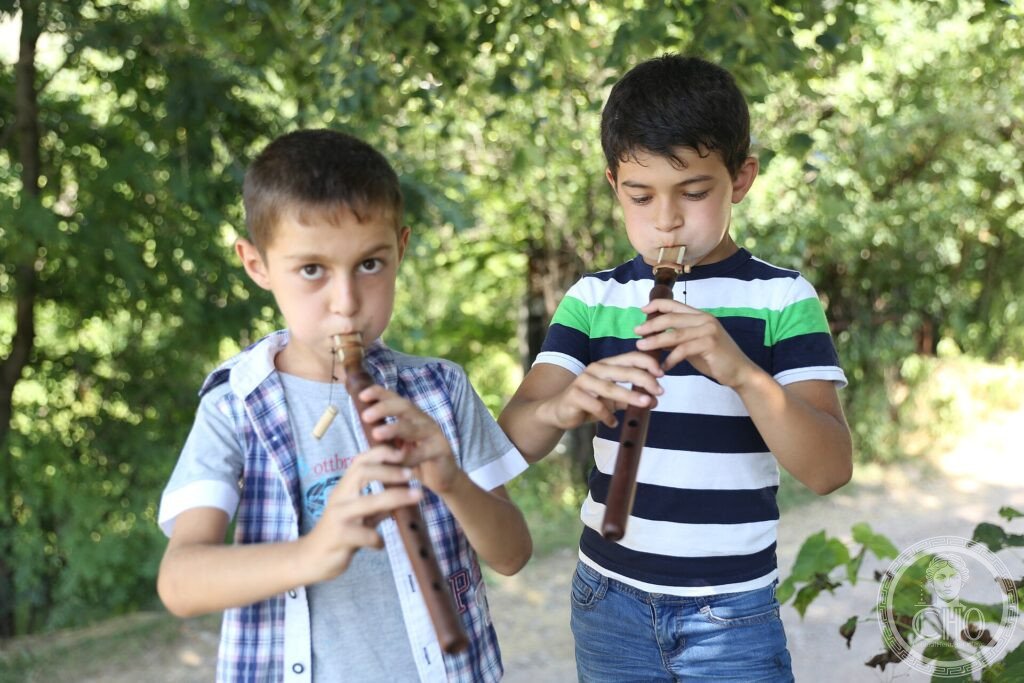
A double-reed woodwind instrument carved from apricot wood, the Armenian duduk produces a sound of haunting warmth when played in pairs—one musician sustaining a drone while the other voices the melody.
In UNESCO’s words
The duduk, the Armenian oboe, is a double-reed wind instrument characterized by a warm, soft, slightly nasal timbre. It belongs to the category of aerophones, which also includes the balaban played in Azerbaijan and Iran, the duduki common in Georgia and the ney in Turkey.The soft wood of the apricot tree is the ideal material for the body of the instrument. The reed, called ghamish or yegheg, is a local plant growing alongside the Arax River. The roots of Armenian duduk music go back to the times of the Armenian king Tigran the Great (95-55 BC). It accompanies popular Armenian traditional songs and dances of the various regions and is played at events, such as weddings and funerals. Although there are also famous duduk soloists, among them Gevorg Dabaghyan and Vache Sharafyan, the duduk is usually played by two musicians. One player creates the musical environment for the lead melody by playing a continual drone held by circular breathing, while the other player develops complex melodies and improvisations. There are four major types of duduk, varying in length from 28 to 40 cm. This variety allows the sound of the duduk to express various moods depending on the content of the piece and the playing context. The 40-cm long duduk, for example, is regarded as most appropriate for love songs, whereas the smaller one usually accompanies dances. Today, duduk craftsmen continue to create and experiment with different forms of duduks. Many Armenians consider the duduk as the instrument that most eloquently expresses warmth, joy and their history. Over the last few decades, the popularity of Armenian duduk music has faded, in particular in the rural areas where it originated. The duduk instrument is played less and less in popular festivities, but more often as a staged performance by professionals, risking to threaten the music’s viability and traditional character.
Official description, UNESCO Intangible Cultural Heritage List — Duduk and its music
At a glance
The duduk is an Armenian double-reed wind instrument known for its warm, soft, slightly nasal sound. Made from apricot wood with a reed grown along the Arax River, it belongs to a family of similar instruments found across the region, including the balaban, duduki, and ney. The instrument expresses warmth, joy, and Armenian history in ways many Armenians find deeply resonant.
Origins & history
Armenian duduk music traces its roots to the time of King Tigran the Great, around 95–55 BC. The instrument has accompanied popular traditional songs and dances across the country's various regions for centuries, played at major life events including weddings and funerals.
The practice
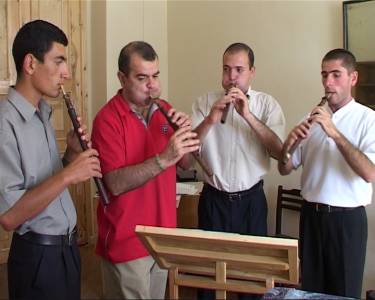
Duduk players traditionally work in pairs using circular breathing: one musician sustains a continuous drone while the other develops complex melodies and improvisations. Four major types exist, ranging from 28 to 40 centimetres in length. The longer 40-cm duduk suits love songs, while smaller versions typically accompany dances. Craftsmen continue to create and experiment with different duduk forms, adapting the sound to match the mood and context of each piece.
Cultural significance
The duduk holds deep cultural meaning for Armenians as an instrument expressing their warmth, joy, and shared history. However, over recent decades its popularity has declined, particularly in rural areas where it originated. The shift from everyday celebration to staged professional performance risks changing the music's traditional character and threatening its continued viability in communities.
Key facts
- Country: Armenia
- Inscribed: 2008
- UNESCO list: Representative List of the Intangible Cultural Heritage of Humanity
- UNESCO reference: 00092
- UNESCO vocabulary: Instrumental music; Woodwind instruments
- Map: not shown — UNESCO’s official description of this element names no locality, and a living tradition is practised across a community, not at one address.
Where to experience it
The duduk remains central to Armenian cultural life, though its presence has declined in rural areas where the tradition originated. Visitors may encounter duduk performances at weddings, funerals, and other traditional celebrations across Armenian communities. Professional staged performances by accomplished musicians such as Gevorg Dabaghyan and Vache Sharafyan offer opportunities to experience the instrument's warm, expressive sound. Craftsmen throughout Armenia continue to create and refine duduks from apricot wood and local reeds, maintaining the knowledge required to produce these distinctive instruments.
Sources & resources
- UNESCO — official element page: Duduk and its music
- UNESCO — open data record: Intangible Heritage List, reference 00092
- UNESCO — official video: UNESCO film on this element — embedded on this page
- UNESCO — official photograph: Photograph of this element — Samvel Amirkhanyan
- Reference — Wikipedia (secondary): Duduk — consulted as a secondary reference, not as confirmation
- Cultural Heritage Online: Our archive and city guides
Sources
- S1 — Nercessian, Andy. The Duduk and National Identity in Armenia. Scarecrow Press, 2001. ISBN 978-0-8108-4075-1.
- S2 — Redgate, Anne Elizabeth. The Armenians. Wiley-Blackwell, 2000. ISBN 978-0-631-22037-4.
Spotted an error? Write to editorial@culturalheritageonline.com and we correct it the same day.