
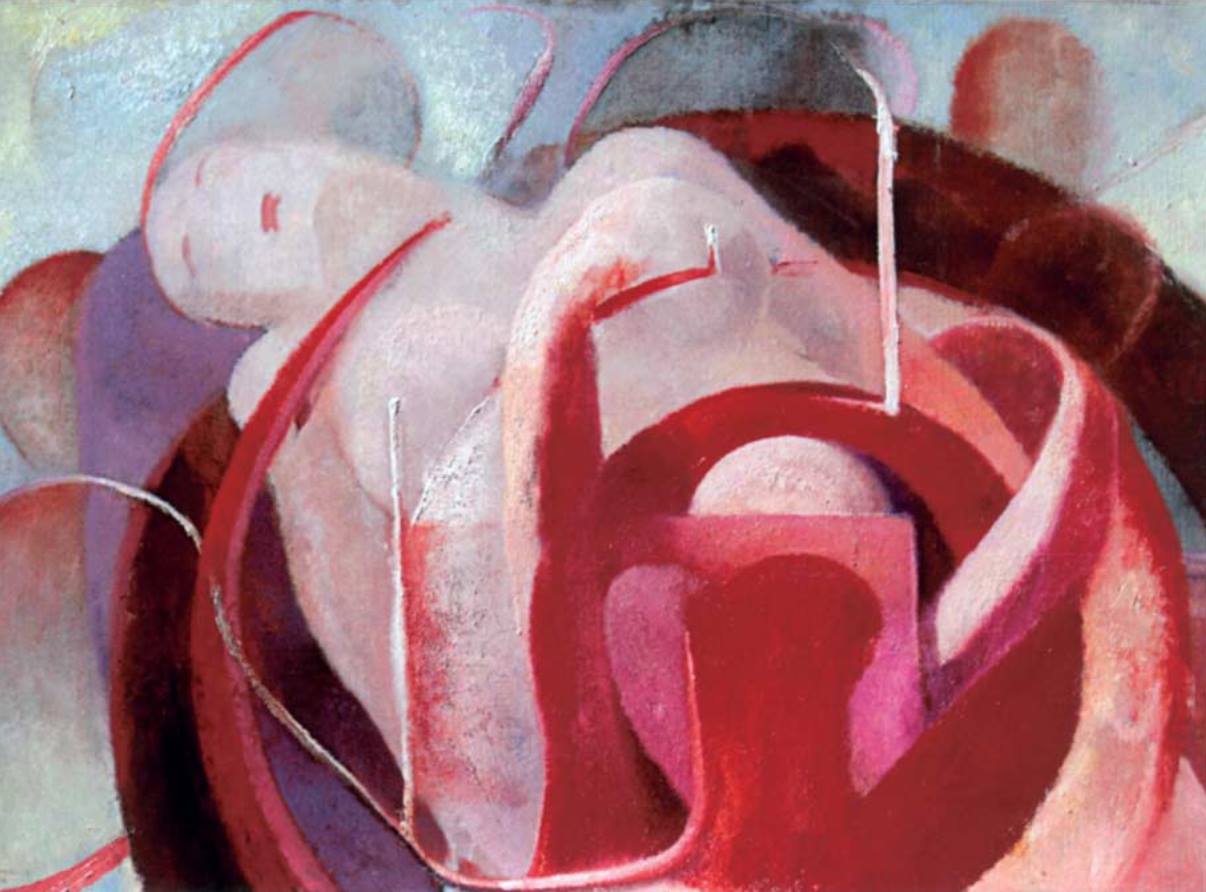
L’ebbrezza fisica della maternità is a 1936 painting by Marisa Mori, an Italian painter and scenographer working within the Futurist movement. The title translates to The Physical Intoxication of Motherhood, indicating the work’s engagement with themes of maternal experience and bodily sensation characteristic of avant-garde artistic inquiry in interwar Italy.
Mori was among the notable female artists who participated in Futurism, a movement that challenged conventional representation through dynamic formal innovation. By the 1930s, Mori had developed her practice under the mentorship of Felice Casorati, a prominent Turin-based artist, studying with him between 1925 and 1931 alongside other significant figures in Italian modernism including Carlo Levi and Paola Levi-Montalcini. This work from 1936 reflects the artistic experimentation and thematic ambition of her mature period.
About Marisa Mori
Marisa Mori (1900–1985) was born in Florence and relocated to Turin in 1918, where she pursued formal artistic training. Beyond her work as a painter, she was active as a scenographer, contributing to multiple dimensions of visual culture during the twentieth century.
Details
- Creator: Marisa Mori
- Year: 1936
- Movement: Futurism
- Medium: Painting
Frequently asked questions
Who was Marisa Mori?
Marisa Mori (1900–1985) was an Italian painter and scenographer born in Florence. She studied under Felice Casorati in Turin from 1925 to 1931 and was one of several female artists active within the Futurist movement.
What does the title mean?
The title L’ebbrezza fisica della maternità translates to The Physical Intoxication of Motherhood, suggesting the work engages with embodied experiences and maternal themes.
What artistic movement did Mori belong to?
Mori was an artist working within Futurism, an avant-garde movement that emphasized dynamic formal innovation and challenged conventional artistic representation in early twentieth-century Italy.
.jpg?w=768&resize=768,0&ssl=1 "Dux by Uberto Bonetti, 1933")

