
A centuries-old practice of applying plant-based dye to skin and hair, henna rituals unite aesthetic expression, social celebration, and regional identity across North Africa and the Middle East.
In UNESCO’s words
Henna is a deciduous tree that grows in hot regions. Perceived as sacred by communities in Northern Africa and the Middle East, its leaves are harvested twice a year, left to dry, then ground and processed to create a paste. The specific ingredients and techniques used to prepare the paste vary according to the intended use and country. Henna paste is commonly used by women for adornment, such as to dye hair and fingertips or to decorate hands and feet. A symbol of joy, it is used in everyday life and on festive occasions such as births and weddings. Henna branches, leaves and paste are also used in crafts and for medicinal purposes, including the treatment of certain skin diseases. Its use is frequently accompanied by oral expressions such as chants, songs, proverbs and poems, and is linked to centuries-old societal rules and traditions. This includes knowledge related to the cultivation and care of the henna tree and the preparation and application of the paste. Families and communities transmit the traditions through observation and hands-on practice. Today, organizations, beauty centres, universities and the media also contribute to their transmission. A key component of traditional events, henna rituals enhance social bonds and promote communication.
Official description, UNESCO Intangible Cultural Heritage List — Henna: rituals, aesthetic and social practices
At a glance
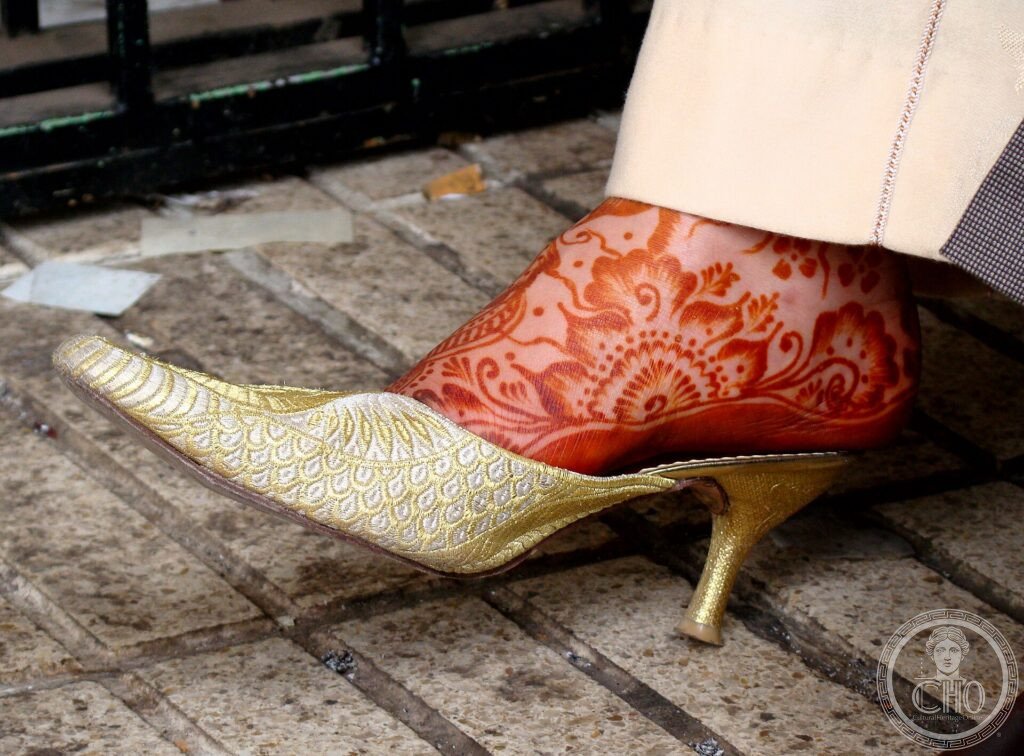
Henna is a practice centred on the leaves of a tree that grows in hot regions. Communities in Northern Africa and the Middle East regard it as sacred. The dried leaves are ground and processed into a paste that women commonly use for adornment—dyeing hair and fingertips, or decorating hands and feet. A symbol of joy, henna appears in everyday life and at festive occasions such as births and weddings. Beyond personal decoration, henna branches, leaves and paste serve purposes in crafts and medicine, including treatment of certain skin diseases.
Origins & history
Knowledge of henna cultivation, care, and paste preparation has developed over centuries within communities. The use of henna is linked to centuries-old societal rules and traditions that have shaped how the practice is understood and performed across different countries. Specific ingredients and techniques for preparing the paste vary according to intended use and location, reflecting how the tradition has adapted within different regions.
The practice
Henna paste is created by harvesting leaves twice yearly, drying them, then grinding and processing them using methods that differ by country and purpose. Women apply the paste to hands, feet and other areas of the body. Families and communities transmit knowledge through observation and hands-on practice, though organizations, beauty centres, universities and media now also contribute to its transmission. The practice is frequently accompanied by oral expressions such as chants, songs, proverbs and poems.
Cultural significance
Henna rituals enhance social bonds and promote communication within communities. The tradition carries particular importance at festive occasions—births, weddings and other celebrations—where it functions as a key component of traditional events. Knowledge of henna cultivation and paste preparation represents cultural heritage that families and communities work to preserve and pass forward to future generations.
Key facts
- Country: United Arab Emirates, Algeria, Bahrain, Egypt, Iraq, Jordan, Kuwait, Mauritania, Morocco, Oman, State of Palestine, Qatar, Saudi Arabia, Sudan, Tunisia, Yemen
- Inscribed: 2024
- UNESCO list: Representative List of the Intangible Cultural Heritage of Humanity
- UNESCO reference: 02116
- UNESCO vocabulary: Cosmetics; Life cycle; Natural dyes
- Map: not shown — UNESCO’s official description of this element names no locality, and a living tradition is practised across a community, not at one address.
Where to experience it
Henna traditions flourish across Northern Africa and the Middle East, where the practice remains integral to daily life and celebrations. Weddings, births, and festive occasions throughout these regions feature henna rituals, with professional artists applying intricate designs in beauty centres, traditional souks, and private ceremonies. Families continue to transmit knowledge of henna cultivation, paste preparation, and application techniques through observation and hands-on practice, while organizations, universities, and the media also support these living traditions. Visitors can witness henna's cultural significance at traditional events and festivals where it strengthens social bonds and marks joyful occasions.
Sources & resources
- UNESCO — official element page: Henna: rituals, aesthetic and social practices
- UNESCO — open data record: Intangible Heritage List, reference 02116
- UNESCO — official video: UNESCO film on this element — embedded on this page
- UNESCO — official photograph: A local woman is preparing the henna paste in Al Ain City (United Arab Emirates) — K.Renative FZ LLC, Kerelous Yacoub — Department of Culture and Tourism, Abu Dhabi, United Arab Emirates, 2022
- Reference — Wikipedia (secondary): Henna — consulted as a secondary reference, not as confirmation
- Cultural Heritage Online: Our archive and city guides

Sources
- S1 — Westermarck, Edward. Ritual and Belief in Morocco. Macmillan, 1926. ISBN 978-0-8201-1406-4.
- S2 — Early, Evelyn A. Baladi Women of Cairo: Playing with an Egg and a Stone. Lynne Rienner Publishers, 1993. ISBN 978-1-55587-268-7.
Spotted an error? Write to editorial@culturalheritageonline.com and we correct it the same day.