
A fiery red chili pepper paste that embodies centuries of Tunisian culinary tradition, harissa carries the heat and complexity of roasted peppers, aromatic spices, and olive oil into everyday meals and festive tables across North Africa.
In UNESCO’s words
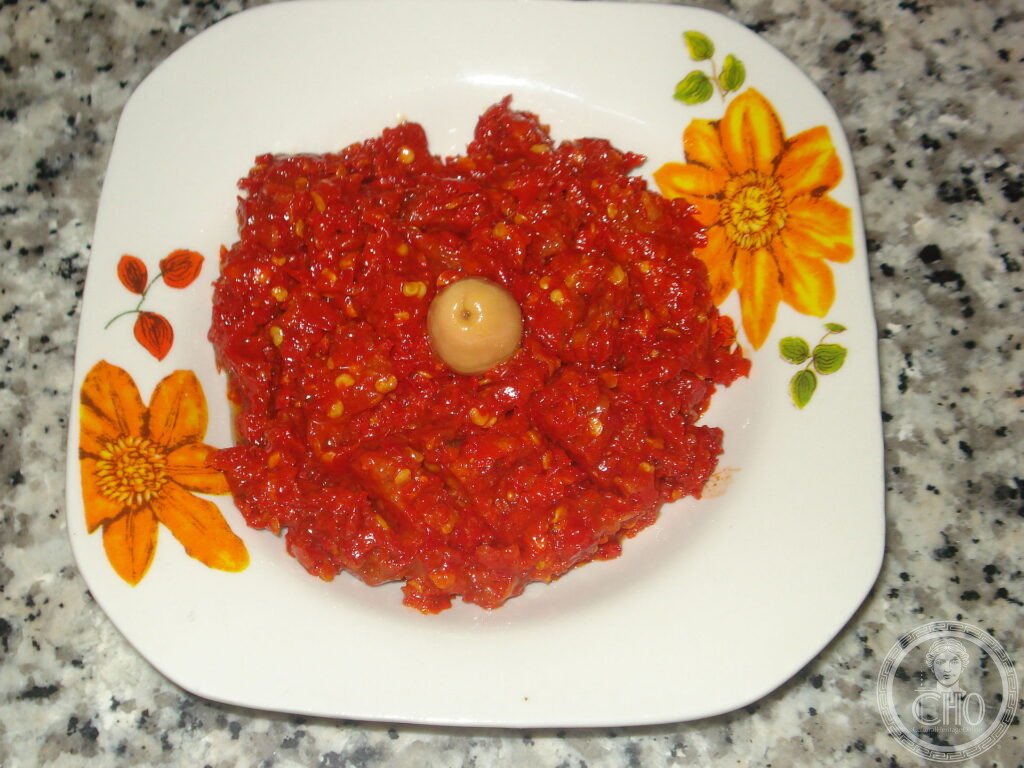
Harissa, a seasoning made with chilli pepper paste, is an integral part of domestic provisions and the daily culinary and food traditions of Tunisian society. It is usually prepared by women in a convivial and festive family or neighbourhood setting. It is prepared by drying the chilli peppers in the sun, and splitting the peppers, removing the stalks and deseeding. The chilli peppers are then washed, ground and seasoned with salt, garlic and coriander using a pestle and mortar or a manual meat mincer. The harissa is stored in glass or pottery for subsequent use. The cultivation of chilli peppers follows an agrarian calendar that prohibits sowing during certain periods, which are considered unlucky. Chillies are hung on looms and replicas are made from coral to avoid bad luck. The knowledge and skills related to chilli pepper growing are passed on within communities of farmers or through agronomy schools and institutes.
Official description, UNESCO Intangible Cultural Heritage List — Harissa, knowledge, skills and culinary and social practices
At a glance
Harissa is a chilli pepper paste that forms an integral part of Tunisian daily food traditions and domestic cooking. Made by drying chilli peppers in the sun, then grinding them with salt, garlic and coriander, harissa is usually prepared by women in family or neighbourhood settings. The paste is stored in glass or pottery containers for later use.
Origins & history
The cultivation of chilli peppers follows an agrarian calendar rooted in local farming practices, with certain sowing periods considered unlucky. Knowledge of growing chilli peppers has been passed down within farming communities and through agronomy schools and institutes, becoming embedded in Tunisian agricultural and culinary life over generations.
The practice
Harissa is made by drying chilli peppers in the sun, then splitting them to remove stalks and seeds. The peppers are washed, ground and mixed with salt, garlic and coriander using a pestle and mortar or manual meat mincer. The preparation typically occurs in a convivial, festive atmosphere within families or neighbourhoods. The finished harissa is stored in glass or pottery vessels for future use.
Cultural significance
Harissa embodies Tunisian culinary and food identity, linking people across generations through the act of preparation. The practice carries spiritual dimensions: chillies are hung on looms and coral replicas are made to ward off bad luck. For the community, the tradition represents continuity of knowledge and skills within family and neighbourhood networks, maintaining connection to agrarian and culinary heritage.
Key facts
- Country: Tunisia
- Inscribed: 2022
- UNESCO list: Representative List of the Intangible Cultural Heritage of Humanity
- UNESCO reference: 01710
- UNESCO vocabulary: Food customs; Food preparation
- Map: not shown — UNESCO’s official description of this element names no locality, and a living tradition is practised across a community, not at one address.
Where to experience it
Harissa is encountered throughout Tunisia as an integral part of daily meals and domestic provisions. The tradition lives within families and communities, where women prepare the paste in convivial, festive settings using sun-dried chilli peppers, salt, garlic, and coriander ground by pestle and mortar or manual meat mincer. Visitors can witness this knowledge being passed on through agronomy schools and institutes, and observe the practice at Tunisian tables where harissa serves as a staple condiment. The tradition reflects deep cultural connections to an agrarian calendar and community-based food practices that span generations.
Sources & resources
- UNESCO — official element page: Harissa, knowledge, skills and culinary and social practices
- UNESCO — open data record: Intangible Heritage List, reference 01710
- UNESCO — official video: UNESCO film on this element — embedded on this page
- UNESCO — official photograph: Photograph of this element — Mohamed BOUHJAR — Institut National du Patrimoine (INP), Tunisie, 2020
- Reference — Wikipedia (secondary): Harissa — consulted as a secondary reference, not as confirmation
- Cultural Heritage Online: Our archive and city guides

Sources
- S1 — Roden, Claudia. The New Book of Middle Eastern Food. Alfred A. Knopf, 2000. ISBN 978-0-375-40506-8.
- S2 — Perkins, Kenneth J. A History of Modern Tunisia. Cambridge University Press, 2004. ISBN 978-0-521-81140-8.
Spotted an error? Write to editorial@culturalheritageonline.com and we correct it the same day.