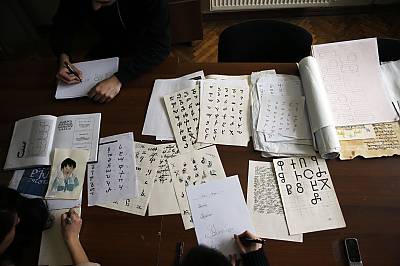
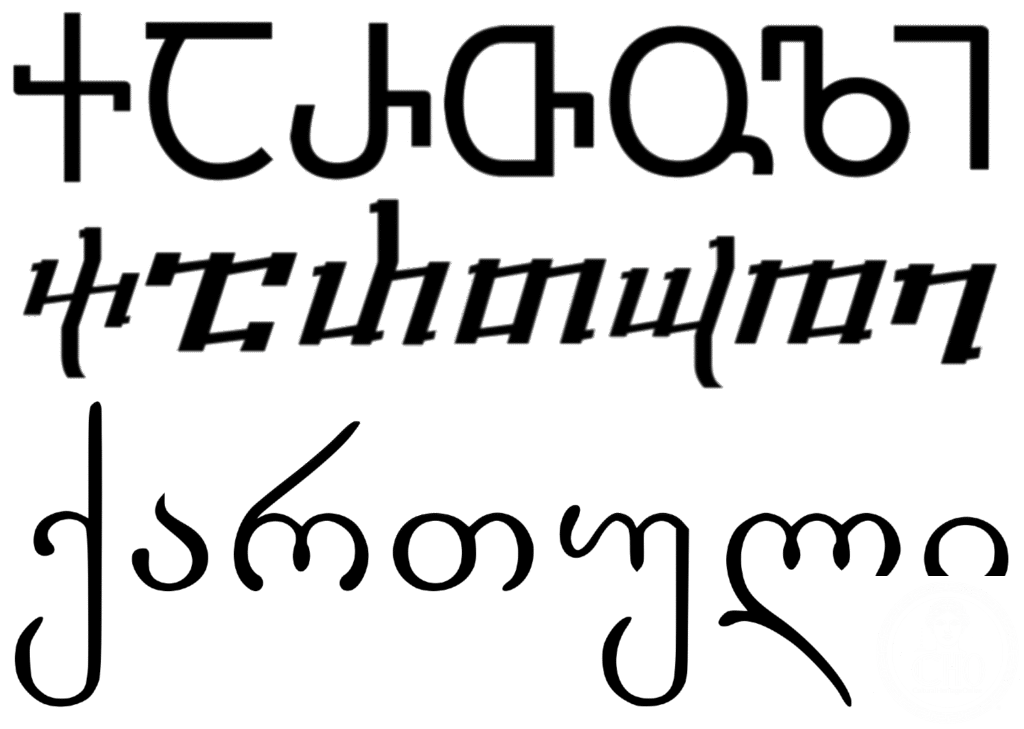
Three distinct writing systems—Asomtavruli, Nuskhuri and Mkhedruli—preserve the living tradition of written Georgian, each carrying the same alphabetical order yet serving different ceremonial and everyday purposes across nearly two millennia.
In UNESCO’s words
The evolution of Georgia’s written language has produced three alphabets – Mrgvlovani, Nuskhuri and Mkhedruli – which all remain in use today. Mrgvlovani was the first alphabet from which Nuskhuri was derived and then Mkhedruli. The alphabets coexist thanks to their different cultural and social functions, reflecting an aspect of Georgia’s diversity and identity. Their ongoing use in a cultural sense, also gives communities a feeling of continuity. The alphabets Mrgvlovani and Nuskhuri are practised and taught informally predominately by the community of the Georgian Apostolic Autocephalous Orthodox Church. For example, the alphabets feature in texts used by church worshippers such as the psalms and hymns and on inscriptions of display items used in the church, like the icons. Traditional craftspeople (goldsmiths, embroiderers, icon-painters and sculptors) who create pieces for the church can also be considered as practitioners and transmitters of the alphabets, as well as some theological schools, tertiary institutions, linguists, scholars and historians. Georgia’s educational system, however, is based on the Mkhedruli alphabet. Taught in primary and high school, the Mkhedruli alphabet is also transmitted informally in the home from older to younger generations. The Mrgvlovani and Nuskhuri alphabets are taught in schools in Georgia but at a basic level.
Official description, UNESCO Intangible Cultural Heritage List — Living culture of three writing systems of the Georgian alphabet
At a glance
Georgia has three alphabets—Mrgvlovani, Nuskhuri, and Mkhedruli—that evolved from one another and remain in active use today. Each alphabet serves different cultural and social functions within Georgian society. All three coexist because they reflect aspects of Georgia's diversity and identity, giving communities a sense of continuity with their past.
Origins & history
Mrgvlovani was the first Georgian alphabet. Nuskhuri was then derived from it, and Mkhedruli developed from Nuskhuri. The three alphabets have persisted together because of their distinct roles in Georgian culture and society, each maintaining its own purpose across generations.
The practice
The Georgian Apostolic Autocephalous Orthodox Church community practices and teaches Mrgvlovani and Nuskhuri informally. These alphabets appear in church texts such as psalms and hymns, and on inscriptions found on icons and other religious display items. Traditional craftspeople—goldsmiths, embroiderers, icon-painters, and sculptors—who create works for the church are practitioners and transmitters of these scripts. Mkhedruli is taught in Georgia's primary and high schools as the standard alphabet, and transmitted informally from older to younger generations in homes. Theological schools, tertiary institutions, linguists, scholars, and historians also work with these alphabets.
Cultural significance
The three alphabets represent Georgia's cultural identity and diversity. Their continued use provides communities with a feeling of continuity across time. Mrgvlovani and Nuskhuri preserve Georgia's religious and artistic heritage through their presence in church worship and traditional craftsmanship, while Mkhedruli sustains the language in everyday education and communication.
Key facts
- Country: Georgia
- Inscribed: 2016
- UNESCO list: Representative List of the Intangible Cultural Heritage of Humanity
- UNESCO reference: 01205
- UNESCO vocabulary: Alphabets; Calligraphy
- Map: not shown — UNESCO’s official description of this element names no locality, and a living tradition is practised across a community, not at one address.
Where to experience it
Georgia's three alphabets remain woven through the country's religious, educational, and cultural life. Visitors encounter Mkhedruli in daily signage, schools, and printed materials throughout the nation. The older alphabets, Mrgvlovani and Nuskhuri, appear in liturgical texts and church decorations, particularly in Orthodox churches where worshippers encounter them in psalms, hymns, and icons created by traditional craftspeople. Theological schools and cultural institutions maintain these scripts through teaching and scholarship, while families pass Mkhedruli informally from older to younger generations, ensuring the alphabets continue to reflect Georgia's identity and historical continuity.
Sources & resources
- UNESCO — official element page: Living culture of three writing systems of the Georgian alphabet
- UNESCO — open data record: Intangible Heritage List, reference 01205
- UNESCO — official photograph: Students of the Graphic Design Faculty of the State Academy of Fine Arts in calligraphy of three systems of Georgian alphabet — Zurab Tsertsvadze — National Agency for Cultural Heritage Prservation of Georgia, 2015
- Reference — Wikipedia (secondary): Georgian scripts — consulted as a secondary reference, not as confirmation
- Cultural Heritage Online: Our archive and city guides