
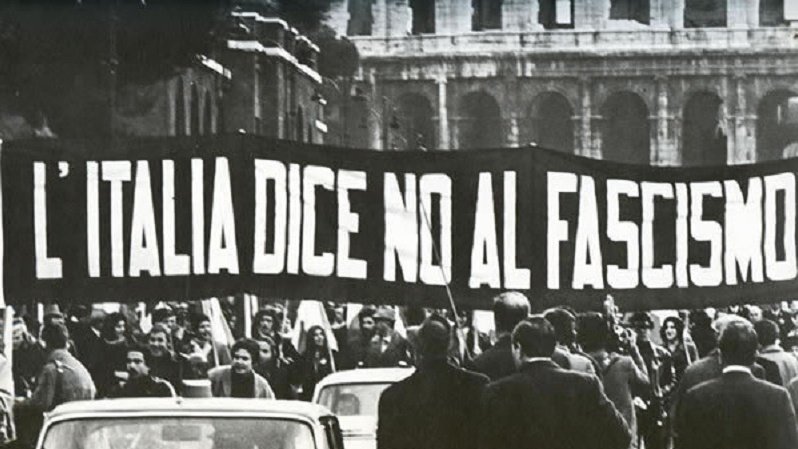
Published in May 2019, this article examines Italy’s constitutional framework regarding fascism and the legal boundaries of political expression. The analysis traces how Italy’s founding legislators approached the question of banning fascist ideology while protecting democratic freedoms.
Constitutional Origins and Intent
In 1944, King Umberto II of Savoy established a referendum on the monarchy and called for the election of 556 Constituent Assembly members—men and, for the first time, women—to draft Italy’s new constitution. These delegates represented all political factions, including Communists, Socialists, Resistance activists, former Fascists, monarchists, and conservatives. Notably, Amintore Fanfani, a former Fascist who taught economic doctrine, contributed to drafting Article 1 of the Constitution. When Communist leader Palmiro Togliatti proposed opening the document with “Italy is a Republic of workers,” Fanfani suggested the final formulation: “Italy is a democratic Republic founded on work,” emphasizing work as both a right and duty—a concept already present in the Fascist Labor Charter. The Constituent Assembly’s Transitional Provisions banned reorganization of the dissolved Fascist Party “in any form,” though this restriction applied only to party reorganization, not to individual political expression. Togliatti himself urged colleagues not to overreach, arguing that new political movements must be countered through democratic competition, not prohibition.
The Scelba Law and Judicial Interpretation
In 1952, the Scelba Law codified the constitutional prohibition, defining reorganization as occurring when five or more persons pursue antidemocratic aims of the Fascist party, exalt violence as political method, suppress constitutional liberties, denigrate democracy or Resistance values, conduct racist propaganda, or engage in fascist external manifestations. Article 4 criminalized “apology of fascism”—praising fascist figures or deeds—while Article 5 punished “usual manifestations” of the dissolved party. This broad language created ambiguity: praising the reclamation of the Pontine Marshes or reconstruction of earthquake-damaged cities—objectively fascist achievements—technically violated the law, while criticism of partisan violence against alleged fascist sympathizers risked prosecution.
In its 1958 decision, the Constitutional Court upheld the law but imposed a restrictive interpretation. The ruling clarified that apology requires conduct “suitable and efficacious” to provoke adhesion to fascist reorganization, not mere individual expression of fascist sympathy. The court emphasized that manifestations must occur in circumstances making them “suitable to provoke consensus” and promote fascist reorganization. Subsequently, judges applied this standard case-by-case: condemning a spectator who wore a Mussolini t-shirt at a hockey match in Alto Adige (an area marked by nationalist clashes), yet no conviction arose against an organizer of a March on Rome commemoration who wore an “Auschwitzland” shirt.
Frequently asked questions
Did Italy’s founders intend to ban all fascist speech or only fascist party reorganization?
The Constituent Assembly prohibited reorganization of the Fascist Party specifically, not all fascist expression. Palmiro Togliatti advocated restraint, insisting democratic society must combat dangerous ideologies through political competition rather than prohibition. The Constitution protected freedom of thought and expression in Articles 2, 3, and 21.
What did the 1958 Constitutional Court ruling establish about fascism apology charges?
The Court ruled that apology constitutes a crime only when manifestations are “suitable and efficacious” to promote fascist reorganization and provoke consensus in their specific context. Isolated gestures or clothing items expressing individual sympathy do not automatically constitute the offense.
Why has the Scelba Law not been declared unconstitutional despite apparent conflicts with freedom of expression?
The Constitutional Court chose interpretive restriction over invalidation, particularly given the 1958 ruling came only a decade after the new Constitution. The court aligned the law with constitutional protections by narrowing “apologia” to dangerous organizational conduct rather than mere political opinion.
Sources
- S1 — Zagrebelsky, Gustavo. Il diritto mite: Legge, diritti, giustizia. Einaudi, 1992. ISBN 978-88-06-12965-1.
- S2 — Cassese, Sabino. La democrazia e i suoi limiti. Sellerio, 2017. ISBN 978-88-389-3669-2.
Spotted an error? Write to editorial@culturalheritageonline.com and we correct it the same day.


