
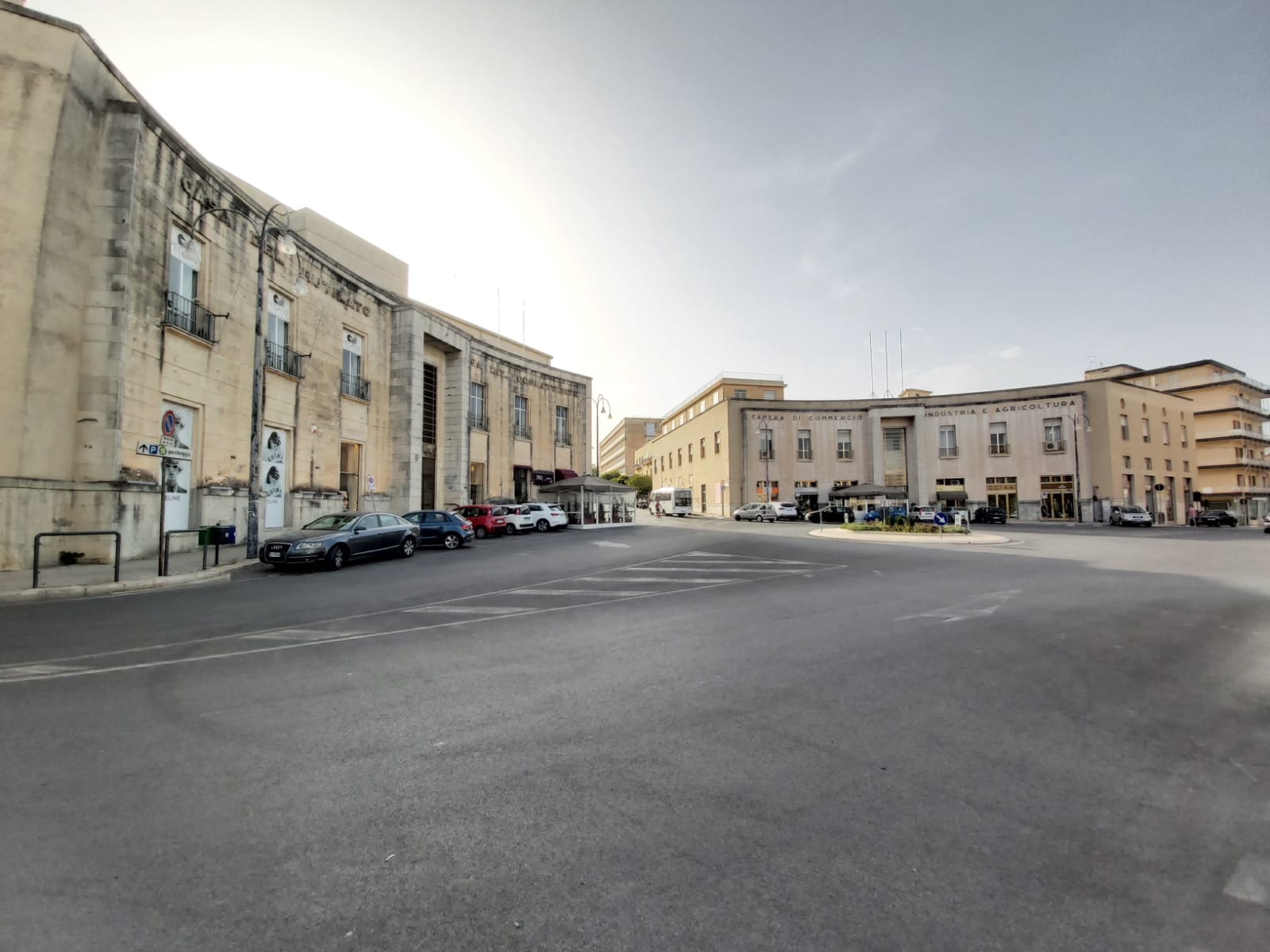
The Casa del Mutilato e del Combattente and Palazzo delle Corporazioni in Ragusa was designed by architect Francesco Fichera in 1938. Originally constructed to serve as a building for war veterans and disabled servicemen alongside a corporate assembly hall, it now functions as the Chamber of Commerce, Industry and Agriculture for the province.
Fichera was among Sicily’s leading architectural figures of the early twentieth century. His practice, based in Catania, encompassed residential, public, and monumental commissions distinguished by refined classicism and careful proportional relationships. The Ragusa palazzo reflects his characteristic approach: restrained formality and clarity of composition.
About Francesco Fichera
Fichera (1881–1950) graduated in engineering from Rome University in 1904 and obtained his architecture diploma in 1906. After formative work in Palermo under the influence of Art Nouveau, he returned to Catania to direct his father’s architectural practice. Beyond his extensive building projects—including post offices in Catania and Syracuse, villas, and institutional structures—Fichera was a distinguished scholar of Sicilian Baroque and eighteenth-century architecture, publishing major studies on local masters.
Details
- Architect: Francesco Fichera
- Year completed: 1938
- Location: Ragusa, Sicily
- Original function: Casa del Mutilato e del Combattente (House for War Veterans and Disabled Servicemen) and Palazzo delle Corporazioni (Corporate Assembly Hall)
- Current use: Chamber of Commerce, Industry and Agriculture
Explore more: 11 heritage places in Ragusa
Frequently asked questions
Who designed this building?
Francesco Fichera, a leading Sicilian architect and engineer (1881–1950), designed the palazzo. He was known for refined classicism and careful proportional design across residential, public, and monumental works.
What was the building originally for?
The structure served as both the Casa del Mutilato e del Combattente (a facility for war veterans and disabled servicemen) and the Palazzo delle Corporazioni (a hall for corporate and guild assemblies). It now houses Ragusa’s Chamber of Commerce, Industry and Agriculture.
When was it built?
The palazzo was completed in 1938 during Italy’s interwar period.


