
An ancient epic cycle of Oghuz Turkic tales, transmitted orally and through manuscript, preserving the moral wisdom and pre-Islamic beliefs of nomadic peoples across Central Asia and the Caucasus.
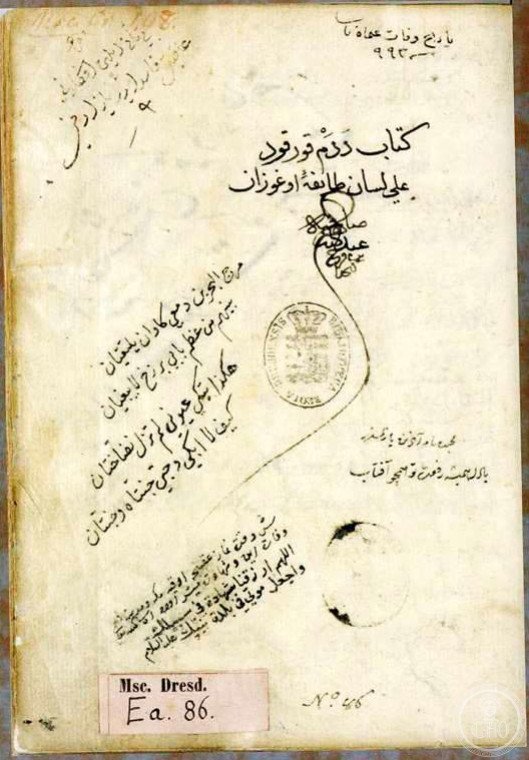
In UNESCO’s words
The epic culture, folk tales and music of Dede Qorqud/Korkyt Ata/Dede Korkut are based on twelve heroic legends, stories and tales and thirteen traditional musical compositions shared and transmitted across the generations through oral expressions, performing arts, cultural codes and musical compositions. Dede Qorqud appears in each story as a legendary figure and wise individual, a sage of minstrels whose words, music and expressions of wisdom relate to traditions of birth, marriage and death. In the musical compositions, the main intonations are reproduced using a musical instrument called the Kobyz through the sounds of nature, and imitation soundscapes are characteristic of this medium (such as the imitation of a wolf’s howl or a swan’s note). The musical compositions are all interconnected by the epic stories that accompany them. The element encompasses social, cultural and moral values such as heroism, dialogue, physical and spiritual wellness and unity as well as respect for nature, and contains profound knowledge about the history and culture of Turkic-speaking communities. It is practised and sustained by the community concerned on a wide variety of occasions – from family events to national and international festivals – and is therefore well-rooted in society, serving as a connecting thread between generations.
Official description, UNESCO Intangible Cultural Heritage List — Heritage of Dede Qorqud/Korkyt Ata/Dede Korkut, epic culture, folk tales and music
At a glance
The epic culture of Dede Qorqud consists of twelve heroic legends and thirteen traditional musical compositions transmitted orally across generations. Dede Qorqud appears in each story as a legendary wise figure and sage of minstrels whose words relate to traditions of birth, marriage and death. The musical compositions use a stringed instrument called the Kobyz, with characteristic imitations of natural sounds such as a wolf's howl or swan's note. The stories and music interconnect to express social, cultural and moral values including heroism, dialogue, wellness and unity, along with respect for nature.
Origins & history
These epic stories and musical compositions have been shared and transmitted through oral expressions and performing arts across generations within Turkic-speaking communities. The tradition carries profound knowledge about the history and culture of these communities, encompassing both social values and spiritual wisdom passed down through time.
The practice
The tradition is practised through oral expression and performing arts, with the musical compositions performed using the Kobyz instrument. The main intonations are reproduced through this instrument, creating imitation soundscapes characteristic of the medium. The epic stories and musical compositions are interconnected, and the practice occurs on a wide variety of occasions ranging from family events to national and international festivals, ensuring the tradition remains well-rooted in community life.
Cultural significance
The tradition serves as a connecting thread between generations within Turkic-speaking communities, sustaining social, cultural and moral values such as heroism, dialogue, physical and spiritual wellness, unity and respect for nature. By being practised across diverse occasions and firmly rooted in society, the tradition maintains its living importance to the community concerned.
Key facts
- Country: Azerbaijan, Kazakhstan, Türkiye
- Inscribed: 2018
- UNESCO list: Representative List of the Intangible Cultural Heritage of Humanity
- UNESCO reference: 01399
- UNESCO vocabulary: Epic poetry; Instrumental music; Story telling
- Map: not shown — UNESCO’s official description of this element names no locality, and a living tradition is practised across a community, not at one address.
Where to experience it
Dede Qorqud culture thrives among Turkic-speaking communities who maintain it through oral transmission, family gatherings, and public festivals. Visitors encounter the tradition through performances featuring the Kobyz, a traditional musical instrument that reproduces the epic's main intonations using sounds of nature—the howl of a wolf or the note of a swan. These performances appear at family events and national and international festivals, where the twelve heroic legends and thirteen musical compositions connect generations, preserving the moral values and historical knowledge of Turkic peoples.
Sources & resources
- UNESCO — official element page: Heritage of Dede Qorqud/Korkyt Ata/Dede Korkut, epic culture, folk tales and music
- UNESCO — open data record: Intangible Heritage List, reference 01399
- UNESCO — official video: UNESCO film on this element — embedded on this page
- UNESCO — official photograph: Photograph of this element — Ramil Abbakirov, Azerbaijan, 2017
- Reference — Wikipedia (secondary): Book of Dede Korkut — consulted as a secondary reference, not as confirmation
- Cultural Heritage Online: Our archive and city guides

Sources
- S1 — Lewis, Geoffrey, trans. The Book of Dede Korkut. Penguin Books, 1974. ISBN 978-0-14-044298-4.
- S2 — Reichl, Karl. Turkic Oral Epic Poetry: Traditions, Forms, Poetic Structure. Routledge, 1992. ISBN 978-0-8153-0779-2.
Spotted an error? Write to editorial@culturalheritageonline.com and we correct it the same day.