
A genre of romantic song born in late-19th-century eastern Cuba, bolero transformed folk poetry into the quintessential Latin American love song of the twentieth century, spreading from trovador guitars to concert halls and radio stations worldwide.
In UNESCO’s words
Bolero is an indispensable part of the Latin American sentimental song, with a strong lyrical character deeply rooted in Cuba and Mexico. A cultural amalgam, it combines the language used in European poetry, with African rhythms of enslaved peoples and the sentiments of the native peoples of the Americas. Bolero lyrics allude to daily life, and the songs are performed in a variety of spaces, from households to public areas and large concert halls, as well as in festivals and as serenades. The practice is generally passed down within families, through oral tradition and imitation. Researchers and academics (such as historians, musicologists and cultural managers) also contribute to its transmission. Today, new boleros continue to be composed, and the lyrics and music give room to an ever-evolving dialogue with the tradition of both countries. The prestige achieved by Bolero and its appropriation by different sectors of the population have led to its expansion to other parts of Latin America and to other Spanish-speaking countries. As a strong cultural symbol for broad sectors of Cuban and Mexican societies, especially in urban areas, it has served as a means of expressing emotions and feelings for over a century.
Official description, UNESCO Intangible Cultural Heritage List — Bolero: identity, emotion and poetry turned into song
At a glance
Bolero is a vocal song tradition with deep roots in Cuba and Mexico. It blends European poetic language with African rhythms and the sentiments of native American peoples. The songs explore themes from daily life and are performed everywhere—in homes, public spaces, concert halls, festivals, and as serenades. For over a century, it has been a powerful way for broad sections of Cuban and Mexican society, especially in cities, to express emotions and feelings.
Origins & history
Bolero emerged from a cultural meeting of European poetry, African rhythms carried by enslaved peoples, and American indigenous sentiment. The tradition developed in Cuba and Mexico as a distinct form. Over time, it has spread to other parts of Latin America and other Spanish-speaking countries, gaining prestige and being adopted by different sectors of the population. Throughout this expansion, both countries have continued to compose new boleros, allowing the lyrics and music to evolve in dialogue with the tradition.
The practice
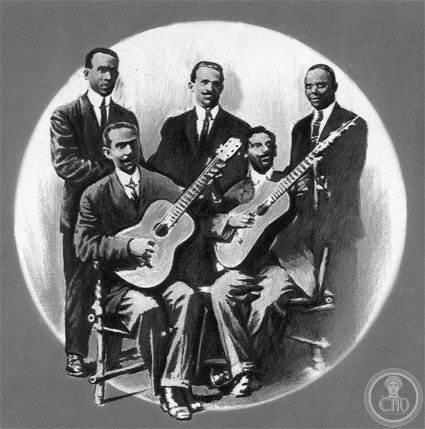
Bolero is performed by singers in many settings, accompanied by acoustic guitar or ensemble instruments. The practice is generally passed down within families through oral tradition and imitation, though researchers, historians, musicologists, and cultural managers also help transmit it. New compositions continue to be created, keeping the form alive. The songs draw on daily life for their subjects and give performers room to develop their own interpretations of the tradition.
Cultural significance
Bolero serves as a strong cultural symbol for Cuban and Mexican communities, representing their identity and values. It has become inseparable from how these societies express deep emotion. The form's combination of European, African, and American elements makes it a cultural amalgam that speaks to the heritage of both countries. Its expansion across Latin America and Spanish-speaking regions shows how it resonates beyond its origins as an expression of shared human feeling.
Key facts
- Country: Cuba, Mexico
- Inscribed: 2023
- UNESCO list: Representative List of the Intangible Cultural Heritage of Humanity
- UNESCO reference: 01990
- UNESCO vocabulary: Emotions; Poetry; Vocal music
- Map: not shown — UNESCO’s official description of this element names no locality, and a living tradition is practised across a community, not at one address.
- Related World Heritage site: Old Havana and its Fortification System, Historic Centre of Mexico City and Xochimilco, Historic Centre of Oaxaca and Archaeological Site of Monte Albán, Archaeological Zone of Paquimé, Casas Grandes, San Pedro de la Roca Castle, Santiago de Cuba, Urban Historic Centre of Cienfuegos, Historic Centre of Camagüey (a different UNESCO designation, not the place of the tradition)
Where to experience it
Bolero lives within the communities of Cuba and Mexico that cherish it as a cultural symbol, passed down through families and oral tradition across generations. Visitors encounter the tradition in households, public spaces, and large concert halls, where both classic and newly composed boleros are performed. Festivals and serenades showcase the genre's enduring presence, while researchers and musicologists continue documenting and transmitting this practice. From its stronghold in Cuba and Mexico, bolero has expanded across Latin America and Spanish-speaking countries, where it remains a vital means of expressing emotion and sentiment in urban and rural settings alike.
Sources & resources
- UNESCO — official element page: Bolero: identity, emotion and poetry turned into song
- UNESCO — open data record: Intangible Heritage List, reference 01990
- UNESCO — official photograph: Transmission of bolero from generation to generation, Mexico — Alberto Medrano — Medrano, 2022
- Reference — Wikipedia (secondary): Bolero — consulted as a secondary reference, not as confirmation
- Cultural Heritage Online: Our archive and city guides

Sources
- S1 — Loyola Fernández, José. En ritmo de bolero. Ediciones Unión, 1997. / Sublette, Ned. Cuba and Its Music: From the First Drums to the Mambo. Chicago Review Press, 2004. ISBN 978-1-55652-516-2.
- S2 — Manuel, Peter, et al. Caribbean Currents: Caribbean Music from Rumba to Reggae. Temple University Press, 2006. ISBN 978-1-59213-463-2.
Spotted an error? Write to editorial@culturalheritageonline.com and we correct it the same day.