
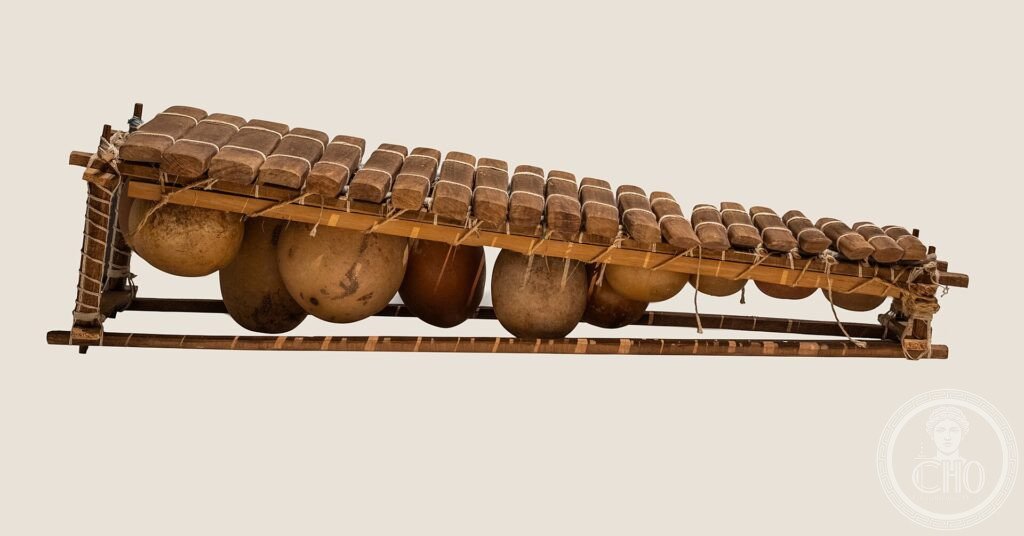
A gourd-resonated xylophone struck by hand, the balafon carries the voice of West African communities from Mali to Ivory Coast, speaking through wood and vibrating air.
In UNESCO’s words
The balafon (in Mali, Burkina Faso and Côte d’Ivoire) and kolintang (in Indonesia) refer to a set of wooden xylophones of different lengths. The Indonesian and West African instruments share similarities in material, shapes, keys, functions, transmission processes and values. They are believed to represent mutual respect and tolerance and promote unity and peaceful and harmonious living. In Indonesia, the kolintang is played during religious ceremonies and rituals and is associated with philosophical, ethical and aesthetic values that establish ties between people of different backgrounds and with nature. The instrument is also viewed as a means of addressing mental and physical health ailments. To its bearers and practitioners, kolintang promotes dialogue and understanding, and its existence is a symbol of respect for cultural diversity. Kolintang musicians, craftspeople, researchers and academics play an important role in transmitting the practice by raising awareness of the importance of kolintang heritage, ensuring the instrument’s sustainability and significance, and transmitting the related knowledge and skills broadly, including to youth, women and girls, and people in vulnerable and marginalized situations. The element is also transmitted through activities across different sectors, including education, culture, research and health. It promotes creativity while supporting diversity, inclusion and social cohesion.
Official description, UNESCO Intangible Cultural Heritage List — Cultural practices and expressions linked to Balafon and Kolintang in Mali, Burkina Faso, Côte d'Ivoire and Indonesia
At a glance
The balafon and kolintang are wooden xylophones found in West Africa and Indonesia. Made of bars of different lengths, these instruments share similarities in materials, shapes, keys and functions. Both are believed to represent mutual respect and tolerance, promoting unity and peaceful living among people of different backgrounds and with nature.
Origins & history
The balafon and kolintang traditions developed in their respective regions as instruments linked to communities and their values. Over time, they have been transmitted through generations of musicians, craftspeople, researchers and academics who have ensured the knowledge and skills of these practices endure and remain significant to their bearers.
The practice
In Indonesia, the kolintang is played during religious ceremonies and rituals. Musicians, craftspeople and practitioners work to transmit the instrument's knowledge and skills broadly, including to youth, women, girls and people in vulnerable or marginalized situations. The practice is transmitted through activities across education, culture, research and health sectors, supporting creativity and diversity.
Cultural significance
The kolintang is associated with philosophical, ethical and aesthetic values that establish ties between people and with nature. It is viewed as a means of addressing mental and physical health ailments. For its bearers and practitioners, the instrument promotes dialogue and understanding, serving as a symbol of respect for cultural diversity. Its existence supports social cohesion, inclusion and the wellbeing of communities.
Key facts
- Country: Mali, Burkina Faso, Côte d'Ivoire, Indonesia
- Inscribed: 2024
- UNESCO list: Representative List of the Intangible Cultural Heritage of Humanity
- UNESCO reference: 02131
- UNESCO vocabulary: Instrument making; Music education; Percussion instruments
- Map: not shown — UNESCO’s official description of this element names no locality, and a living tradition is practised across a community, not at one address.
Where to experience it
The balafon thrives across Mali, Burkina Faso and Côte d'Ivoire, while the Indonesian kolintang is practised in communities throughout Indonesia. Both instruments are encountered during religious ceremonies, rituals and gatherings where musicians, craftspeople and academics work to transmit knowledge to youth, women, girls and wider communities. The tradition is sustained through education, cultural programmes, research initiatives and health-related activities. Visitors interested in experiencing these wooden xylophones can connect with local practitioners, attend performances and workshops, and engage with the cultural organisations and educational institutions dedicated to preserving this heritage of mutual respect and harmony.
Sources & resources
- UNESCO — official element page: Cultural practices and expressions linked to Balafon and Kolintang in Mali, Burkina Faso, Côte d'Ivoire and Indonesia
- UNESCO — open data record: Intangible Heritage List, reference 02131
- UNESCO — official video: UNESCO film on this element — embedded on this page
- UNESCO — official photograph: Kolintang class in middle school As a regular curriculum in some schools in Indonesia, it is a way to pass the technics of playing the instrument through generations. — Julius Widjojono — Manado Independent School, Indonesia, 2023
- Reference — Wikipedia (secondary): Balafon — consulted as a secondary reference, not as confirmation
- Cultural Heritage Online: Our archive and city guides

Sources
- S1 — Charry, Eric. Mande Music: Traditional and Modern Music of the Maninka and Mandinka of Western Africa. University of Chicago Press, 2000. ISBN 978-0-226-10162-0.
- S2 — Nketia, J. H. Kwabena. The Music of Africa. W.W. Norton, 1974. ISBN 978-0-393-02177-6.
Spotted an error? Write to editorial@culturalheritageonline.com and we correct it the same day.