
A living tradition of singer-poets who perform epic narratives and original compositions accompanied by long-necked lutes, carrying forward centuries of oral storytelling across the South Caucasus.
In UNESCO’s words
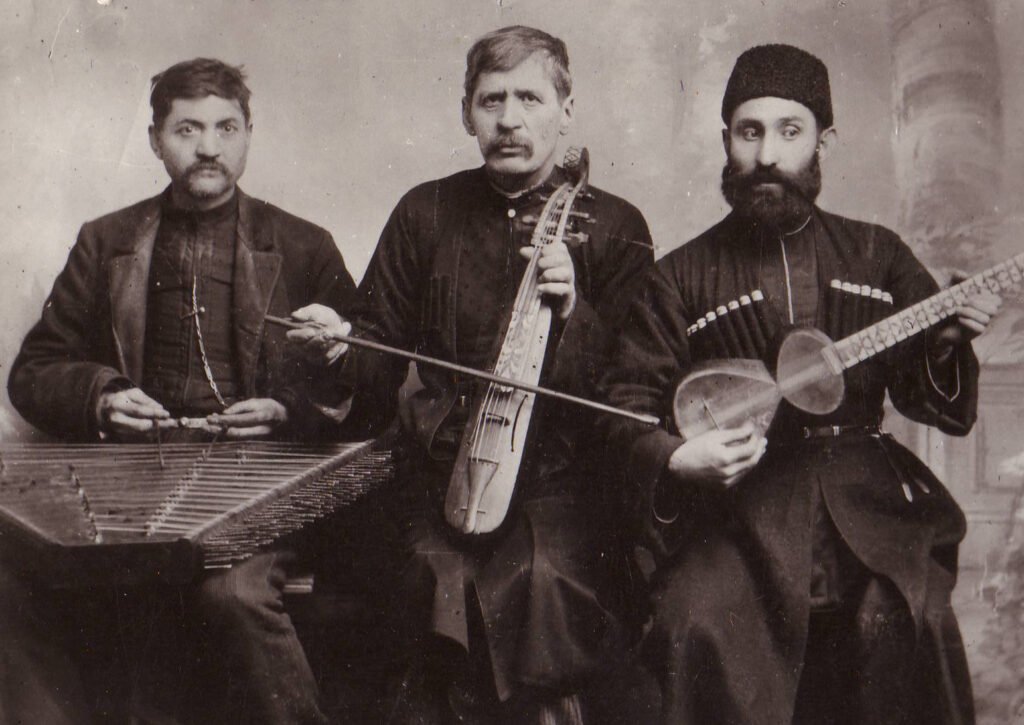
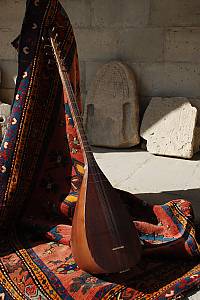
The art of Azerbaijani Ashiqs combines poetry, storytelling, dance and vocal and instrumental music into a traditional performance art that stands as a symbol of Azerbaijani culture. Characterized by the accompaniment of the ''saz,'' a stringed musical instrument, the classical repertoire includes 200 songs, 150 literary-musical compositions known as ''dastans,'' nearly 2,000 poems in different traditional poetic forms and numerous stories. The regional variations may include other musical instruments, but all are united by a common national language and artistic history. Ashiqs take part in weddings, friendly parties and festive events throughout the Caucasus and appear on concert stages, radio and television, sometimes synthesizing classical melodies with contemporary ones as they continue to recreate their repertoire. Their art is considered an emblem of national identity and the guardian of Azerbaijani language, literature and music. Even as Ashiqs represent the consciousness of a people, they also help to promote cultural exchange and dialogue: Kurds, Lezhins, Talishes, Tats and other ethnic groups living in the country often perform the Ashiqs’ art, and their poems and songs have spread across the region.
Official description, UNESCO Intangible Cultural Heritage List — Art of Azerbaijani Ashiq
At a glance
Azerbaijani Ashiqs are traditional performers who combine poetry, storytelling, dance, and music into a single art form. They accompany themselves on the saz, a stringed instrument, and draw from a classical repertoire that includes 200 songs, 150 literary-musical compositions called dastans, nearly 2,000 poems, and numerous stories. This performance art has become a symbol of Azerbaijani culture and national identity.
Origins & history
The ashiq tradition flourishes across Armenian, Iranian, Azerbaijani, Turkish, and Georgian cultures of the South Caucasus and surrounding regions. The name itself—derived from the Persian word for “lover”—reflects the practice’s deep roots in the cultural crossroads of the Near East. What began as an oral tradition of wandering bards has evolved into a disciplined art form passed down through formal apprenticeship.
The practice
Ashiqs perform at weddings, friendly gatherings, and festive events throughout the Caucasus, as well as on concert stages, radio, and television. They accompany their performance with the saz, though regional variations may include other instruments. While the classical repertoire forms the foundation of their art, Ashiqs continue to recreate their repertoire, sometimes blending classical melodies with contemporary ones.
Cultural significance
The Ashiq tradition is considered an emblem of national identity and guardian of Azerbaijani language, literature, and music. It represents the consciousness of the people and helps promote cultural exchange: Kurds, Lezhins, Talishes, Tats, and other ethnic groups perform this art, and their poems and songs have spread across the region.
Key facts
- Country: Azerbaijan
- Inscribed: 2009
- UNESCO list: Representative List of the Intangible Cultural Heritage of Humanity
- UNESCO reference: 00253
- UNESCO vocabulary: Dance; Instrumental music; Vocal music
- Map: not shown — UNESCO’s official description of this element names no locality, and a living tradition is practised across a community, not at one address.
Where to experience it
Ashiqs perform throughout the Caucasus at weddings, friendly gatherings, and festive events, appearing on concert stages, radio and television. Visitors may encounter these master musicians at cultural venues and festivals across Azerbaijan and the wider region, where they continue to train apprentices and perform classical compositions alongside contemporary creations. The art thrives among diverse communities—Kurds, Lezhins, Talishes, Tats and other ethnic groups—ensuring that ashiq performances remain a living expression of a shared cultural identity, exchanged between regions.
Sources & resources
- UNESCO — official element page: Art of Azerbaijani Ashiq
- UNESCO — open data record: Intangible Heritage List, reference 00253
- UNESCO — official video: UNESCO film on this element — embedded on this page
- UNESCO — official photograph: Photograph of this element — Mammad Rahimov — 2008, by M.Rahimov/Azerbaijan Ministry of Culture & Tourism
- Reference — Wikipedia (secondary): Ashik — consulted as a secondary reference, not as confirmation
- Cultural Heritage Online: Our archive and city guides
Sources
- S1 — Reinhard, Kurt, and Ursula Reinhard. Musik der Türkei: Band 2. Heinrichshofen, 1984. ISBN 978-3-7959-0426-5.
- S2 — Slobin, Mark, ed. Retuning Culture: Musical Changes in Central Asia and the Caucasus. Duke University Press, 1996. ISBN 978-0-8223-1847-7.
Spotted an error? Write to editorial@culturalheritageonline.com and we correct it the same day.