
Thailand’s traditional New Year festival, celebrated each April with ritual water purification and communal celebration, now recognized as intangible cultural heritage.
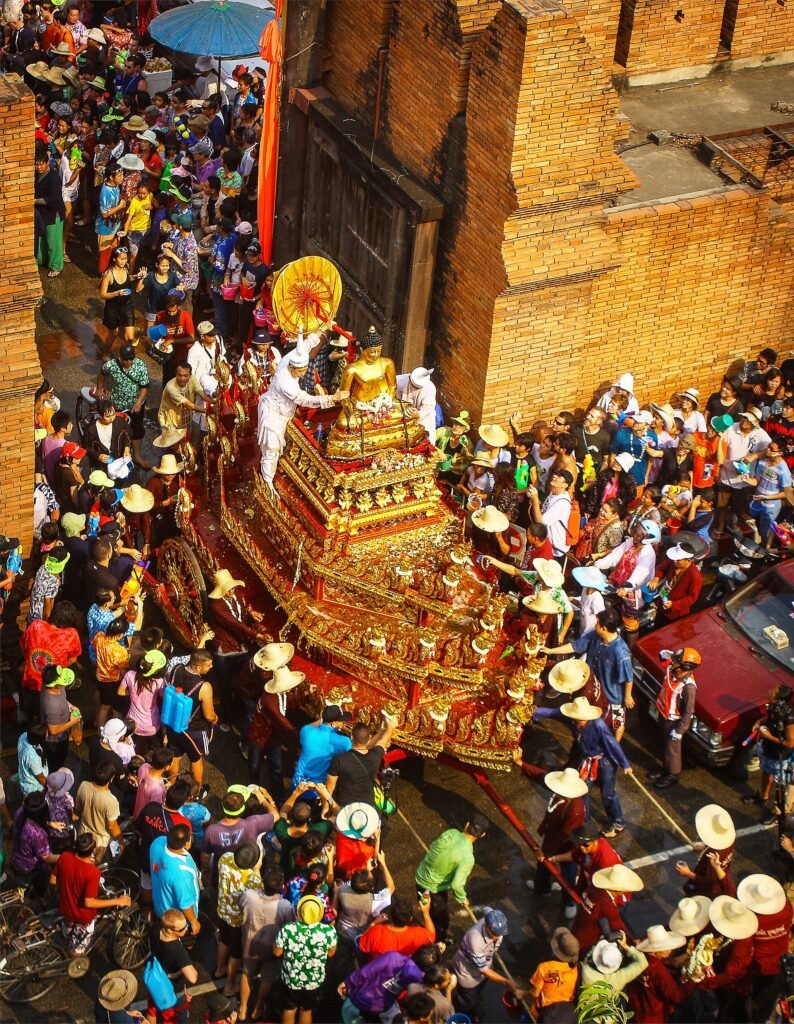
In UNESCO’s words
In Thailand, Songkran refers to the sun’s annual passing into the Aries constellation, the first sign of the Zodiac, which marks the traditional start of the new year. Occurring in mid-April after the rice harvest, it is a time when people reunite with their families and pay their respects to older adults, ancestors and sacred Buddha images. Pouring water is a significant act during Songkran, symbolizing cleansing, reverence and good fortune. Other activities include bathing important Buddha images, splashing water on family and friends, folk plays, games, music and feasting. The tradition is passed on through participation in the festivities. Parents transmit the tradition to their children orally through regular social and family interactions. Educational institutes, government agencies, the media and Thai astrologers also play an important role in preserving, promoting and transmitting the astrological knowledge and wisdom related to Songkran. Songkran promotes community cooperation, unity and forgiveness. It is viewed as a time to symbolically wash away misfortunes, pray for prosperity for the coming year, reunite with family members, and honour ancestors and older adults. Furthermore, by emphasizing the importance of older adults and of family, Songkran helps to combat loneliness and social isolation.
Official description, UNESCO Intangible Cultural Heritage List — Songkran in Thailand, traditional Thai New Year festival
At a glance
Songkran marks the traditional Thai new year, occurring in mid-April when the sun enters the Aries constellation. The festival centers on water—poured, splashed and used to bathe sacred Buddha images—as a symbolic act of cleansing, reverence and blessing. Beyond water rituals, Songkran includes folk plays, games, music and feasting. Families reunite, pay respect to elders and ancestors, and gather to celebrate together.
Origins & history
Songkran was Thailand’s official New Year celebration until administrative reforms reshaped the national calendar. In 1888, the official New Year shifted to 1 April, then moved again to 1 January in 1940. Despite these bureaucratic changes, Songkran persists as a national holiday, maintaining continuity with pre-modern Thai timekeeping and Buddhist liturgical tradition. The festival’s observance reflects deeper cultural attachments that no decree could displace.
The practice
Songkran brings together family members, friends and communities in activities that pass the tradition forward through direct participation. Water is central: people pour it as a significant ritual act, splash it on loved ones, and bathe important Buddha images. The festival also features folk plays, games, music and feasting. Parents transmit knowledge orally through family interactions, while educational institutes, government agencies, the media and Thai astrologers help preserve and promote the astrological knowledge underlying the celebration.
Cultural significance
Songkran allows people to wash away misfortunes symbolically and pray for prosperity in the year ahead. It reinforces respect for older adults and ancestors, strengthening family bonds and community unity. By emphasizing family connection and the role of elders, the festival combats loneliness and social isolation. It also promotes forgiveness and cooperation across the community.
Key facts
- Country: Thailand
- Inscribed: 2023
- UNESCO list: Representative List of the Intangible Cultural Heritage of Humanity
- UNESCO reference: 01719
- UNESCO vocabulary: Buddhism; Festivals; New year; Social inclusion
- Map: not shown — UNESCO’s official description of this element names no locality, and a living tradition is practised across a community, not at one address.
Where to experience it
Songkran is celebrated throughout Thailand during mid-April, marking the traditional new year across the country. The festival unfolds in temples, streets, neighborhoods, and homes as families reunite and communities gather together. Visitors can witness water blessings at temples, observe the bathing of Buddha images, and participate in water-splashing activities, folk plays, games, music, and feasting that characterize the celebration. The tradition is experienced through direct participation in these festivities, passed down orally through families and reinforced by schools, government agencies, and media throughout Thailand.
Sources & resources
- UNESCO — official element page: Songkran in Thailand, traditional Thai New Year festival
- UNESCO — open data record: Intangible Heritage List, reference 01719
- UNESCO — official video: UNESCO film on this element — embedded on this page
- UNESCO — official photograph: The merit-making ceremonies include giving alms to monks and listening to sermons on Buddha’s teachings. These are believed to bring happiness and prosperity throughout the whole year. This photo was taken at Rongthamsamakkhi temple, Chiang Mai province (Northern Thailand). — Banharn Vihokhern, Thailand, 2019
- Reference — Wikipedia (secondary): Songkran (Thailand) — consulted as a secondary reference, not as confirmation
- Cultural Heritage Online: Our archive and city guides

Sources
- S1 — Rajadhon, Phya Anuman. Essays on Thai Folklore. Editions Duang Kamol, 1988. ISBN 978-974-210-345-3.
- S2 — Terwiel, B. J. Monks and Magic: An Analysis of Religious Ceremonies in Central Thailand. White Lotus, 1994. ISBN 978-974-8495-97-2.
Spotted an error? Write to editorial@culturalheritageonline.com and we correct it the same day.