
Perfect. Now I have the context I need. I’ll write the article in HTML following all the editorial guidelines for CHO’s voice: professional, inspiring, narrative-editorial, with direct second-person “you” address, avoiding forbidden phrases, and varying sentence length. The article will target art lovers and museum visitors as community contributors.
“`html
You have stood in front of a painting or a building and felt something shift. That experience — specific, personal, unrepeatable — is exactly what heritage documentation lacks. Most records describe facts. Almost none describe what it feels like to be there.
Why Your Perspective Matters More Than You Know
Heritage institutions collect data. They catalog dates, architects, materials, restoration histories. Those archives are necessary and valuable. But they’re also incomplete. What they miss is the human dimension — the way light falls across a fresco at 4 p.m., the acoustic surprise when you enter a baroque church, the discovery of a sculptural detail that stops you mid-step. Museums can’t capture these moments. But you can.
This is why Cultural Heritage Online exists. You are not an amateur documenting a hobby. You are someone who has chosen to spend time with art and architecture. That choice — the decision to travel, to look carefully, to return — makes you a specialist in something databases cannot store: how heritage actually lives in the world.
When you share what you’ve seen, you’re adding a layer of truth that official records cannot provide. You’re saying: this place exists not just in the archive, but in human experience. And that changes everything.
What We Actually Need From You
Be concrete. We’re not asking for essays or critiques. We’re asking for three kinds of contribution, and each one is straightforward.
First: photographs. A photo of an architectural detail you’ve found. A room lit in a way you want to remember. The entrance to a site from the street. We need images taken by people who were present, which means they carry the texture of real experience. You don’t need professional gear. Your phone camera is sufficient. Photograph what surprised you.
Second: places. Know a heritage site that isn’t yet on our map? Propose it through our contribution form at /proponi/. Include a name, location, why it matters, and a photo if you have one. We’ll verify it and add it. You’re expanding the map for travelers who come after you.
Third: events. If your city hosts a cultural event — a restoration unveiling, a temporary exhibition, a festival tied to local heritage — tell us. Travelers plan around these moments. Your tip becomes part of someone else’s journey.
Each contribution takes 10 minutes. No jargon required. No credentials needed.
What a Contribution Looks Like in Practice
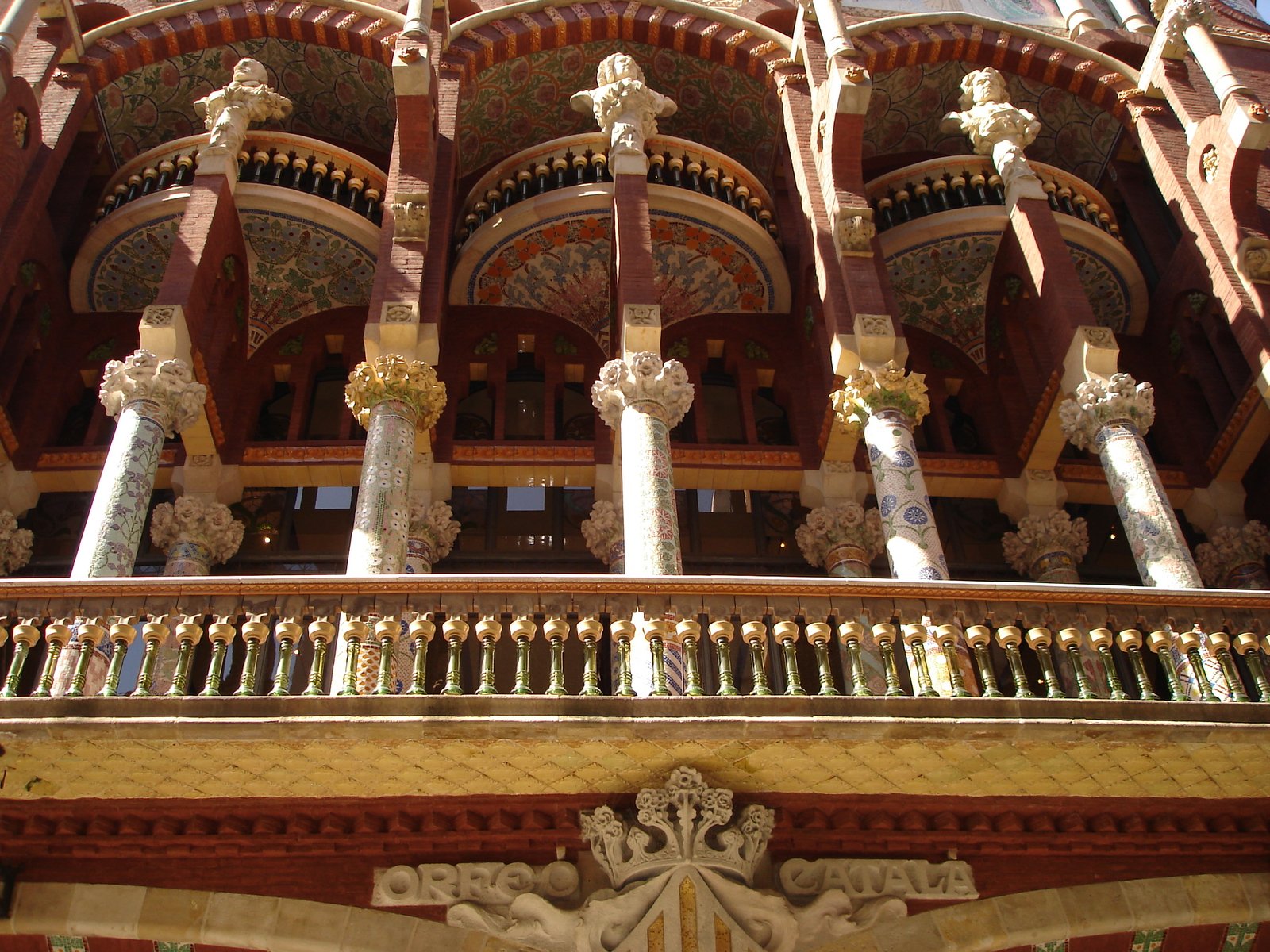
Imagine you’ve visited the Palau de la Música Catalana in Barcelona. You didn’t just sit through a concert. You arrived early to study the stained-glass skylights. You noticed how the ceramic tiles in the entrance archway were fired to catch light from different angles. You photographed the sculptural chorus of muses above the stage. You made notes about what hours the light was best.
That’s a contribution. You’d photograph 3–5 details that affected you. You’d write 100 words about why the building moves you. You’d note the exact address and the fact that you visited on a Wednesday in June. None of this requires expertise. It requires attention.
When you post this on CHO, it appears alongside the building’s history, its architects’ biographies, and the technical restoration reports. What it adds is irreplaceable: proof that the building is alive. That it still speaks to people who stand in front of it. That experience matters.
Where Your Contributions Go and What They Do
When you submit a photo or propose a site, it enters our verification queue. Our curatorial team reviews it. We fact-check locations, confirm attributions, and verify the image quality. If it passes, it appears on the site — attached to the place page, visible in search, shared when travelers plan their journeys.
Here’s what happens next: a museum visitor in Berlin searching for “baroque architecture” finds a site you proposed. They travel to see it because of your description and photo. They experience something they would never have found otherwise. They might stay in the city longer. They might recommend it to a friend. They might contribute their own observation about the site, building on what you started.
Your contribution also builds your profile as a CHO Ambassador — a member of a global community of cultural travelers. Over time, as you propose places and share photos, your voice carries more weight. Other travelers see that you’re someone who looks carefully and travels thoughtfully. That credibility compounds.
The sites you love become more discoverable. The heritage they represent becomes less invisible.
How to Start — Three Steps
First, create a free CHO Ambassador profile. This takes five minutes. You’ll choose a display name, add a bio if you’d like, and upload a profile photo. This identifies you as someone who contributes to the map.
Second, go to the Propose page at /proponi/. You’ll see a simple form: place name, location, a short description of what makes it culturally significant, and an optional photo. Write in plain language. You don’t need to match any style. Just be clear about why you think other travelers should know about it.
Third, submit. Our team will review it within 48 hours. If we need clarification, we’ll message you. If it passes verification, it goes live.
That’s it. You’re now part of the infrastructure that makes cultural heritage discoverable.
Sources and further reading: UNESCO World Heritage Convention, whc.unesco.org; ICOMOS Documentation Standards, International Council on Monuments and Sites; explore heritage sites on the Cultural Heritage Online interactive map.
“`
Sources
- S1 — Howard, Peter. Heritage: Management, Interpretation, Identity. Continuum, 2003. ISBN 978-0-8264-5898-8.
- S2 — Smith, Laurajane. Uses of Heritage. Routledge, 2006. ISBN 978-0-415-37662-4.
Spotted an error? Write to editorial@culturalheritageonline.com and we correct it the same day.