
Credo in Concrete — a tour of Central European University’s Nádor Street campus with KÉK, Budapest
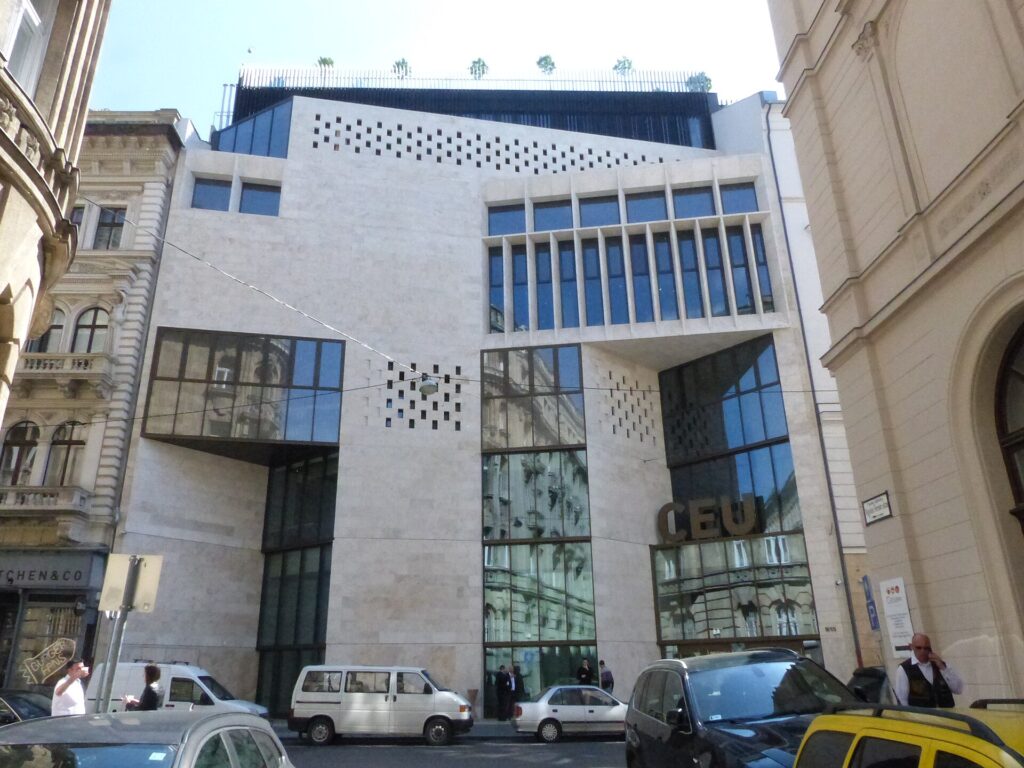 Photo: Elekes Andor, via Wikimedia Commons, CC BY-SA 4.0
 How does a contemporary building cut into a historic city block without erasing it? The Nádor Street campus of Central European University is one answer: O’Donnell + Tuomey’s prize-winning intervention threads new floors, courtyards, bridges and staircases through a row of older buildings, so that the old and the new stay legible at every step rather than being kept apart.
This two-hour walk, led by the architecture and urbanism researcher Alexey Zelensky, crosses the campus building by building. It is as much about what a university is for as about what it is made of: the tour follows the story of an institution bound up with the democratic transformation of Central Europe and, more recently, with the arguments over academic freedom in Hungary. The architecture, in other words, is being asked to carry an argument.
The walk is organised by KÉK — the Contemporary Architecture Centre, the Budapest centre behind the Városi Séták urban walks programme and the Budapest100 open-house weekend, together with Central European University, as part of the university’s thirty-fifth anniversary programme.
Practical details
- When: Sunday 18 October 2026, 10:00–12:00
- Duration: about two hours
- Meeting point: the CEU campus reception desk, Nádor utca 15, Budapest 1051
- Guide: Alexey Zelensky, architecture and urbanism researcher
- Admission: free of charge, but registration in advance is required — the group is limited to 25 people
- Registration: online, on the KÉK booking page linked below
- Organiser: KÉK — Contemporary Architecture Centre, Budapest, with Central European University
The same campus is walked again in Russian on 24 October 2026. KÉK’s programme runs through the year and regularly opens buildings that are normally closed, with a ticket for three walks on sale at the centre’s gallery in Budapest. Readers who want the city’s architecture before and after this century will find it in our own pages, from the Szecesszió of Ödön Lechner outward.
📷 Become a Cultural Heritage Online photographer
Share your photos of events: they stay published under your name as the author. The more they're seen, the more you get noticed — and soon a contest will reward the most appreciated photos.
Log in or sign up free to add a photo