


Henry E. Legler Regional Branch of the Chicago Public Library – Virtual Tour 360°
The first regional library in Chicago, designed by Alfred S. Alschuler in Beaux Arts style and opened in 1920. Now a National Register landmark.

The first regional library in Chicago, designed by Alfred S. Alschuler in Beaux Arts style and opened in 1920. Now a National Register landmark.

A c. 1905 Gothic Revival church and a c. 1910 Queen Anne parsonage in a historically African-American neighborhood of Waycross, Georgia, listed on the National Register in 2003.

A state-run home for orphaned, abandoned, and abused children in Owatonna, Minnesota, operating from 1886 to 1945 and home to 10,635 children.

St. Stephen’s Episcopal Pro-Cathedral in Wilkes-Barre, Pennsylvania, is a Romanesque Revival church designed by Charles M. Burns and completed in 1897. It served as pro-cathedral of the former Diocese of Bethlehem.

The cathedral of the Roman Catholic Diocese of Lafayette in Indiana, located at 1207 Columbia Street and a contributing property in the St. Mary Historic District.

A 1908 Classical Revival federal building by James Knox Taylor in Biloxi, Mississippi, now serving as City Hall. Listed on the National Register since 1978.

Durham’s first hospital, founded by George W. Watts in 1895, closed in 1976 and now houses the North Carolina School of Science and Mathematics.

The Arte Laguna Prize, the international contemporary art competition founded in Venice in 2006 by the MoCA cultural association, presents
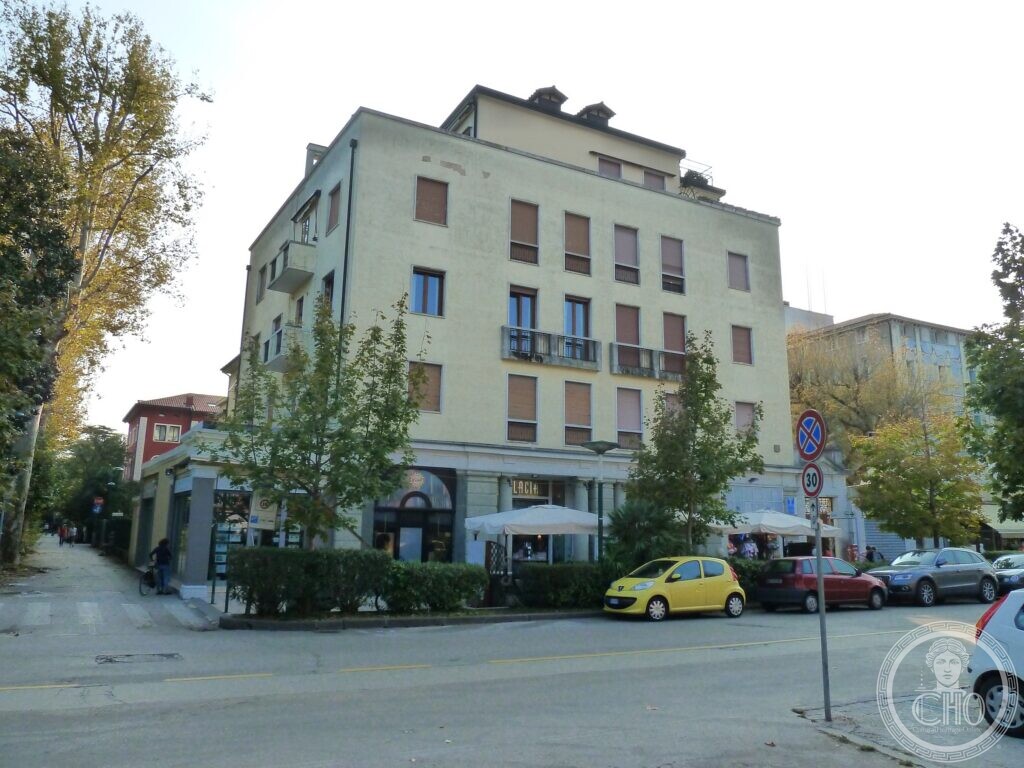
A plain yellow block of four storeys with shops and a restaurant at its foot, at the corner of Via Spalato a few steps from the Lido’s Gran Viale: the island of the years after the Second World War rather than of the Liberty season. Its date and architect are not documented in any published source we could find.
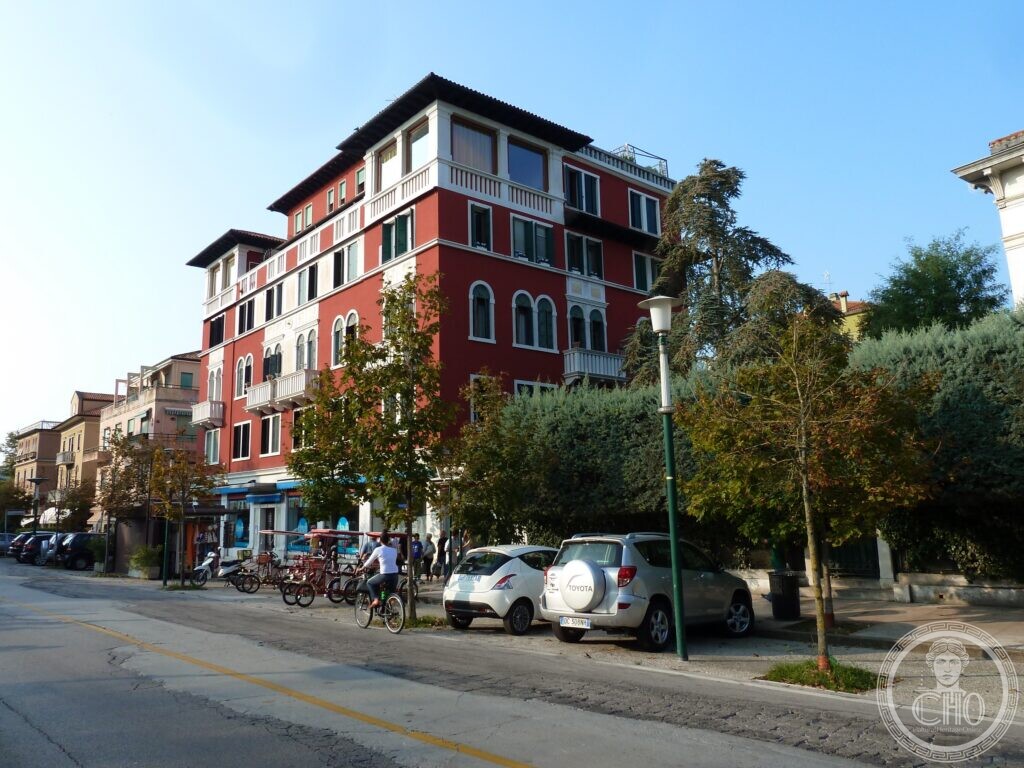
A five-storey block in Venetian red with white stone arches, balconies and an open loggia under the eaves, with shops at its foot, in the streets between the Gran Viale and the beach of the Lido; it belongs to the island’s early twentieth-century season, but its date and architect are not documented in any published source we could find.